
Musk: AI5 chip goes to Optimus, cars stay on AI4 — and memory prices have doubled AI4's cost
Elon Musk said on X on Sunday, Nov 22, that Tesla's next-generation AI5 chip is going to the Optimus humanoid robot, not cars — and that the AI4 computer now in Tesla vehicles costs twice as much because of memory and storage price hikes.
The News
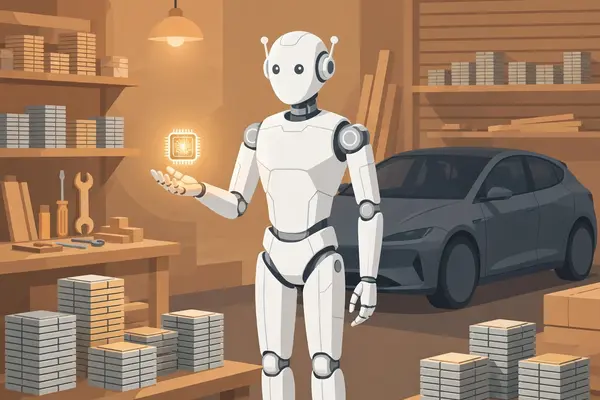
Elon Musk said on X on Sunday, November 22, that Tesla's next-generation AI5 chip is going to the Optimus humanoid robot and that 'cars will remain at AI4,' the computer now in Tesla vehicles. In a separate post he said AI4 now costs twice as much because of memory and storage price hikes, and that Tesla cut the AI4.5 upgrade's memory from 32 GB to 24 GB because RAM is 'super expensive.' Musk also called Optimus 'awesome' and 'the best product of all time of any kind' in a November 22 post, and Tesla's Super Intelligence account said in November 21 release notes that one shared world model — a vision encoder trained on millions of internet videos — drives both FSD v15 and Optimus.
The direction is not new. On Tesla's first-quarter call in April, Musk said AI5 was not pressing for vehicles, with the chip going first to Optimus and data centers, and on the October 21 earnings call he pointed to integrating AI5 into Optimus around April 2027. What Sunday adds is a flat statement with no AI5 date for cars, plus a cost signal: the part of the car computer getting pricier — and being trimmed and redesigned — is memory, which sets how large a driving model fits and how fast it runs.
The caveats matter, and they are stated plainly. All of Sunday's claims are Musk's own X posts, not filings or Tesla statements. The cost doubling carries no dollar figure and no start date, and nothing reported ties it to car prices, FSD subscriptions or retrofit prices. Musk's AI5 size estimates have shifted — about five times AI4's useful compute in earlier reporting, about twelve times on Sunday — with no comparison or workload specified. The 'best product of all time' line announces no new model, price or delivery date. AI4.5 naming is inconsistent across sources (AI4 Plus, AI4.1, AI4.5) and Tesla has not confirmed which vehicles get it or when.
The robot gets the new chip, the cars keep the old one — and the old one now costs twice as much.
Why It Matters
This matters because it pins down Tesla's hardware priorities in public. The AI5 chip is Tesla's next-generation computer, the one meant to run both its cars and its humanoid robot. Musk is now saying the robot gets it first and the cars stay on the current AI4 computer — which means the driving software has to keep improving on today's hardware, not tomorrow's. The shared world model is the other half of the story: one vision system, trained on millions of internet videos, driving both the car's self-driving software (FSD v15) and the robot. If that model works, progress in one product feeds the other.
The cost signal is the part with the most immediate bite. Memory is the component that sets how large a driving model can be and how fast it runs — cut the memory from 32 GB to 24 GB and you shrink the model that fits. Musk says AI4 now costs twice as much because memory and storage prices have risen, but he gave no dollar figure, no start date, and no link to what a buyer pays. The memory price surge is the same force behind the chip-stock rout: the cost of the memory inside every AI system is climbing, and Tesla is now saying it out loud about its own cars.
Tesla closed Friday at $345.82, down 7.64%. The stock fell with the wider market, not on this news — Sunday's posts landed after the close. XPeng's AI Day is still ahead on November 25, with its IRON humanoid, and the Humanoids Summit runs December 1–2. The robot race is now a calendar of events, and Tesla's entry in it is a chip that goes to the robot first.
Analyst's Take
Our call is Mixed. The roadmap is clear and the shared world model is a real technical story — one vision system for cars and robots is exactly the kind of leverage Tesla needs. But the cost signal cuts the other way: the computer in every Tesla now costs twice as much by Musk's own account, with no dollar figure attached, and the memory trim from 32 GB to 24 GB is a real constraint on the driving model. And none of this arrived as a filing — it is a Sunday of X posts.
What to watch next is whether Tesla puts any of this in a filing or an earnings call — a dollar figure for the AI4 cost, a date for AI5 in cars, or a confirmation of which vehicles get the AI4.5 upgrade. Also watch XPeng's AI Day on November 25 for the rival humanoid answer. Until then, the Optimus-first plan is stated, the cost pressure is real, and the numbers are Musk's own. Reader poll: Is Optimus Tesla's future or a distraction? Vote: Optimus is the future, Cars still matter most, Both can win.
Are you bullish or bearish on this story?
By The Numbers
FAQ
What is the AI5 chip?
AI5 is Tesla's next-generation computer chip, designed to run its self-driving software and its Optimus humanoid robot. It is the successor to AI4, the computer in Tesla cars today. Musk says AI5 will go to Optimus first, with no date given for cars.
What is FSD?
FSD stands for Full Self-Driving, Tesla's driver-assistance software. Despite the name, it still requires a human driver to supervise. Version 15 is the latest release, and Tesla says it shares a vision model with Optimus.
What is a world model?
A world model is an AI system trained to understand how the physical world works — how objects move, how scenes change — usually by watching huge amounts of video. Tesla says one such model, trained on millions of internet videos, now drives both its cars and its robot.
Why does memory matter in a car computer?
Memory, or RAM, is the fast storage a computer uses while it works. In a self-driving car, memory sets how large the driving model can be and how quickly it can react. Less memory means a smaller model — which is why Tesla cutting AI4.5 from 32 GB to 24 GB matters.
👁
Source: TechTimes