
Tesla opens Cybercab sales to select customers — $29,990, plus a $299-a-month subscription to drive it
Tesla said Friday it is inviting select customers to buy its steering-wheel-free, pedal-less Cybercab for personal use — the first time a purpose-built driverless car has been offered for sale to the public. The car costs $29,990 before taxes, needs a $1,000 non-refundable deposit, and will not drive without a mandatory $299-a-month "Autonomy Subscription." Delivery is estimated for December 2026 in Austin, limited to Tesla's Robotaxi service areas in Texas and Florida, according to Tesla's order page as reported by Electrek and TechCrunch.
The News
Tesla said Friday, November 13, it is inviting select customers to buy its steering-wheel-free, pedal-less Cybercab for personal use — the first time a purpose-built driverless car has been offered for sale to the public rather than only as a fleet ride. The order page lists a price of $29,990 before taxes, a $1,000 non-refundable deposit, and a mandatory $299-a-month "Autonomy Subscription" — the car will not drive without it. Delivery is estimated for December 2026 in Austin, and sales are limited for now to Tesla's Robotaxi service areas in Texas and Florida, according to Tesla's order page as reported by Electrek and TechCrunch.
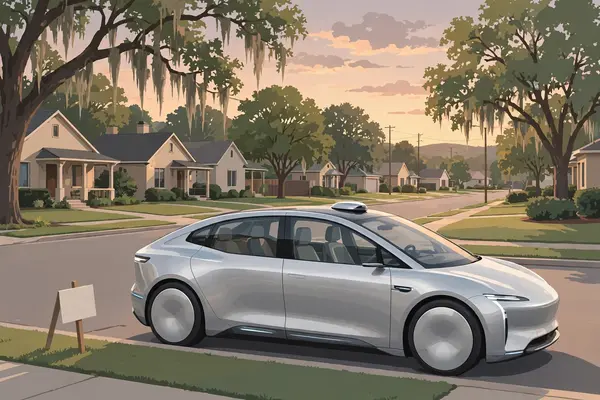
The Cybercab is a car built around one idea: there is no driver's seat in the usual sense, because the car is meant to drive itself. Tesla's Robotaxi service has been running the vehicle as a fleet ride, but selling it to individual buyers is a new step — it turns a robotaxi from a service you hail into a product you own. CEO Elon Musk said on X on November 14 that the $299 monthly fee is "too high" and should match the cost of Tesla's Full Self-Driving software and connectivity, about $115 a month. He also said sales will go nationwide as regulatory approval arrives.
The overhang is regulatory. NHTSA, the U.S. National Highway Traffic Safety Administration, opened an audit query in September into how Tesla self-certified a vehicle with no steering wheel, pedals or mirrors — in plain terms, how Tesla declared the car safe to sell without the controls every other car is required to have. That probe is still open. Tesla shares closed Friday at $390.22, down 1.82%.
A driverless car you can finally buy — but the monthly fee is higher than the car payment on some new cars, and the regulator's question is still open.
Why It Matters
This is the first time anyone has tried to sell a purpose-built driverless car to the public. Until now, robotaxis have been fleet vehicles — you hail one, you ride, you get out. Selling the Cybercab as a personal car changes the business model: instead of Tesla earning money per ride, it earns money per car sold, plus a monthly subscription for as long as the car is on the road.
The subscription is the part to watch. At $299 a month, the Autonomy Subscription costs $3,588 a year — roughly the price of a used car, every single year, on top of the $29,990 purchase price. That is a very different ownership deal from a normal car, where you pay once and drive. Musk's own comment that the fee is too high and should be about $115 a month suggests even Tesla thinks the current price will not hold.
The regulatory question matters more than the price. A car with no steering wheel, pedals or mirrors cannot be sold nationwide until regulators in each state allow it, and NHTSA's probe into how Tesla self-certified the vehicle is still open. Tesla is starting in its existing Robotaxi areas in Texas and Florida precisely because those are the places it already has permission to operate. How fast the rest of the country follows is the real test of this launch.
Analyst's Take
Our call is Mixed. Selling a purpose-built driverless car to the public is a genuine first — nobody has done it before, and Tesla getting select customers into the Cybercab by December would be a real milestone for the whole robotaxi industry. The $29,990 sticker price is also deliberately low for a new car, which is clearly meant to make the idea feel reachable rather than futuristic.
But the economics are the catch. A $299-a-month subscription on top of the purchase price works out to $3,588 a year, every year, just to keep the car moving — and Musk himself said on X that the fee is too high. If the fee falls toward the roughly $115 a month he suggested, the maths changes a lot; until it does, the Cybercab costs more to own than the sticker suggests. And the NHTSA probe into how Tesla self-certified a car with no steering wheel, pedals or mirrors is a real risk: if the regulator pushes back, the nationwide rollout Musk promised could stall.
Reader poll: would you buy a car that needs a $299-a-month subscription to drive? Vote: Yes, I'd buy one, No, too expensive, or Only if the fee drops.
Are you bullish or bearish on this story?
By The Numbers
FAQ
What is the Cybercab?
The Cybercab is Tesla's purpose-built driverless car. It has no steering wheel, no pedals and no mirrors — it was designed from the start to drive itself, rather than being a normal car with self-driving software added. Until now it has only been used as a fleet ride in Tesla's Robotaxi service; this is the first time it has been offered for sale to the public for personal use.
What does the $299-a-month subscription cover?
The "Autonomy Subscription" is mandatory — Tesla says the car will not drive without it. It covers the self-driving service the car needs to operate. CEO Elon Musk said on X on November 14 that $299 is "too high" and that the fee should match the cost of Tesla's Full Self-Driving software and connectivity, about $115 a month — but as of now the listed price is $299.
Where can you buy one?
For now, only select customers, only in Tesla's Robotaxi service areas in Texas and Florida, with estimated delivery in December 2026 in Austin. Musk said sales will go nationwide as regulatory approval arrives — meaning each state or city has to allow a car with no steering wheel on its roads first.
What is the NHTSA probe about?
NHTSA is the U.S. National Highway Traffic Safety Administration, the federal agency that sets vehicle safety rules. It opened an audit query in September into how Tesla self-certified a vehicle with no steering wheel, pedals or mirrors — in plain terms, whether Tesla followed the rules when it declared the car safe to sell. That question is still open and is the main regulatory overhang on the launch.
👁
Source: TechXplore