
Tesla plans €3 billion Berlin expansion to build up to 1 million Cybercabs a year
Tesla will spend €3 billion on its Berlin-area gigafactory to build the Cybercab robotaxi at a rate of up to one million a year, with production starting in 2029.
The News
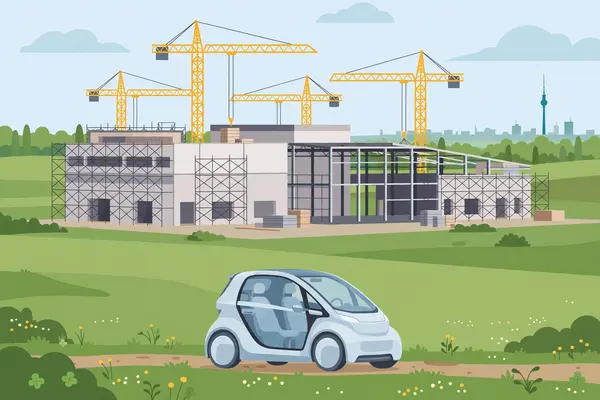
Tesla said on Monday, November 16, that it will invest €3 billion ($3.3 billion) in its Grünheide gigafactory near Berlin, adding a dedicated Cybercab production facility targeting up to one million robotaxis a year. At that rate it would make Grünheide Germany's largest auto plant by capacity, ahead of Volkswagen's Wolfsburg site.
The plan is to file a building permit application before the end of the year, start construction in the first half of 2027, and begin production in 2029. That is a long runway, and it is worth saying plainly: the Cybercab has yet to be sold anywhere at scale commercially, and it has no approval in Germany or the European Union.
The only Cybercab sales so far are in the United States. Privately invited American buyers were offered the car at $29,990 before taxes plus a required $299-a-month subscription and a $1,000 non-refundable deposit, according to Electrek reporting published November 15, with delivery estimated from December and the order page's delivery menu listing five Texas cities. This November 16 factory announcement is a separate event from that November 13–15 sales report, which the cited WNCY article does not cover.
A million robotaxis a year is a factory bet on a car that has not been sold at scale anywhere yet.
Why It Matters
The scale is what makes this announcement different from a normal factory expansion. One million robotaxis a year is not a pilot line — it is mass production, on the scale of a country's biggest car plant. Tesla is betting that driverless taxis will be a volume business, like regular cars, and it is building the factory before the car has proven itself in the market.
Germany matters because it is the heart of Europe's car industry. Building the Cybercab there puts Tesla's robotaxi in direct competition with Volkswagen, BMW and Mercedes on their home turf, and it gives Tesla a European base for a product it wants to sell across the continent. A factory in Germany also signals to European regulators that Tesla intends to be a local manufacturer, not just an importer of American cars.
The risk is the approval gap. A car with no steering wheel and no pedals needs permission from regulators who have never approved one before, and the Cybercab has none in Germany or the EU today. Tesla's track record is to announce boldly and then work through the problems — but a €3 billion factory is a bigger promise than most, and the three years until 2029 give regulators, rivals and the market plenty of time to test it.
Analyst's Take
Our call is Mixed. A €3 billion factory bet is the strongest signal yet that Tesla is serious about the Cybercab as a mass product, not a concept car — but it is a bet on a car with no approval in Germany or the EU, a 2029 start date, and an EU registration cap of 1,500 driverless vehicles a year under current rules. The factory is real; the market for what it will build is not yet. One million robotaxis a year would make Grünheide Germany's biggest car plant by capacity, ahead of Volkswagen's Wolfsburg — a statement of intent aimed squarely at the European market and at every rival robotaxi programme.
The honest caveat is the gap between the factory and the product. The Cybercab has no approval in Germany or the EU, it has not been sold at scale anywhere, and production is not due until 2029. Tesla is building the factory for a car that regulators have not yet allowed on European roads, and the only buyers so far are a small group of invited Americans paying $29,990 plus $299 a month. That is a lot of confidence to place in a permit process that has not started. There is a second, harder ceiling: under the EU's current small-series approval programme for fully driverless vehicles, only 1,500 Cybercabs a year could be registered across the whole bloc. Building a million a year in Berlin is a factory plan; selling them in Europe needs a regulatory change that has not happened.
For readers, the timeline is the story. The permit application comes before year-end, construction starts in the first half of 2027, and production follows in 2029 — three years of milestones to watch, each one a test of whether this is a real product or a very expensive promise. If the permits land and the car wins approval, Tesla owns the biggest robotaxi factory in Europe. If either stalls, the €3 billion sits in a building with nothing to build. Reader poll: Will Cybercab launch in Europe by 2029? Vote: Yes; Delayed; Never in EU.
Are you bullish or bearish on this story?
By The Numbers
FAQ
What is the Cybercab?
The Cybercab is Tesla's planned self-driving taxi — a small two-seat car with no steering wheel and no pedals, designed to carry passengers without a human driver. It has not yet been sold anywhere at scale commercially.
What is a gigafactory?
A gigafactory is one of Tesla's very large factories, built to make cars and batteries at high volume. The Grünheide plant near Berlin is Tesla's only car factory in Europe.
What is a building permit application?
A building permit application is the formal request a company files with local authorities for permission to build. Tesla says it will file before the end of the year, and construction would start in the first half of 2027 if approved.
👁
Source: WNCY