 AI Agent Update
Raleigh cut IT service-desk costs 66% with AI agents — a city did it first
The City of Raleigh, North Carolina is the first municipal government running ServiceNow's IT Service Desk AI Specialist in production — and the numbers are not pilot numbers: 66% lower service-desk costs, nearly half of requests resolved autonomously, over 1,300 staff hours a year handed back. The agent era's cleanest proof point works at city hall.
The News
The City of Raleigh, North Carolina is the first municipal government to put ServiceNow's IT Service Desk AI Specialist into production, per ServiceNow's announcement (Oct 8; covered Oct 20 by Intelligent CIO). The results: a 66% reduction in service-desk costs, nearly half of IT support requests resolved autonomously, and over 1,300 staff hours a year returned.
The operating context makes those numbers land harder. Raleigh's help desk is four people supporting 4,400 city employees — while the city as a whole fields roughly 300,000 resident service calls a year. This is not a lab deployment with a hand-picked workload; it is a small, stretched public-sector team that put agents on real tickets.
Two agents do the work. “Ral-E” routes self-service requests across IT, HR and facilities with a 98% deflection rate. “Alli,” the L1 AI Specialist, resolves complete workflows end-to-end, drawing on the knowledge base, historical incident data and remediation workflows — with humans overseeing the system and keeping the knowledge current.
CIO Mark Wittenburg framed the rollout deliberately: “We're introducing AI deliberately, building trust step by step and keeping our people in the loop.”
A 4-person help desk in Raleigh just became the public sector's agent proof point: 66% cheaper, half the tickets closed by machines, humans still in the loop.
Why It Matters
This is the shift the agent economy has been promising: from chatbots that answer questions to agents that complete operational tasks — password resets, access requests, incident workflows — with measurable cost outcomes. When the proof point is a municipal IT desk rather than a tech company's demo, procurement officers everywhere else can point to it.
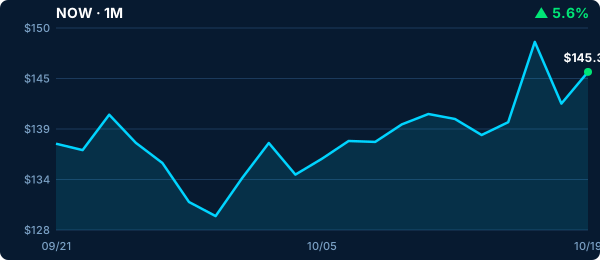
For ServiceNow ($NOW), every public reference deployment like Raleigh converts AI agents from platform marketing into a renewal-and-expansion argument: the agents run on its workflow data, which is precisely the moat ServiceNow sells. Cities are also copycat buyers — one credible municipal result seeds dozens of RFPs.
Analyst's Take
The detail to steal from Raleigh is the staffing math. A four-person help desk is the perfect agent beachhead: a bounded domain, a deep knowledge base, brutal ticket volume, and outcomes you can count in dollars and hours. Enterprises keep trying to debut agents on glamorous, ambiguous work and stalling; Raleigh pointed them at the queue everyone hates and published the savings.
The honest caveat is that these are vendor-announced results, and 'nearly half resolved autonomously' deserves the scrutiny any first-of-kind claim gets. But the structure — humans overseeing, knowledge kept current, trust built step by step — is exactly the deployment pattern that survives audits, which is why this case will travel. Watch whether Raleigh's numbers start appearing in other cities' budget documents this winter; that is when a case study becomes a category.
By The Numbers
FAQ
What did Raleigh deploy?
ServiceNow's IT Service Desk AI Specialist — the first municipal government to run it in production. Two agents operate the desk: “Ral-E” routes self-service requests across IT, HR and facilities, and “Alli” (the L1 AI Specialist) resolves complete workflows end-to-end.
What results did Raleigh get?
A 66% reduction in service-desk costs, nearly half of IT support requests resolved autonomously, and over 1,300 staff hours per year returned — with a 98% deflection rate on routed self-service requests.
Who are Ral-E and Alli?
Ral-E is the routing agent: it directs self-service requests across IT, HR and facilities. Alli is the L1 AI Specialist: it completes workflows end-to-end using the knowledge base, historical incident data and remediation workflows, with humans overseeing and maintaining the knowledge.
Why does a city government deployment matter?
It proves agents on unglamorous, high-volume operational work — a 4-person desk serving 4,400 employees — rather than in a tech demo. Public-sector proof points are conservative-buyer gold: they de-risk the decision for every other city and enterprise watching.
Source: ServiceNow (company announcement) · Intelligent CIO