 AI Agent Update
The AI funding scare just took the chip index to its worst day in four months
It wasn't demand that broke — it was the question of who pays for it.

The News
Thursday was the day the AI trade stopped arguing about demand and started arguing about money. The Philadelphia Semiconductor Index — the SOX, the main scoreboard for US chip stocks — fell 6.7% to 10,731.98, its worst single day since June 23, according to Reuters and AP reporting. The Nasdaq fell 2.6%, its worst session since June. This was not one company's bad quarter. It was the whole industry's funding model getting repriced in a single session.
Two prints lit the fuse. Meta fell 7.0% after its third-quarter results showed its AI cash burn accelerating — spending on datacenters and chips growing faster than the cash the business throws off. And Lam Research, which makes the machines that make chips, plunged 11.8% after its finance chief said near-term supply-chain constraints held back its December-quarter guidance. Read that again: the guide was capped because Lam cannot get enough parts to build machines fast enough. That is a supply break, not a demand break — customers are still ordering more than Lam can ship.
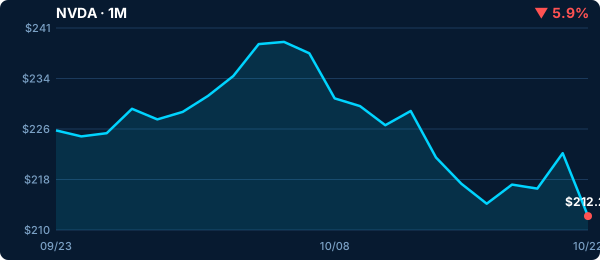
The selling did not discriminate. Nvidia fell 4.4%, AMD 8.1%, Micron about 6%, Applied Materials 8.2% and KLA 9.5%. The pattern matters more than any single number: the steepest falls hit the equipment makers and memory names — the companies whose order books depend on somebody else writing very large checks for new factories. When investors start worrying about whether the money keeps flowing, those are the stocks that move first, because their revenue is, quite literally, other companies' spending.
The market isn't repricing AI demand — it's repricing who pays for it.
Why It Matters
Think of the chip industry as a chain of IOUs. AI labs promise to buy compute, cloud companies promise to build datacenters, and equipment and memory makers build factories against those promises. Thursday's selloff was the market walking down that chain and asking, at every link, the same question: where does the cash actually come from? Meta's print — spending outrunning the cash the business generates — made that question impossible to ignore.
That is why equipment and memory names lead on days like this. They are the financing canaries: their customers pay them out of borrowed money and raised capital more than out of profits, so any doubt about funding lands on them first. GPU designers like Nvidia sit one step closer to end demand, which is why Nvidia fell least among the big names. The ordering of Thursday's losses is the market's own map of where it thinks the funding risk lives.
Analyst's Take
Here is what the tape is actually pricing: credit risk, not demand destruction. Lam's problem was that it cannot build fast enough. Nvidia's Jensen Huang told CNBC the same day that neocloud demand is “off the charts” — while conceding that capital is scarce. Both things can be true at once, and Thursday they were: the customers want the gear, and the money to pay for it has suddenly become the contested part. A market that sells a supply constraint as if it were a demand collapse is a market trading fear, not information.
So watch the right tell. Not the next keynote — the next credit deal. In the same 24 hours, Nebius closed a $3.5 billion facility with Citi to fund datacenters and GPUs, backed by more than $40 billion of long-term contracts. Banks are still writing checks against contracted AI demand while public equity markets slash the same names. If facilities like that keep closing, Thursday was a funding scare inside a real buildout. If the credit window starts shutting too, it becomes something worse. That is the line to watch.
By The Numbers
FAQ
Why did chip stocks fall if AI demand is strong?
Because the worry is financing, not demand. Meta's results showed AI spending outrunning its cash generation, and investors started asking who funds the buildout if profits don't cover it. Stocks whose revenue depends on other companies' big spending plans — equipment and memory makers — fell hardest.
What did Lam Research actually say?
Its CFO said near-term supply-chain constraints held back the December-quarter guidance — Lam can't source parts fast enough to build all the machines customers want. Orders didn't fall; the ability to ship did. The market sold it anyway, down 11.8%.
Is this a repeat of the dot-com bust?
The mechanics differ. In 2000, much of the demand itself was fictional. Today the demand signals — sold-out capacity, customers prepaying suppliers, banks lending against signed contracts — are real. The open question is the financing structure: how much of the buildout rests on borrowed money, and at what price.
What would stabilize the sector?
Evidence that the money keeps flowing on reasonable terms: more bank facilities like Nebius's $3.5B Citi deal closing, hyperscalers funding capex from cash flow, and equipment makers converting constrained guides into shipments. Watch credit deals, not keynote speeches.
Source: Reuters / AP market reporting (via TechTimes)