 AI Agent Update
Optimus is officially a factory product — Tesla's humanoid line is running at Fremont
Tesla confirmed Optimus is in production on a high-volume line, targets 20,000 robots a week within a year, and external deliveries in late 2027. The auto business funding it just shrank 43%.
The News
Tesla has started building its Optimus humanoid robot on a real production line. In its third-quarter shareholder letter, the company confirmed Optimus is in production on a high-volume line at its Fremont, California factory — in space that used to build Model S and X cars, a line Tesla removed in just 46 days to make room. The letter calls the robots coming off the line “the first production-quality bots that we have manufactured,” which is a stronger claim than any demo video: it says the machines are now being built the way a sellable product is built, not hand-assembled for a stage.
On the earnings call, Elon Musk put numbers on the ambition. Ramping up to 20,000 robots per week, he said, would take “at least a year, perhaps a little longer.” Deliveries to outside industrial customers would begin around late 2027. The Wall Street Journal reports the Fremont line is ultimately designed for 1 million robots a year, with a second line in Austin, Texas aimed at 10 million a year. Tesla also flagged an upgrade to the robot's AI5 chip around April, and an unscripted demonstration video within one to two months.
The business funding the robot push had a rough quarter. Revenue was $28.04 billion, essentially flat versus a year earlier. Net profit fell 43% to $787 million as Tesla poured money into AI and robotics. Vehicle deliveries came in at 486,532. In plain terms: the car company is earning less, on purpose, because it is spending heavily to become a robot company.
The robot you bought a car from is now the robot building the robots.
Why It Matters
Every humanoid robot headline until now has been a prototype, a pilot, or a production “intention.” This is the first time any company has claimed a commercial-grade humanoid manufacturing process backed by an actual high-volume line rather than a video. If Tesla ships even a fraction of the 20,000-a-week target, humanoids stop being a science-fair category and start being an industry with a cost curve, a supply chain and a price — the moment every competitor's plans get measured against a real factory.
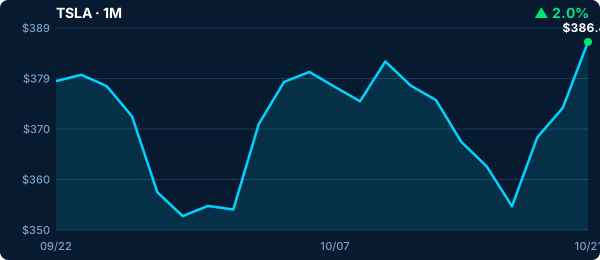
The constraints are real, too. Musk has flagged China's supply of rare-earth magnets — essential ingredients in the electric motors that move the robot's joints — as a risk to the ramp. And the funding engine underneath it all, Tesla's car business, just posted a 43% profit drop. The robot bet is now large enough that both halves of $TSLA — the shrinking cash cow and the growing robot line — move the stock.
Analyst's Take
The milestone is real, and it deserves to be taken seriously: a high-volume line producing “production-quality” robots is the hardest claim Tesla has ever made about Optimus, and it is printed in a shareholder letter — a legal document — not posted on social media. That said, read the second half of every sentence. Outside revenue starts in late 2027 at the earliest. The ramp is explicitly slow. And the 20,000-a-week figure comes with a dexterity caveat from this week's reporting: roughly 100 hand-fitted screws per robot, which is another way of saying the line is not yet the automated machine the target implies.
So this is a credible start, not a finished ramp. The gap between robots a company uses in its own factories and robots a customer can buy, trust and maintain is exactly where humanoid startups go to die — and Tesla has now walked into that gap carrying the biggest production claim in the industry. What to watch: the unscripted demo video, the AI5 chip upgrade in April, and whether the first external delivery date survives contact with 2027.
By The Numbers
FAQ
What does “production-quality” mean versus earlier Optimus demos?
Earlier Optimus units were prototypes — hand-built machines shown in demos. “Production-quality” is Tesla's claim that robots are now coming off a repeatable manufacturing line, built the same way each time, to a standard the company says is suitable for a commercial product. It is a manufacturing claim, not yet a sales claim.
When can customers actually buy one?
Tesla targets first deliveries to outside industrial customers around late 2027. Before that, production is for Tesla's own use. The 20,000-robots-a-week rate is a ramp target Musk says will take at least a year, perhaps a little longer, to reach.
What is the AI5 chip upgrade?
AI5 is Tesla's next in-house AI chip, slated to reach Optimus around April. A better brain chip matters because a humanoid's usefulness depends on how well it can see, decide and move in an uncontrolled environment — the computer inside the robot is as much the product as the motors.
How does this compare to Unitree's 10,000–20,000 G1 units?
China's Unitree has discussed volumes in the 10,000–20,000-units-a-year range for its G1 humanoid. Tesla's Fremont line alone is designed for 1 million robots a year — a far bigger manufacturing ambition, though Unitree ships product today while Tesla's external deliveries start in late 2027.
Source: Tesla Q3 2026 shareholder letter / TechCrunch