 AI Agent Update
Tesla and Nvidia just became Samsung's landlords — $2.8B for chip substrates
When your customers prepay $2.8B for factory lines, that's not circular financing — that's demand.

The News
Reported by Maeil Business and carried by Reuters: Tesla and Nvidia will co-invest $2.8 billion to build chip-substrate production lines at Samsung Electro-Mechanics' plant in Sejong, South Korea. Tesla is putting in ₩1.1 trillion and Nvidia ₩2.6 trillion, under a long-term contract that locks in supply of FC-BGA substrates. Samsung Electro-Mechanics is a Samsung group company that makes advanced components — and substrates are the part of a chip almost nobody thinks about until they run out.
A plain-English detour, because it matters: an AI chip is not just the silicon die in the middle. That die has to sit on something that connects it — electrically, thousands of tiny connections — to the rest of the computer. That something is the substrate, and FC-BGA (flip-chip ball grid array) is the high-end kind used for AI accelerators. Making them is slow, specialized work, and capacity has been a known bottleneck: you cannot ship a finished GPU without one, no matter how many silicon wafers you have.
So the two biggest buyers of AI silicon are doing the logical, expensive thing: paying to build their supplier's factory lines themselves, in advance, to guarantee their place at the front of the queue. The Sejong lines feed a long-term supply arrangement — Tesla for its AI chips across vehicles and robots, Nvidia for the accelerators everyone is fighting over. This is the supply chain's bottleneck being bought out by its own customers.
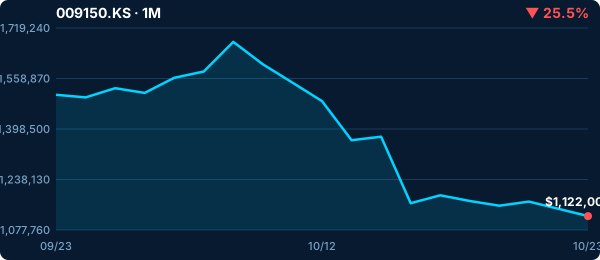
Customers prepaying $2.8B for factory lines is demand, not financial engineering.
Why It Matters
Customers funding supplier capacity is the strongest demand signal a market can produce — stronger than orders, which can be cancelled, and stronger than forecasts, which are free. A prepayment is cash out the door today for capacity that arrives years from now. Companies do that only when they are certain they will need the product and frightened someone else will take their slot. Both Tesla and Nvidia just paid rent on factories they will never own, purely to make sure the substrates exist.
For $NVDA holders, this is demand visibility money can't fake: Nvidia's own cash is now physically embedded in its future supply. It also quietly rebuts the week's dominant narrative — that AI spending is a hall of mirrors. Mirrors don't pour concrete in Sejong.
Analyst's Take
The market read Thursday's news through its new favorite lens: circular financing, the worry that AI companies are passing the same dollars around to manufacture the appearance of demand. Draw the bright line, because this story sits on the other side of it. Vendor financing — a supplier lending customers money so they can “buy” the supplier's product — is a red flag. Customers prepaying a vendor — buyers wiring their own cash to guarantee supply — is the greenest flag there is. This is the latter, and conflating the two is how a funding scare turns into sloppy analysis.
What to watch: whether more bottleneck layers get the same treatment. Substrates were this week's answer; advanced packaging, testing and power equipment are the other known choke points. Every customer prepayment that lands is another piece of hard evidence that the buildout's problem is supply and financing structure — not end demand. That's a bullish fact pattern wearing a bearish week's clothing.
By The Numbers
FAQ
What is FC-BGA?
Flip-chip ball grid array — the high-end substrate (the layered board a chip die sits on) that connects an AI processor to the rest of the system through thousands of tiny solder balls. AI accelerators need big, complex versions, and making them is a capacity bottleneck.
What is Samsung Electro-Mechanics?
A Samsung group company (separate from Samsung Electronics) that makes advanced components, including the FC-BGA substrates AI chips are built on. Its Sejong plant is where the new Tesla- and Nvidia-funded lines will be built.
Why are substrates a bottleneck?
They're slow and hard to manufacture, few suppliers can make the largest AI-grade versions, and every finished AI chip needs exactly one. When GPU and memory supply expanded, substrate capacity became one of the tightest links in the chain.
What is circular financing?
The worry that AI companies inflate demand by lending each other money to spend — a supplier funding a customer who then “buys” the supplier's own product. This deal is the reverse: customers spending their own cash to secure a supplier's capacity, which is genuine demand.
Source: Maeil Business via Reuters (Euronext)