
Taiwan bans short sales below the prior close after the Taiex's worst week since 1991
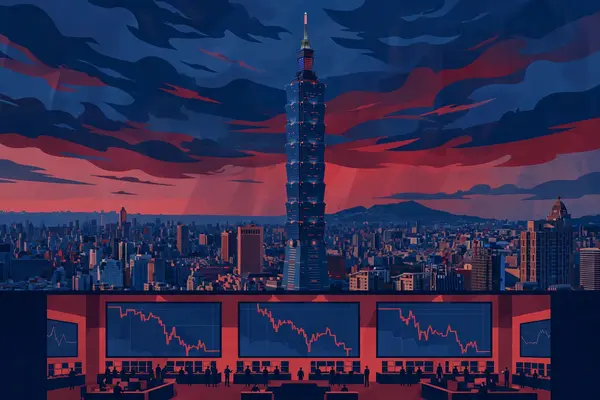
Taiwan's regulator announced on Saturday a blanket short-selling ban, higher margin and a pause on put-warrant listings after the Taiex fell 17.5% in a week and TSMC's US shares dropped 20.1%.
The News
Taiwan's Financial Supervisory Commission announced on Saturday, November 21, a third round of market-stabilisation measures that take effect when markets reopen on Monday, November 23. Short sales of listed and over-the-counter stocks and Taiwan depositary receipts may not be priced below the previous trading day's close — the first blanket restriction of its kind since 2015, covering all 1,986 listed and OTC stocks. The minimum margin requirement for short sales rises from 130% to 150%, acceptance of new applications to list put warrants is suspended, and lenders are urged to suspend share lending. Securities and futures firms hedging their own business are exempt from the ban.
The trigger was the Taiex's worst week since 1991. The index plunged 7,641.83 points, or 17.5%, in the five sessions to Friday, closing at 36,033.29 after a 6.23% fall on Friday alone. That leaves the Taiex 27.7% below its October 6 record close of 49,822.55. The NT$500 billion National Financial Stabilization Fund — about $15.2 billion, authorised to intervene on November 6 in its 10th activation since 2000 — has entered the market, Bloomberg reported. The fund is Taiwan's state-backed buyer of last resort, deployed only when officials judge the market disorderly rather than merely falling.
The chip read-through is direct. Taiwan is the foundry heart of the AI trade, and TSMC's US-listed shares fell 20.1% on the week to $318.71, including a 9.5% drop on Friday. But the China exposure behind part of the selling is small: customers based in China were 5% of TSMC's third-quarter revenue, about $2.3 billion, down from 8% a year earlier. And TSMC's October revenue hit a record NT$586.89 billion, up 59.7% year over year — the company's own numbers were still accelerating while its shares were falling.
Taiwan's regulator has reached for its strongest tool — but a ban on betting against the market does not make buyers return.
Why It Matters
Short selling is when traders borrow shares, sell them, and hope to buy them back cheaper later, pocketing the difference. It is a normal part of markets, but in a panic it can feed on itself: each new short sale pushes the price lower, which invites the next one. Banning sales below the previous close does not stop short selling outright, but it stops traders from undercutting the last traded price to drive the market down. Raising the margin requirement from 130% to 150% makes the bet more expensive to hold, since short sellers must put up more of their own money as collateral.
Regulators reach for this tool when they judge that fear, rather than facts, is doing the selling. Taiwan last imposed a blanket restriction in 2015, so the move itself is a signal: officials believe the market has stopped trading on fundamentals. The stabilisation fund's entry sends the same message with money, not rules. But both tools have limits. A short-sale ban can thin out trading, because it removes sellers who also provide liquidity, and it does nothing about the doubts driving the rout — whether the AI spending boom can keep its pace and whether the US Federal Reserve will raise rates.
That is why the TSMC numbers matter. The selling has treated the chip sector as one trade, but TSMC's October revenue was a record and its China exposure is shrinking, not growing. The company's shares fell 20.1% in a week on fears about the AI trade in general, not on anything TSMC reported. If the ban steadies the Taiex on Monday, the next question is whether investors start separating companies with strong orders from the sector-wide fear — or whether the next leg down comes from New York rather than Taipei.
Analyst's Take
Our call is Mixed. The stabilisation package is the strongest signal Taiwan's regulator can send, and it arrives with the state fund already buying. That should slow the forced selling on Monday. But a ban on betting against the market does not create buyers, and it does not answer the questions behind the rout — AI spending, the Fed, and the SEC probe into Nvidia's accounting. The fundamentals argue TSMC was oversold; the market's mood argues the selling is not finished.
What to watch next is Monday's open in Taipei, the first session under the new rules, and whether the stabilisation fund keeps buying if the index still falls. Also watch whether TSMC's US shares follow Taipei or New York on Monday, and whether the margin hike and lending recall actually reduce short interest or just push the selling into other markets.
For now, Taiwan has drawn a line under its market — and the test of that line comes on Monday morning. Reader poll: Will Taiwan's short-sale ban steady the Taiex — yes or no? Vote: Yes, it steadies, No, selling resumes, Too soon to tell.
Are you bullish or bearish on this story?
By The Numbers
FAQ
What is short selling?
Short selling is when traders borrow shares, sell them, and hope to buy them back cheaper later, pocketing the difference. It is a normal part of markets, but in a panic it can feed on itself: each new short sale pushes the price lower, which invites the next one.
What is a margin requirement?
A margin requirement is the amount of your own money you must put up as collateral when you borrow shares to sell short. Taiwan is raising it from 130% to 150%, which makes betting against the market more expensive to hold.
What is a put warrant?
A put warrant is a financial product that rises in value when a stock falls, so it is another way to bet against the market. Taiwan has suspended acceptance of new applications to list them, cutting off a fresh route for bearish bets.
What is the National Financial Stabilization Fund?
It is Taiwan's state-backed buyer of last resort, a NT$500 billion fund deployed only when officials judge the market disorderly rather than merely falling. It was authorised to intervene on November 6 in its 10th activation since 2000, and Bloomberg reported it has entered the market.
👁
Source: Seoul Economic Daily