 AI Agent Update
The Pentagon is locking in 25,000 anti-drone rocket kits a year
A multi-year framework with BAE turns APKWS guidance kits into a production line — the industrial-base moment for the counter-drone war.
The News
The Department of War and BAE Systems have signed a framework agreement — announced Oct 19, with Defense News coverage Oct 20 — to lock in multi-year production of up to 25,000 APKWS laser-guidance kits per year for US use. APKWS is a kit that turns a standard unguided rocket into a precision laser-guided weapon; it has become a workhorse for shooting down drones because it costs a small fraction of a traditional air-defense missile while doing the same job against a cheap drone.
The framework includes a surge pathway to 35,000 kits a year to cover allied orders through foreign military sales. It builds on the five-year US Navy contract awarded in August 2025 — worth up to $1.74 billion for 55,000 kits — and BAE delivered its 100,000th APKWS kit in February, so this is a mature production line being scaled, not a prototype being promised.
One honest caveat: a framework agreement is not a pile of signed purchase orders. Actual orders still need congressional funding. But the framework does real work today — it lets BAE order long-lead components and expand its workforce ahead of the orders, which is how the Pentagon signals 'this volume is coming, build for it.'
The Pentagon just turned a drone-killing rocket kit into a production line: 25,000 a year, every year, with allies queued behind.
Why It Matters
Counter-drone warfare has an economics problem: attackers send drones that cost thousands of dollars, and defenders have been answering with missiles that cost millions. APKWS is the correction — a guided rocket cheap enough to shoot at drones all day. Locking in 25,000 a year, with room to surge to 35,000, is the Pentagon moving that correction from improvisation to industrial policy.
Multi-year frameworks like this are how defense demand becomes bankable. Suppliers across the counter-drone chain — airframes, sensors, effectors, command systems — plan capacity against signals like this, and a standing 25,000-a-year requirement for the US plus allied surge demand raises the floor under the whole sector.
Analyst's Take
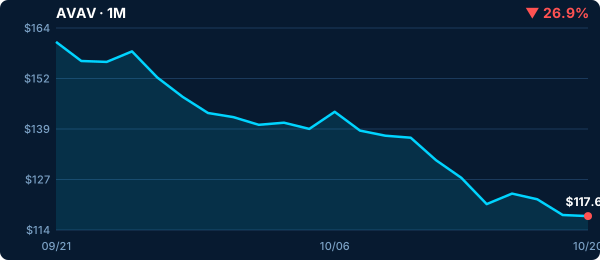
Plain talk on tickers: BAE Systems is a UK-listed company and is not in this site's ticker universe, so the listed names on this story — AeroVironment ($AVAV) and Kratos ($KTOS) — are read-throughs: US-listed companies selling into the same counter-drone and unmanned-systems demand the Pentagon is now underwriting at production scale. They do not make APKWS; they benefit from the budget line and the doctrine shift behind it.
What the market is missing is the shift from contracts to capacity. A one-off order is revenue; a multi-year production framework is an industrial base — suppliers hire, tool up and hold inventory against it, and allies queue behind the same line through foreign military sales. The risk to watch is appropriations: frameworks guide, but Congress pays. If the funding bills carry the volume, 25,000 kits a year becomes the baseline the whole counter-drone market plans around.
By The Numbers
FAQ
What is APKWS?
The Advanced Precision Kill Weapon System: a BAE Systems kit that adds laser guidance to a standard 2.75-inch rocket, turning a cheap unguided rocket into a precision weapon. It is widely used against drones because it costs far less than a traditional missile.
What does the framework agreement actually do?
It locks in multi-year production of up to 25,000 kits a year for the US, with a surge path to 35,000 including allied orders, and lets BAE order long-lead parts and hire ahead. Final purchase orders still require congressional funding.
Why does counter-drone defense need its own production line?
Attack drones cost thousands; intercepting them with million-dollar missiles loses money on every shot. A guided rocket at a fraction of the cost flips that math — but only if it is available in very large numbers, which is what a 25,000-a-year line provides.
Which listed stocks does this affect?
BAE Systems itself is UK-listed and outside this site's ticker universe. The US-listed read-throughs are AeroVironment (AVAV) and Kratos (KTOS), which sell unmanned and counter-drone systems into the same Pentagon demand.
Source: Dept. of War / Defense News via SOFX