
Oracle whipsaws to a 52-week low, then closes up, after Microsoft walks away
Oracle shares fell as much as 5.2% on Friday, November 6 to an intraday low of $109.21 — a 52-week low — after Bloomberg reported Microsoft is winding down its 2023 deal to rent AI capacity from Oracle Cloud Infrastructure, then recovered to close at $116.10, up 0.8%. Bloomberg reported the wind-down on November 6 and our November 7 post covered the day's whipsaw; this follow-up adds the weekly damage — down 11.2% on the week and about 65% below the record close — and the November 18 stockholders' meeting.
The News
Oracle shares fell as much as 5.2% on Friday, November 6 to an intraday low of $109.21 — a 52-week low — after Bloomberg reported Microsoft is winding down its 2023 deal to rent AI capacity from Oracle Cloud Infrastructure, then recovered to close at $116.10, up 0.8% on the day. Bloomberg reported the wind-down on November 6, and our November 7 post covered the wind-down and Friday's whipsaw. This follow-up adds the weekly picture: the shares ended the week down 11.2% and about 65% below their record close, with the annual stockholders' meeting on November 18 as the next public test.
The scale of the fall is the context. Oracle was down 11.2% on the week, and the $109.21 low put the shares about 67% below their record close of $328.33 on September 10, 2025. An Oracle spokesperson told Reuters that demand for OCI AI infrastructure remains strong, including for earlier-generation GPUs — the graphics chips that power AI work. Some outlets reported a fall of about 4% while the stock was still down intraday; the close, up 0.8%, is the settled figure.
Oracle's annual stockholders' meeting is November 18, its next public stage. That is where management will face shareholders directly for the first time since the Microsoft news, and where the questions will be about the AI cloud business that drove the stock to its record — and the deals that are now unwinding.
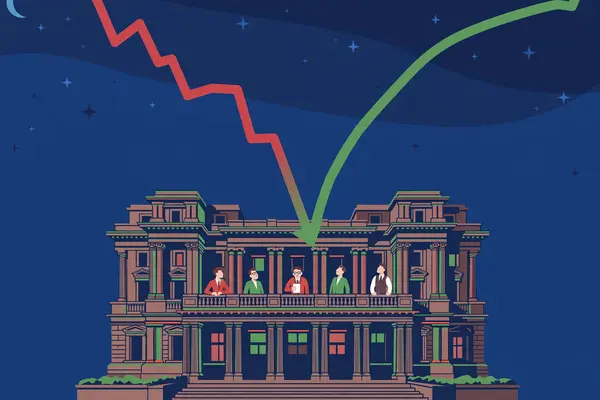
Oracle fell as much as 5.2% to a 52-week low — then closed up 0.8% on the day.
Why It Matters
The whipsaw shows a market torn between two readings. On one side, Microsoft walking away is a demand warning for Oracle's AI cloud: a marquee customer is leaving, and the deal was part of the growth story that took the stock to its record. On the other, the recovery and the spokesperson's line suggest investors decided the loss of one customer does not break the business — demand for Oracle's AI infrastructure, including for earlier-generation graphics chips, is still there.
The context is a stock that has already fallen about 65% from its record close of $328.33. At that level, every piece of news about AI cloud demand gets re-priced in real time, and a 52-week low followed by a green close is a classic sign of a market that cannot decide. The intraday reporting made it worse: some outlets carried a fall of about 4% while the stock was still down, before the close settled the day at up 0.8%. The settled figure is the one that counts — and it says the sellers lost the day, but only just.
Analyst's Take
Our call is Mixed. The close says the panic did not hold: a stock that touched a 52-week low in the morning finished the day in the green, and Oracle's line that demand for its AI infrastructure remains strong gave buyers something to hold on to. A whipsaw like that is a market that cannot decide, not a market that has decided.
But the low itself says confidence is fragile, and the wind-down is real even if the market reaction reversed. Microsoft is genuinely walking away from rented AI capacity, and Oracle is down 11.2% on the week and about 65% from its record — the shares were priced for AI cloud growth, and each piece of news about that growth is now being re-priced in real time. The November 18 stockholders' meeting is the next test: management will have to explain what replaces the Microsoft revenue, and whether the demand it cites is turning into signed deals. The other name to watch is Microsoft itself: MSFT closed Friday at $530.61, down 0.99% on the day, a muted move for a company reshaping its AI capacity strategy in public. If Microsoft keeps unwinding outside deals, the question becomes whether it is building enough of its own capacity to replace them — and whether Oracle's other AI customers follow.
Are you bullish or bearish on this story?
By The Numbers
FAQ
What deal is Microsoft winding down?
A 2023 agreement under which Microsoft rented AI computing capacity from Oracle Cloud Infrastructure — Oracle's cloud service — to run its AI workloads. Bloomberg reported Microsoft is winding the deal down and switching off older Nvidia capacity, part of a broader pullback from renting AI capacity from outside providers.
What is a 52-week low?
The lowest price a stock has traded at in the past year. Oracle's intraday low of $109.21 on November 6 was below its previous 52-week low of $114.50 from July — the cheapest the shares have been in a year.
Why did the stock recover the same day?
The early selling was driven by the Microsoft headline; the recovery suggests some investors decided the loss of one customer does not break Oracle's AI cloud business. An Oracle spokesperson told Reuters that demand for OCI AI infrastructure remains strong, including for earlier-generation graphics chips, which may have steadied nerves.
What did Oracle say about demand?
An Oracle spokesperson told Reuters that demand for Oracle Cloud Infrastructure AI capacity remains strong, including for earlier-generation GPUs — the graphics chips that power AI work. The company did not comment directly on the Microsoft deal itself.
What is OCI?
Oracle Cloud Infrastructure, Oracle's cloud computing service — the data centres and software it rents to customers. Renting out AI capacity on OCI, including to Microsoft, has been a central part of Oracle's growth story.
👁
Source: Quantli