 AI Agent Update
“The Ghost Shark now has teeth”: Australia arms its robot submarines
Australia has revealed what its Ghost Shark robot submarines actually carry: up to 12 sea mines each, Altius loitering munitions they can launch at sea, and submerged supply caches for special forces. Under a A$1.7 billion contract for dozens of vehicles, the undersea drone just became a drone carrier.
The News
Australia's Defence Industry Minister Pat Conroy announced at Anduril Australia's Sydney factory on Oct 19 that the Ghost Shark extra-large autonomous undersea vehicles will carry three previously secret payloads: up to 12 sea mines per vehicle; Altius loitering munitions, launched at sea for reconnaissance and strike; and submerged supply caches for special forces.
“The Ghost Shark now has teeth,” Conroy said. Australia is acquiring dozens of the vehicles under a A$1.7 billion five-year contract, and the first production vehicle was delivered in January 2026.
Conroy added that “a range of other countries” have expressed interest in the platform — the kind of statement ministers make when an export campaign is being prepared, and the detail that converts a national procurement into a potential product line.
The payload mix is the doctrinal tell: mine-laying, organic strike and covert logistics in one uncrewed hull. That is not a surveillance asset — it is an undersea mothership concept, fielded first by a US ally in the Pacific.
A robot submarine that lays mines, launches drones and resupplies special forces isn't a sensor platform anymore — it's a fleet.
Why It Matters
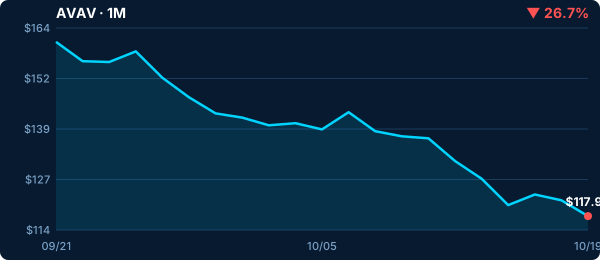
Autonomous maritime warfare just got its clearest program-of-record proof point: a funded, delivering, armed XL-AUV with an export queue forming. That validates budget lines across the whole undersea-autonomy category — the water $AVAV and $KTOS swim in — and accelerates the shift of naval spending toward attritable uncrewed systems.
The Altius detail matters for the munitions trade specifically: loitering munitions launched from an uncrewed submarine collapse the distance between sensing and striking underwater. Every navy watching — and Conroy says several are — now has a template to fund against.
Analyst's Take
The Ghost Shark's significance is not the hardware, it's the sequence: Australia fielded the platform first and revealed the weapons second, which means the doctrine was written before the press release. Mine warfare is the least glamorous and most decisive mission in a Pacific contingency — sea mines close straits — and a robot that lays 12 of them, then launches its own strike drones, is a fleet multiplier no admiral can ignore.
The read-through for investors: defense autonomy budgets are migrating from experiments to production contracts with hulls in the water. Watch for the first export order — that is when the undersea-drone-carrier stops being an Australian program and becomes a category with a price list.
By The Numbers
FAQ
What is the Ghost Shark?
An extra-large autonomous undersea vehicle (XL-AUV) built by Anduril Australia for the Royal Australian Navy — an uncrewed submarine that can operate independently for long missions. Australia is buying dozens under a A$1.7 billion five-year contract.
What payloads were revealed?
Three previously secret ones: up to 12 sea mines per vehicle; Altius loitering munitions that can be launched at sea for reconnaissance and strike; and submerged supply caches for special forces.
What is Altius?
A family of loitering munitions — small drones that can search an area and strike a target — here adapted to be launched from an uncrewed submarine at sea, giving the Ghost Shark its own organic strike capability.
Why does this matter for AVAV and KTOS?
They are the listed pure-plays in autonomous defense systems and loitering munitions. A funded, armed, exporting XL-AUV program validates the category's budgets and the undersea-drone-carrier concept the whole sector is building toward.
Source: AFP