
Cleverbridge breach: stored card numbers and CVVs copied — customers told 16 days after detection
E-commerce platform Cleverbridge said hackers copied stored payment card data from its platform, including card numbers, expiration dates and CVV security codes. It detected the activity on Nov. 4 and began notifying affected customers on Nov. 20.
📊 Scorecard: our Bearish call on $CRWD is scored from $229.44, the last close before it ran. Its first result comes after the next close.
The News
Cleverbridge, the e-commerce platform that acts as merchant of record — the company that actually takes the payment — for software and subscription vendors, has disclosed that hackers copied stored payment card data from its platform. It detected unauthorized activity on Nov. 4, 2026 and temporarily took the affected systems offline; all systems were back online the same day. Its investigation later found that "a third party copied payment card data stored on our platform." The company began notifying affected customers on Nov. 20 — 16 days after detection.
A breach notification shared with BleepingComputer says the stolen data includes card numbers, expiration dates and CVV/CVC security codes — the three- or four-digit code on the back of a card — and no names, contact details or billing addresses. That CVV detail comes from the notification letter seen by BleepingComputer, not from Cleverbridge's public incident page, which is more sparing. The combination matters: a card number plus its expiry date plus its CVV is enough to attempt purchases online, which is why the theft of CVVs, which merchants are generally not supposed to store after a transaction is authorised, is the sharpest part of this breach.
What Cleverbridge has not said is almost as important as what it has. It has not disclosed how many customers were affected, how the attackers got in, how long they were inside, or whether the card data was encrypted. It says the incident was not a ransomware attack and no systems were encrypted, and it is working with TransUnion's Cyberscout to offer complimentary credit monitoring and fraud assistance. One affected brand has confirmed it: Malwarebytes said Cleverbridge is one of its third-party payment processors and that only a small subset of its customers was affected. Cleverbridge lists Red Hat, SUSE, Tenable, Veeam, Jamf, Sony and Parallels among its customers but has not said whether their buyers were hit.
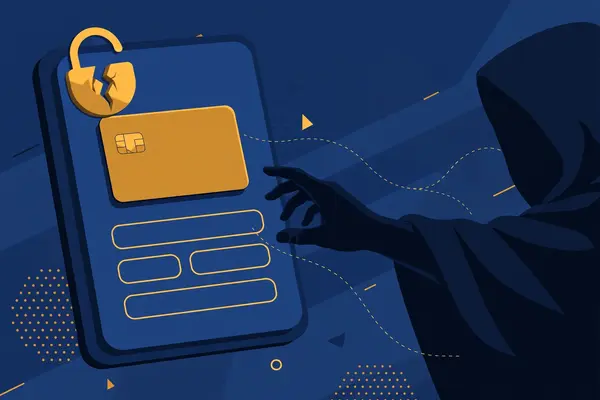
Card numbers and CVVs, copied from the platform in the middle — and customers told 16 days later.
Why It Matters
The 16-day gap between detection and notification is the first problem. Customers whose card data was copied on or before Nov. 4 only started learning about it on Nov. 20, which is a long window in which stolen card details can be tested and used. Notification delays are common while a company investigates, but 16 days is long enough for customers and regulators to ask what took so long — especially when the data at issue includes CVVs, which are supposed to be the hardest part of a card to steal.
The second problem is the missing information. No affected count, no entry method, no dwell time, no word on encryption. That leaves every Cleverbridge customer guessing whether they were hit, and leaves the market guessing how big the liability is. The customer list — Red Hat, SUSE, Tenable, Veeam, Jamf, Sony, Parallels — is a roll-call of software companies whose buyers pay through Cleverbridge, and the company has not said whether any of their buyers were affected. Until the count comes out, the incident's size is unknowable, and unknowable is what markets dislike most.
For the security sector, the read-through is familiar by now: the breach is at a payments intermediary, not at the brands whose customers were hit, and the vendors named here — CrowdStrike and Palo Alto Networks — are public read-throughs for the sector, not participants. They are not involved in this incident, and both are tagged mixed in our per-ticker view. The pattern across this week's stories is that attackers keep finding the shared plumbing — the platforms and processors that sit between companies and their customers — and the companies that sell the defences keep getting asked to prove they work.
Analyst's Take
Our call is Bearish. Stored card numbers plus CVVs, copied from a payments platform used by major software brands, with no affected count and a 16-day notification delay, is a bad combination. The one mitigating fact is that no names, contact details or billing addresses were in the stolen data, which limits how easily the card details can be matched to people — but card numbers with CVVs are usable on their own, and the delay gave the attackers time.
What to watch next is the affected count, which Cleverbridge has so far withheld, and whether any of the big named customers — Red Hat, SUSE, Tenable, Veeam, Jamf, Sony or Parallels — confirm their buyers were hit. Watch also for whether regulators ask why CVV data was stored in the first place, and for the entry method, which will show whether this was a known flaw or a novel one.
For investors, the direct exposure is to Cleverbridge itself, which is private, so the market read is through the sector: another week, another breach at shared infrastructure, another reminder that payment processors are high-value targets. The security vendors' stocks fell with the market on Friday — CrowdStrike $229.44, down 5.76%, Palo Alto Networks $343.32, down 5.09% — and this incident does not change either company's quarter on its own. Reader poll: Should companies have to notify breach victims within a week — yes or no? Vote: Yes, within days, A week is fair, 16 days is fine.
Are you bullish or bearish on this story?
By The Numbers
FAQ
What is a CVV?
A CVV (or CVC) is the three- or four-digit security code printed on a card — on the back for Visa and Mastercard, on the front for American Express. Online shops ask for it to prove the buyer physically holds the card. Merchants are generally not supposed to store CVVs after a payment is authorised, which is why their theft here is especially notable.
What is a merchant of record?
A merchant of record is the company that legally sells a product and takes the customer's payment, even if another company made the product. Cleverbridge acts as merchant of record for software vendors: when you buy a subscription from one of its clients, Cleverbridge is the company that actually processes your card. That is why a breach at Cleverbridge can expose the buyers of many different brands at once.
What is credit monitoring?
Credit monitoring is a service that watches your credit file and alerts you if someone tries to open an account or take out credit in your name. Cleverbridge is offering it free through TransUnion's Cyberscout, along with fraud assistance, to people whose card data was copied — a standard step after a breach, meant to catch misuse early.
Why are CrowdStrike and Palo Alto Networks in this story?
They are named only as public read-throughs for the cybersecurity sector — companies that sell the defences against this kind of intrusion. Neither company is involved in the Cleverbridge breach. Their share prices are a way to track how the market values the security sector, not a claim that they had anything to do with the incident.
👁
Source: CyberSecurityNews