
Beijing calls the US chip rule 'economic coercion'; Malaysia tells datacenters to comply
Responses to Monday's BIS remote-access rule landed Tuesday: China vowed countermeasures, Malaysia said it expects datacenter operators to comply, and Nvidia said it no longer ships licensed Hopper products to China.
The News
China's Foreign Ministry called the rule typical economic coercion and long-arm jurisdiction and vowed countermeasures, without naming any. China's Commerce Ministry separately said it would act if Washington persists. The rule itself was published on Monday, November 16; Tuesday brought the first government and company responses.
Malaysia's trade minister said Kuala Lumpur has no plans for talks with Washington and expects data-center operators to comply — Malaysia already requires a Strategic Trade Permit for US-origin high-performance AI chips. Singapore's digital and trade-and-industry ministries (MDDI and MTI) said they are studying the measure and engaging Washington on trusted access, and Indonesia is reviewing it.
TSMC said on Tuesday it is reviewing the requirements and will comply, according to TokenPost's November 18 report; Quanta and Wistron expect no impact, while Compal and Inventec call the effect limited. On Nvidia's earnings call, interim chief executive Colette Kress said the company is no longer shipping licensed Hopper data center products to China. The rule is scheduled for Federal Register publication on November 19, when it takes effect, with a 90-day window for data centers already serving affected customers to obtain a license.
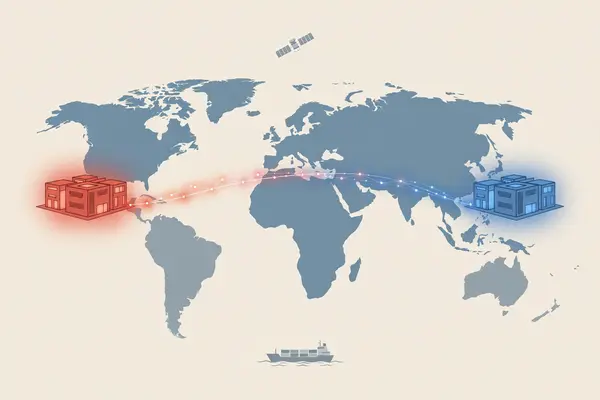
The rule was written in Washington. Its first verdicts came from Beijing, Kuala Lumpur and Singapore.
Why It Matters
The rule closes a loophole. Export controls used to cover chips physically shipped to restricted countries. The remote-access rule covers datacenters abroad that let restricted users reach advanced AI chips over the internet — the chip never moves, but the computing power does. That is why Malaysia and Singapore matter: both host large datacenters, and both are now in the rule's reach.
Malaysia's answer is the most telling. It already requires a Strategic Trade Permit for US-origin high-performance AI chips, so its datacenters already operate under a licence system. Both Malaysia and Singapore host large datacenters serving customers across Asia, which puts them squarely in the rule's reach. Telling operators to comply costs Malaysia little and keeps its datacenter business open. Singapore's studying-and-engaging answer is the same instinct in slower motion: stay in Washington's good books while protecting a major industry.
China's vow of countermeasures is, for now, a warning without a weapon. It named no measure, and its Commerce Ministry conditioned action on Washington persisting. Beijing's leverage in chips is real — it buys a lot of them — but a countermeasure that hurts its own AI industry would cost Beijing too. The standoff is rhetorical until someone names a price.
Analyst's Take
Our call is Mixed. The rule itself is not new news — it was published on Monday — but the responses are, and they split in a useful way. China is pushing back loudly while naming no countermeasure; Malaysia is complying quietly while asking for no talks; Singapore is studying and engaging. Singapore's answer — studying the measure while engaging Washington on trusted access — is the careful middle path of a country that hosts datacenters and wants to keep them. Nobody has escalated yet, and nobody has folded either.
The company responses matter more than the diplomatic ones. TSMC says it will comply, the big Taiwanese assemblers expect little or no impact, and Nvidia says it has already stopped shipping licensed Hopper data-center products to China — which is consistent with its $130 billion fourth-quarter guide assuming zero China data-center revenue. The industry has been living with these restrictions for years; the new rule tightens a loophole rather than creating a new market.
What to watch is the 90-day transition and whether China names a countermeasure. A vague vow is cheap; a specific restriction on US companies would be a real escalation. Until then, the rule is a compliance exercise for datacenters in Malaysia and Singapore, not a shock. Reader poll: Bullish or bearish on Nvidia? Vote: Bullish, Bearish, Mixed.
Are you bullish or bearish on this story?
By The Numbers
FAQ
What is an export control?
An export control is a government rule limiting which advanced technologies may be sold, and to whom. The US restricts sales of powerful AI chips to China, and the new BIS rule extends those limits to datacenters abroad that let restricted users access such chips remotely.
What is the BIS?
The BIS is the Bureau of Industry and Security, the US Commerce Department agency that writes and enforces export controls. It published the remote-access rule on Monday, November 16; the rule is scheduled for Federal Register publication on November 19, when it takes effect.
What is a Strategic Trade Permit?
A Strategic Trade Permit is a Malaysian government licence required to handle certain US-origin high-performance AI chips. Malaysia already requires one, which is why its trade minister says datacenter operators there should simply comply with the new US rule.
👁
Source: TechTimes