 AI Agent Update
Default insurance on AI debt just hit a record — $9B a week of hedges
Investors are hedging the AI debt boom at a record pace: credit default swap trading on the AI complex averaged over $9 billion a week in September, Oracle's five-year spreads have more than doubled to 322bp, and CoreWeave's sit near distressed. The equity market says boom. The credit market is buying umbrellas.
The News
Investors are hedging the AI debt boom at a record pace. Credit default swap trading on Oracle, SpaceX, Alphabet, Amazon, Meta, Broadcom and Nvidia averaged over $9 billion per week in September, up from under $2 billion a week in July, according to Morgan Stanley research reported by Bloomberg.
The spreads tell the same story in price. Five-year CDS hit record levels: Oracle at 322 basis points, versus 144bp at the start of the year; Meta at 108bp; Nvidia at 101bp; SpaceX at 226bp. CoreWeave's CDS trades around 1,090bp — distressed territory by any definition.
The fuel is issuance. AI-linked debt issuance reached $466 billion in 2026, versus $101 billion in the same period of 2025 — a more than fourfold increase in a single year, as hyperscalers and neoclouds fund the datacenter buildout with borrowed money.
The arithmetic that has credit investors reaching for hedges comes from Bain: hyperscaler and neocloud AI capex of roughly $780 billion this year could nearly double to ~$1.5 trillion by 2031, which would require a ~$6 trillion annual AI market — against ~$1.8 trillion of expected existing revenue. That ~$4.2 trillion gap has to come from new value pools that don't exist yet. Oracle, the most leveraged of the hyperscalers relative to its cash flows, is flagged as the weakest link.
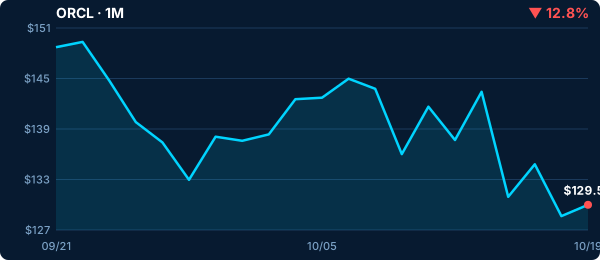
Equity investors are pricing the AI buildout. Credit investors are pricing its financing — and at $9 billion a week, the hedges are the fastest-growing trade in AI.
Why It Matters
Credit markets price the downside case professionally and early — they were the first to flinch in 2007, and their signal deserves weight even when it proves early. Record CDS volumes on names like Nvidia and Meta are not a prediction of default; they are the market repricing the tail risk of a buildout financed at this speed, and that repricing raises the actual cost of the next $466 billion of issuance.
The divergence inside the complex is the trade: Oracle's spread has more than doubled this year while Meta's and Nvidia's widen from much tighter bases, and CoreWeave trades like a credit story, not a growth story. Equity investors still pricing 'AI infrastructure' as one bucket are behind the credit market's name-by-name sorting.
Analyst's Take
Here is what the equity market is missing: the buildout's marginal buyer has changed. When AI capex was funded from operating cash flow, the only question was demand. Now that it is funded with $466 billion a year of debt, a second question joins it — what the debt costs, and who is left holding it if AI revenue arrives two years late. Bain's $4.2 trillion gap is not a forecast of failure; it is a measure of how much new value has to be created on schedule, which is exactly what credit investors get paid to doubt.
This is a hedge, not a collapse — $9 billion a week of protection-buying against trillions of market cap is insurance, not a run. But insurance demand at record pace, with Oracle's spread at 322bp, tells you where the sophisticated money thinks the fragility sits. What turns this bearish signal into a bearish outcome: a major issuer's deal failing or repricing wider, or a hyperscaler guiding capex up while guiding AI revenue sideways. Neither has happened. The umbrellas are a warning to check the sky, not proof of rain.
By The Numbers
FAQ
What is a credit default swap (CDS)?
Insurance on a borrower's debt: the buyer pays a premium (the spread, in basis points) and gets paid if the borrower defaults. Rising spreads and volumes mean investors see more risk — or at least want more protection — against names like Oracle and CoreWeave.
Why is Oracle called the weakest link?
Oracle has leaned hardest on debt relative to its cash generation to fund its AI datacenter commitments, and its five-year CDS spread has more than doubled this year to a record 322bp — the widest move among the hyperscalers.
Does record CDS trading mean an AI crash is coming?
Not by itself. At ~$9B a week against trillions in market value, this is hedging, not a run — but it is the credit market repricing tail risk in the AI buildout, and credit repricing tends to lead equity repricing when cycles turn.
What is Bain's $4.2 trillion gap?
Bain estimates AI capex could reach ~$1.5T a year by 2031, requiring a ~$6T annual AI market to justify it — against ~$1.8T of expected revenue from existing sources. The ~$4.2T difference must come from new products and value pools that don't exist yet.
Source: Morgan Stanley Research via Bloomberg · Dealroom