
US Treasury sanctions four Iranian 'oil trustees' as Bessent says Tehran's seaborne oil is exhausted
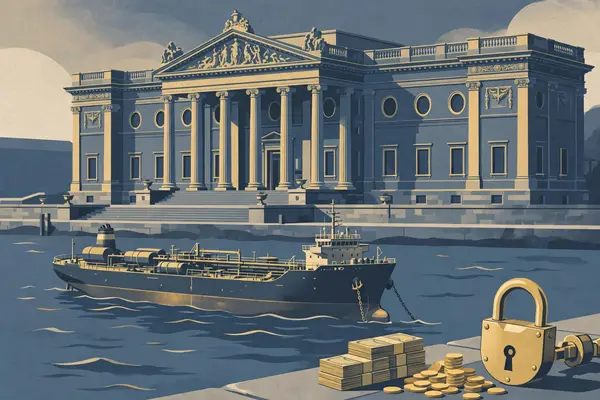
The US Treasury said Friday it sanctioned four Iranians it said acted as 'oil trustees', collecting money from illicit international oil sales for Tehran to evade sanctions and the US naval blockade. The action is part of Operation Economic Outcast, launched August 24.
The News
The US Treasury said on Friday it imposed sanctions on four Iranians it said acted as 'oil trustees', collecting money from illicit international oil sales for Tehran to evade sanctions and the US naval blockade. The four — Mohammad Javad Bavand, a former IRGC intelligence officer; Majid Taj; Mohammadhossein Servati, son of an IRGC brigadier general; and Mojtaba Arabnejad, son of the sanctioned Mahan Air chief executive — were added to OFAC's Specially Designated Nationals list, freezing any US assets and effectively barring dollar transactions.
Treasury said Bavand and Majid Taj were part of a network tasked with obtaining cash by selling from Iran's dwindling oil reserves and that in many cases the trustees kept oil revenues for personal gain, leaving Tehran trying to recoup billions of dollars. The action is part of Operation Economic Outcast, the campaign launched on August 24 to cut off the regime's illicit revenue.
Treasury said there is no Iranian oil on the water outside the US military blockade and none has been loaded onto vessels since the operation began — that is Treasury's characterisation, not an independently verified fact. Treasury Secretary Scott Bessent posted that 'the regime has exhausted its seaborne oil supply, and it may never see the revenue from the oil it has already sold.'
Sanction the ships, then sanction the men collecting the money.
Why It Matters
The sanctions matter because they target the money, not the oil. A blockade can stop tankers, but it cannot stop cash that has already changed hands, and Treasury's case is that these four men were the ones collecting it. Freezing their US assets and barring them from dollar transactions cuts them off from the banking system that almost all international oil deals run through — dollars pass through American banks, and banks that handle dollars must follow US sanctions or risk being cut off themselves.
They matter because of what Treasury says they reveal. If the trustees kept oil revenues for personal gain, as Treasury alleges, then Tehran is being squeezed twice: by the blockade stopping new sales, and by its own collectors keeping the money from sales already made. That is Treasury's account, and it has not been independently verified — but it is the reason the administration is presenting the sanctions as more than a symbolic listing.
For the oil market, the sanctions are a reinforcing move rather than a new one. They sit inside Operation Economic Outcast, the campaign launched on August 24 to cut off the regime's illicit revenue, and they land in the same week as the convoy gathering at Kharg Island and CENTCOM's widening of the blockade. Taken together, the message is that the US is tightening both the physical and the financial routes for Iranian oil — which supports oil prices at the margin, with Brent at $92.57 and WTI at $83.98, without changing the supply picture on its own.
Analyst's Take
Our call is Mixed. Going after the money collectors is the logical next step once the ships themselves are stopped: the blockade holds the oil at sea, and these sanctions aim at the cash from oil already sold. If the trustees really kept revenues for personal gain, as Treasury says, Tehran is losing money to its own middlemen as well as to the blockade — but that claim comes from Treasury, and whether the money is actually recovered is unproven.
What to watch next is whether any of the frozen assets or blocked payments are actually clawed back, and whether the convoy gathering at Kharg Island sails anyway. The trustee sanctions and the convoy are two halves of the same test: the blockade stops the oil, the sanctions stop the money, and Tehran is trying to break both at once. Kpler's estimate of about 43 million barrels stranded and $3 billion to $6 billion a month at risk is the scale of what is being fought over.
For investors, the direct effect on Exxon Mobil and Chevron is small and indirect. Tighter enforcement on Iranian oil supports the price of every barrel the majors sell, and both stocks rose on Friday — Exxon to $159.99, up 0.67%, and Chevron to $208.37, up 0.91% — but sanctions on four individuals do not move the oil market by themselves. The market will move on whether the blockade holds and whether the convoy sails, not on this designation. Reader poll: Does the trustee crackdown cut Iran's oil money — yes or no? Vote: Yes, it works, No, they adapt, Too early to say.
Are you bullish or bearish on this story?
By The Numbers
FAQ
What is OFAC and the SDN list?
OFAC is the US Treasury's Office of Foreign Assets Control, the office that runs American sanctions. Its Specially Designated Nationals, or SDN, list names people and companies whose US assets are frozen and with whom Americans are barred from doing business.
What is an 'oil trustee'?
In Treasury's words, an 'oil trustee' is a person who collects money from illicit international oil sales on Tehran's behalf. The four men named are accused of raising cash from Iran's oil reserves and moving it back to the regime while evading sanctions and the naval blockade.
What does barring dollar transactions mean?
Most international oil deals are paid for in US dollars, which pass through American banks. Being barred from dollar transactions means the sanctioned men effectively cannot use the global banking system to move oil money, because banks that handle dollars must follow US sanctions or risk being cut off themselves.
What is Operation Economic Outcast?
Operation Economic Outcast is the US campaign launched on August 24 to cut off the Iranian regime's illicit revenue, including oil sales made around sanctions and the naval blockade. The trustee sanctions are the latest action under that campaign.
👁
Source: US Treasury