
TARSBOT and Aptiv deepen embodied-AI deal: 100 industrial humanoids at Aptiv factories by year-end
Aptiv expects 100 TARSBOT humanoid robots working in its factories by the end of 2026, with a 1,000-unit fleet as the next goal.
📊 Scorecard: our Bullish call on $APTV is scored from $38.75, the last close before it ran. Its first result comes after the next close.
The News
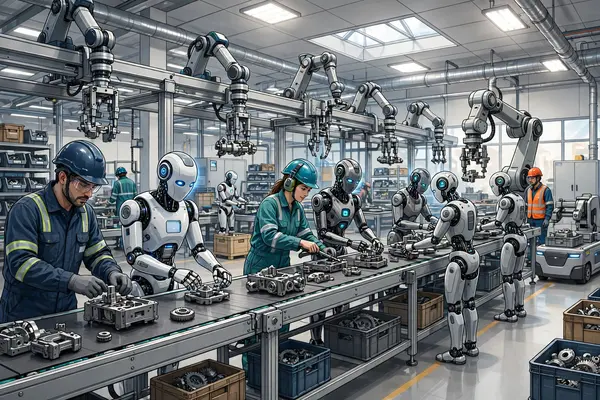
TARSBOT and Aptiv have deepened their partnership on robots that work in factories, signing a new agreement at the 9th China International Import Expo, known as CIIE. Aptiv expects to complete the deployment of 100 TARSBOT A-Series industrial humanoid robots by the end of 2026. A humanoid robot is a machine built roughly in the shape of a person, with arms, legs and hands, so it can work in spaces designed for people. The robots will cover 8 manufacturing process categories and 33 application scenarios, and the first batch is already working on a real Aptiv smart-factory production line.
The deal is about more than the first 100 robots. The two companies are targeting mass production in 2026 and a fleet of 1,000 industrial robots, which would make this one of the largest humanoid deployments in manufacturing. Aptiv's high-performance computing platforms, the powerful computer brains that run a car's driver-assistance and software systems, will also go into TARSBOT's robots. That gives the robots the onboard computing they need to see, decide and move on a factory floor.
The agreement was signed at CIIE, China's big annual import trade fair, where companies show off new products and sign deals. Aptiv shares closed on Friday, November 13 at $38.75, down 0.15 percent, a small move that suggests investors are treating this as an early-stage bet rather than an immediate moneymaker. For now, the news is the deployment itself: robots that were prototypes not long ago are now on a production line doing real work.
A robot that works a real factory line is worth more than a thousand demonstration videos.
Why It Matters
This matters because factories are where humanoid robots either earn their keep or do not. A robot that can pick up parts, move materials and work alongside people could help factories that struggle to hire enough workers, and it can keep running through nights and weekends. Aptiv is a serious test customer: it makes complex car parts at scale, so if the robots work there, other manufacturers will pay attention.
The idea behind embodied AI is simple to say and hard to build. Embodied AI means artificial intelligence that lives in a physical body instead of on a screen, so it can touch and move things in the real world. A chatbot answers questions; a humanoid robot has to balance, grip, avoid people and keep working when something unexpected happens. That is why the first batch running on a real production line matters more than any demonstration video.
The 1,000-unit target is the number to keep in mind. One hundred robots is a pilot, a careful test to learn what breaks and what works. One thousand robots is a fleet, and a fleet means the economics have started to make sense. Aptiv putting its own computing platforms into the robots also ties the two companies closer together, which is a sign both sides expect this to last.
Analyst's Take
Our call is Bullish. Getting 100 humanoid robots onto a real factory floor by the end of 2026, with a 1,000-unit fleet as the stated goal, is the kind of concrete progress this industry needs. The Aptiv partnership gives TARSBOT a demanding customer and gives Aptiv a head start on factory automation.
This is still an early bet, and the impact rating reflects that. We would want to see the 100-robot deployment actually finish on schedule, and then watch for signs of the 1,000-unit fleet moving from target to order book. The flat share price on Friday shows the market agrees: interesting, but not yet proven at scale.
For readers, the picture to hold is a robot with hands doing a job a person used to do, on a line that never stops. If that works reliably, factories everywhere will want one. If it does not, this stays a pilot. The next update comes when the deployment completes at year-end. Reader poll: Will humanoid robots be common in factories by 2027? Vote: Yes, soon, In some factories, Not yet.
Are you bullish or bearish on this story?
By The Numbers
FAQ
What is embodied AI?
Embodied AI is artificial intelligence that lives in a physical body, like a robot, instead of on a screen. It has to see, balance, grip things and move safely around people, which is much harder than answering questions in a chat window.
What will the robots actually do in Aptiv's factories?
They will work across 8 manufacturing process categories and 33 application scenarios, such as moving parts and materials on a smart-factory production line. The first batch is already operating on a real Aptiv production line.
Why is Aptiv putting its own computing platforms in the robots?
Aptiv's high-performance computing platforms are the powerful computer brains used in its car systems. Putting them in TARSBOT's robots gives the machines the onboard computing they need to see, decide and move on the factory floor.
👁
Source: AAP News