
SK hynix pushes HBM4 capacity as the AI memory race speeds up
SK hynix is seeking HBM4 packaging and testing equipment for delivery by early 2027 and plans to buy its first hybrid bonding tools from Besi, as it negotiates at least 20,000 wafers a month of extra HBM4 capacity.
📊 Scorecard: our Bullish call on $000660.KS is scored from ₩1,113,000, the last close before it ran. Its first result comes after the next close.
The News
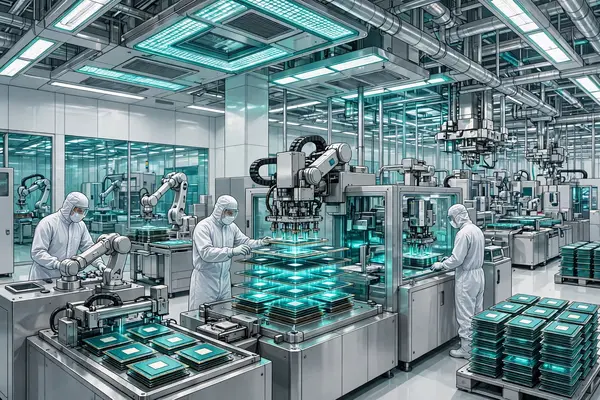
SK hynix is seeking deliveries of additional HBM4 packaging and testing equipment by early 2027 as it prepares to expand production capacity for AI memory, Digitimes reported on November 19. HBM4 is the next generation of high-bandwidth memory — the fast memory stacked in layers and bonded directly to AI processors — and the equipment in question is the machinery that packages and tests those stacks before they ship.
A follow-up Digitimes report on November 20 (https://www.digitimes.com/news/a20261120VL212/sk-hynix-hbm-equipment-dutch-production.html) says SK hynix plans to buy its initial batch of hybrid bonding equipment — the tools that fuse memory layers together — for next-generation HBM from Dutch maker BE Semiconductor Industries, known as Besi, potentially giving it an edge over its South Korean rivals. The build-out matches an earlier Electronic Times report, from November 16, that SK hynix is negotiating a fresh equipment round worth at least 20,000 wafers a month of additional HBM4 capacity, mostly back-end bonding, dicing and inspection tools, for installation in the first half of 2027 at its Cheongju P&T6 plant.
The demand behind the spending is judged strong enough to carry HBM orders even if Nvidia's AI business takes a hit, with demand from AMD and Broadcom cited as the backstop — that framing is the reporting outlet's read of the Electronic Times report, not SK hynix's own words. The capacity race is the physical side of the HBM4 price story published earlier this week: HBM4 is expected to cost $3 to $5.50 per gigabit next year, up to 2.7 times this year's price, with HBM taking about 30% of all DRAM wafer input.
SK hynix is spending real money, on a published timetable, to add at least 20,000 wafers a month of HBM4 capacity — that is a company acting on demand it can already see.
Why It Matters
The build-out matters because HBM is the bottleneck in AI computing. Every advanced AI processor needs stacks of it, and there is not enough to go around — Micron has said its 2027 capacity is sold out, and prices are rising sharply. The company that adds capacity fastest, without breaking the quality of its bonding, wins the biggest share of a market where customers are paying up.
The Besi detail matters because hybrid bonding is the hard part. Stacking memory layers is one thing; fusing them so they work reliably at high speed is another, and the tools to do it are made by only a handful of companies. Buying the first batch from Besi is SK hynix betting that the bonding step, not the wafer step, is where the next advantage will be won.
For Samsung and Micron, the read-through is mixed. Samsung is SK hynix's direct rival in HBM and is chasing the same customers; Micron is the third HBM supplier and faces the same capacity race. All three benefit from the same rising prices, but only one can be first to the next capacity milestone — and today that one looks like SK hynix.
Analyst's Take
Our call is Bullish. SK hynix is spending real money, on a published timetable, to add at least 20,000 wafers a month of HBM4 capacity — that is a company acting on demand it can already see, not hoping for demand that might come. With HBM4 prices set to rise as much as 2.7 times next year, each new wafer of capacity is worth far more than it was this year.
The risks are execution and timing. Equipment ordered now arrives in early 2027 and is installed in the first half of the year; anything that slips — a tool delivery, a yield problem at the new bonding step — pushes revenue into the second half. And if the wider AI market keeps falling, even sold-out capacity can be repriced by a nervous market, as Friday's Seoul rout showed, with SK hynix down 5.92% on the day.
What to watch next is the Besi order itself — confirmation that the first hybrid bonding batch is placed — and then the Cheongju installation in the first half of 2027. If both land on schedule, SK hynix will have turned a price boom into a capacity lead that its rivals have to chase. Reader poll: Who wins the HBM4 race — SK hynix, Samsung or Micron? Vote: SK hynix, Samsung, Micron.
Are you bullish or bearish on this story?
By The Numbers
FAQ
What is HBM?
HBM, or high-bandwidth memory, is a type of memory chip stacked in layers and bonded directly to an AI processor, so data moves between them extremely fast. It is the memory that AI data centres compete hardest for, and it is far more expensive per unit than ordinary memory.
What is hybrid bonding?
Hybrid bonding is a manufacturing technique that fuses layers of memory chips together directly, without the tiny solder bumps used in older methods. It makes the stack thinner, faster and more reliable, and it is one of the hardest steps in building next-generation HBM.
What is packaging and testing?
Packaging is the step where a finished chip is assembled into its final form — stacked, sealed and connected so it can be fitted to a processor. Testing checks that the packaged chip actually works. Both steps happen after the chip itself is printed on a wafer.
What is a wafer?
A wafer is a thin disc of silicon on which many chips are printed at once. Capacity is often measured in wafers per month — how many discs a factory can process. SK hynix is negotiating at least 20,000 wafers a month of additional HBM4 capacity.
👁
Source: Digitimes