
OpenAI outage: 213 minutes, 75% of requests failing after both auth-database replicas crashed
OpenAI's ChatGPT and API failed at rates peaking at 75% on Saturday, November 21, between 1:48 and 5:21 p.m. PT, after scheduled maintenance on a Postgres database crashed both of its read replicas — a routine job that took down authentication across the whole stack.
📊 Scorecard: our Bearish call on $MSFT is scored from $484.52, the last close before it ran. Its first result comes after the next close.
The News
On Saturday, November 21, between 1:48 and 5:21 p.m. Pacific time, requests to OpenAI's API and ChatGPT failed at rates peaking at 75%, on both paid and free ChatGPT. The incident lasted 211 minutes — about three and a half hours — according to a post-incident write-up OpenAI published on its status page the same day. All systems were back by Saturday evening, November 21, and reported operational again by the morning of Sunday, November 22.
The trigger, in OpenAI's own words, was scheduled maintenance on a Postgres database service used by its Primary API service — the system that handles authentication, the process of checking who a user is, across the entire OpenAI stack. The maintenance caused both of the database's read replicas to fail at the same time. A replica is a copy of a database that handles requests so the main database does not have to; when both copies failed, the authentication system behind every OpenAI product went down with them.
The outage was wide. On the API side it swept across Chat Completions, Fine-tuning, Embeddings, Images, Batch, Audio, Moderations, Realtime and the Files endpoint. In ChatGPT it hit Conversations, Login, Search, file uploads and Voice mode. OpenAI is a private company, so its stock does not trade; Microsoft, its largest partner and investor, is used here as a read-through, and MSFT closed Friday at $484.52, down 2.8% in the market-wide rout.
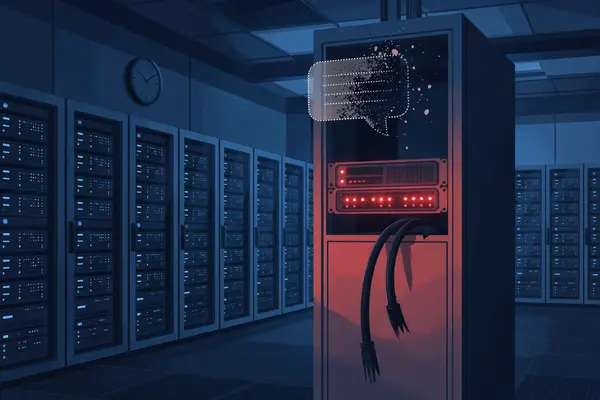
Routine maintenance crashed both database copies — and authentication for the whole stack went with them.
Why It Matters
This matters because the failure mode is the story. Nothing exotic broke: a routine database maintenance job crashed two copies of the same database, and because those copies were load-bearing for authentication — the single gate every OpenAI product passes through — the whole stack went down. A maintenance window that should have been invisible instead took ChatGPT and the API offline for most of a Saturday afternoon.
For agent builders, this is the week's clearest reminder that single-provider stacks are fragile. Agents built entirely on OpenAI's API had no fallback when the API failed at a 75% rate: their chat, their file handling, their voice features and their logins all depended on the same authentication system. A 211-minute outage is a long time for a product that many businesses now treat as infrastructure, and it lands in a week when OpenAI's rivals — Anthropic, Google and Microsoft's own models — are all competing to be the safer bet.
The incident also shows how much of the AI economy now runs through one company's front door. When OpenAI's authentication fails, it is not one app that breaks — it is ChatGPT for hundreds of millions of users and the API for thousands of businesses at once. That concentration is the risk, and it is why companies that build on AI are starting to ask what happens when the provider they chose is the one that goes down.
Analyst's Take
Our call is Bearish. A 213-minute outage with failure rates peaking at 75%, caused by routine maintenance, is a bad look for a company positioning itself as infrastructure — and it is a direct reminder to every business building on OpenAI that a single provider is a single point of failure. The cause was mundane, which is exactly the problem: if scheduled maintenance can do this, the system has too little slack.
What to watch next is whether OpenAI changes how it runs maintenance on its authentication database — separate replicas, staged rollouts, a fallback path — and whether customers start demanding multi-provider setups in response. Also watch Microsoft, the read-through here: OpenAI's reliability is now part of the Copilot story too, since Microsoft's products run on OpenAI models, and an outage like this one lands on Microsoft's customers as well.
For investors, the near-term effect is reputational rather than financial — OpenAI is private, and MSFT's 2.8% Friday fall was the market rout, not this outage. But reliability is a selling point in the model wars, and every hour of downtime is an hour rivals can point to. Reader poll: Would you build on a single AI provider — yes or no? Vote: Yes, one is fine, No, need a backup, Depends on the price.
Are you bullish or bearish on this story?
By The Numbers
FAQ
What is a read replica?
A read replica is a copy of a database that handles requests so the main database does not get overloaded. OpenAI's authentication system relied on two replicas; when both failed at once, the system behind every product stopped working.
What is Postgres?
Postgres, short for PostgreSQL, is a widely used open-source database system. OpenAI uses it to store the data behind its Primary API service, including the records its authentication system checks.
What does 'failure rate' mean here?
It means the share of requests that did not complete successfully. At the peak, 75% of requests to OpenAI's API and ChatGPT failed — three out of every four.
Why is Microsoft the read-through?
OpenAI is a private company, so it has no stock price. Microsoft is its largest partner and investor, so MSFT is used here as the closest listed stand-in — but its price moves for many reasons besides OpenAI.
👁
Source: AI Weekly