
The AI trade unwinds into a correction: S&P 500 and Dow join the Nasdaq in the red
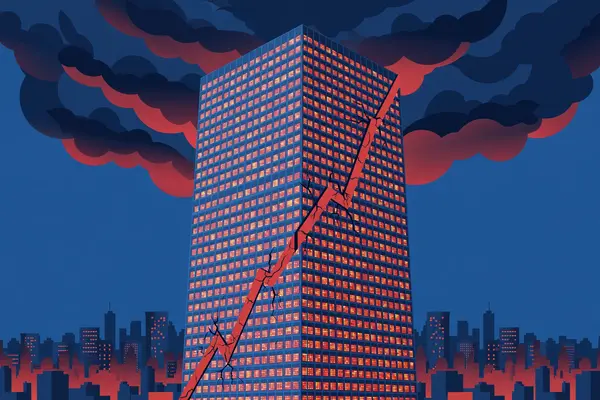
The S&P 500 fell 3.70% to 6,910.39 for a seventh straight loss, 11.6% below its October 6 record, as the Nasdaq fell 5.28% to erase all its 2026 gains and the Dow fell 1.93% — all three in correction territory at once, with the hyperscalers falling together on the SEC report, the Anthropic fade and the Fed.
📊 Scorecard: our Bearish call on $MSFT is scored from $484.52, the last close before it ran. Its first result comes after the next close.
The News
US stocks sold off violently on Friday. The S&P 500 fell 3.70% to 6,910.39 — its seventh consecutive lower close, its longest losing streak since February 2020 — and closed 11.6% below its October 6 record, confirming a correction. The Nasdaq Composite fell 5.28% to 22,617.73, erasing all of its 2026 gains and turning negative for the year at minus 2.69%. The Dow fell 1.93% to 48,147.33, also in correction. For the week, the Dow fell 8.02%, the S&P 500 fell 8.61% and the Nasdaq fell 10.02% — the worst week for the Dow and the S&P 500 since April 2025, and the worst week for the Nasdaq since March 2020.
The hyperscaler cohort fell together. Meta fell 5.93% to $560.84, Amazon fell 4.1% to $246.82, Microsoft fell 2.8% to $484.52 and Alphabet fell 2.7% to $265.29. Nvidia, covered in our lead story, fell 14.01% on the day. A correction is a fall of 10% or more from a recent peak, and all three major indexes now carry that label at once.
Three drivers stacked up during the session. The Reuters report that the SEC is probing Nvidia's accounting landed in the afternoon and deepened the selling. Anthropic faded on its second day of trading, giving back most of its debut pop. And the Fed turned hawkish: Governor Lisa Cook said on Friday the current policy rate is not high enough for inflation she views with "great concern", warning that waiting to raise rates "risks getting behind the curve", with markets broadly expecting a hike at the December 8–9 meeting. Intuit fell 12.8% after cutting its full-year revenue forecast and agreeing to sell Mailchimp for about $3.68 billion. The fear gauge spiked, and the selloff was global: Korea's KOSPI and Japan's Nikkei each fell about 5% on Friday.
All three indexes in correction at once, the year's gains erased, and the buyers in the AI economy falling with the sellers.
Why It Matters
This matters because the hyperscalers are the buyers in the AI economy. Microsoft, Amazon, Alphabet and Meta are the companies spending hundreds of billions on the datacenters and chips that power AI, and their stocks are the other side of the chip trade. When they fall 3% to 6% in a single session, alongside a 14% fall in Nvidia, it means the market is questioning the whole AI spending chain — not just the sellers, but the buyers too.
The correction label matters because it changes how the market behaves. A correction is a fall of 10% or more from a recent peak, and it is the point at which many investors stop treating a selloff as a dip and start treating it as a regime change. The S&P 500's seventh straight loss is its longest losing streak since February 2020, and the Nasdaq's worst week since March 2020 is the kind of statistic that gets remembered. The year's gains are gone: the Nasdaq is now down 2.69% for 2026.
The Fed driver is the one that could keep running. Governor Cook's warning that waiting to raise rates "risks getting behind the curve" is the language of a central bank that thinks it is already late. With markets broadly expecting a hike at the December 8–9 meeting, the hyperscalers face higher borrowing costs just as their AI spending is under the microscope — and Friday showed the market will not wait for the meeting to start pricing that in.
Analyst's Take
Our call is Bearish. Every major index in correction at once, the Nasdaq's 2026 gains erased, the hyperscalers falling together, and three drivers — the SEC probe, the Anthropic fade and the Fed — all pointing the same way. This is no longer a chip story; it is a market story.
What to watch next is the Fed's December 8–9 meeting, where the rate decision lands, and whether the hyperscalers' own spending plans change. If Microsoft, Amazon or Alphabet signal a slower datacenter buildout, the AI trade's demand story takes another hit. Also watch whether the selling spreads beyond AI names — Intuit's 12.8% fall after cutting its forecast shows software is not immune either.
For now, the AI trade has unwound into a correction, and the week's losses are the worst since April 2025. Reader poll: Is the AI trade a buying opportunity or still falling? Vote: Buying opportunity, Still falling, Too early to tell.
Are you bullish or bearish on this story?
By The Numbers
FAQ
What is a correction?
A correction is when a stock index falls 10% or more from a recent peak. The S&P 500 is 11.6% below its October 6 record, so it is in a correction. A bear market is a fall of 20% or more.
Who are the hyperscalers?
Hyperscalers are the giant cloud companies — Microsoft, Amazon, Alphabet and Meta — that run the world's largest datacenters. They are the biggest buyers of AI chips and the biggest spenders on AI infrastructure.
What is the fear gauge?
The fear gauge is the VIX, an index that measures how much volatility, or big price swings, investors expect in the S&P 500 over the next month. When it spikes, investors expect much bigger moves ahead. Sources disagreed on its exact level on Friday, so we only say it spiked.
What does getting behind the curve mean?
Getting behind the curve means the central bank raises rates too late to control inflation. Governor Cook warned that waiting to raise rates risks exactly that — inflation running ahead while the Fed catches up.
👁
Source: Reuters via TradingView