
Oil falls again Tuesday as Trump plays down new Iran strikes; Brent settles at $91.49
Brent futures fell $1.08, or 1.2%, to settle at $91.49 a barrel on Tuesday, and WTI fell 81 cents, or 0.9%, to $86.04 — both closing at their lowest since August 31 for a second straight day. Brent briefly dipped below $90 intraday, its first move under that level since August 31.
📊 Scorecard: our Bearish call on $XOM is scored from $164.47, the last close before it ran. Its first result comes after the next close.
The News
Brent futures fell $1.08, or 1.2%, to settle at $91.49 a barrel on Tuesday, November 10, and WTI fell 81 cents, or 0.9%, to $86.04. Both benchmarks closed at their lowest since August 31 — for a second straight day. Brent briefly dipped below $90 during the session, its first move under that level since August 31.
The slide extends Monday's 5.85% plunge to $92.57, and it has the same cause: de-escalation. President Trump said he will hold off new strikes on Iran, and Secretary of State Marco Rubio told G7 allies that sanctions and the naval blockade are working, so major combat operations are not needed. When traders stop fearing a supply disruption, they stop paying the war premium — the extra price built into oil for the risk that shipments get cut off — and the price falls.
Prices did pare their early losses of more than $3 after Iran's top security official, Mohsen Rezaei, said there are currently no negotiations with Washington. That was a reminder that the standoff is not over: the US is holding off strikes, but there is no deal, and the naval blockade and sanctions remain in place. Even so, the day ended lower, and the two-day slide has now taken Brent down from above $98 to $91.49.
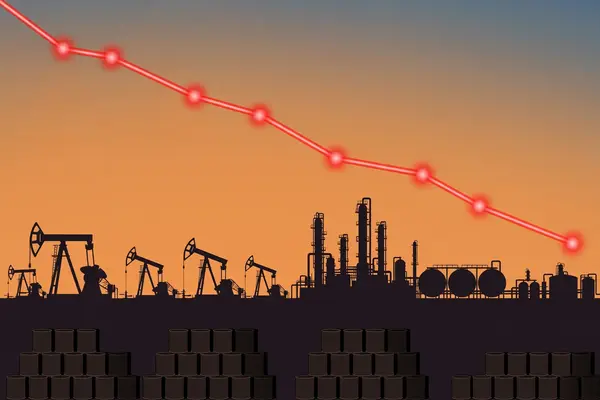
Oil's war premium is draining away — Brent is now at its lowest since August 31, and the market is betting the strikes are on hold.
Why It Matters
The two-day move is now the story, not the single day. Brent has fallen from above $98 to $91.49 in two sessions — a drop of more than 7% — and the trigger in both cases was the same: Washington signalling that it will not escalate militarily. On Monday it was the first hint; on Tuesday it was the President himself saying he will hold off, backed by the Secretary of State telling allies the sanctions and blockade are doing the job. Markets move on the direction of policy, and the direction is now unmistakable.
The intraday dip below $90 matters as a psychological marker. Traders watch round numbers, and $90 was the line Brent had held since August 31. It closed above it, at $91.49, but the fact that it broke through during the session shows how much selling pressure is in the market. A close below $90 would be the next signal to watch.
For the oil majors, the picture is more muted than the headline suggests. Exxon closed Tuesday at $164.47, down just 0.16%, and Chevron at $211.22, up 0.21%. The majors barely moved because Monday's plunge had already done the damage, and because their refining and trading arms cushion the hit from lower crude prices. The bearish call here is about the oil price itself, not a prediction that the majors will fall with it.
Analyst's Take
Our call is Bearish. Oil has now fallen two days running, Brent is at its lowest since August 31, and the driver is clear: the US is publicly stepping back from new strikes, and its top diplomat is telling allies the pressure campaign is working without combat. As long as that message holds, the war premium keeps draining out of the price — and the two-day slide has already taken more than $7 off Brent. Monday's 5.85% plunge to $92.57 set the tone, and Tuesday's follow-through confirms the move was not a one-day reaction.
What to watch: whether the naval blockade and sanctions stay in place without incident, and whether Iran's statement that there are no negotiations hardens into a new standoff. The market has priced in de-escalation; any sign of renewed confrontation would put the premium straight back in.
Are you bullish or bearish on this story?
By The Numbers
FAQ
What are Brent and WTI?
Brent and WTI (West Texas Intermediate) are the two main oil price benchmarks. Brent is the global standard, priced on oil from the North Sea, while WTI is the US standard. When traders say oil fell, they usually mean one or both of these futures contracts — agreements to buy or sell oil at a set price later.
Why did oil fall on Tuesday?
President Trump said he will hold off new strikes on Iran, and Secretary of State Rubio told G7 allies that sanctions and the naval blockade are working, so major combat operations are not needed. That took some of the war premium — the extra price traders pay for the risk of a supply disruption — out of the market.
What happened on Monday?
Oil plunged on Monday, with Brent falling 5.85% to $92.57, after the first signs that the US would not resume strikes on Iran. Tuesday's drop extends that move — it is a new day's trading, not a rehash of Monday's plunge.
Why did prices pare their early losses?
Brent had fallen more than $3 early in the session, then recovered some ground after Iran's top security official, Mohsen Rezaei, said there are currently no negotiations with Washington — a reminder that the standoff is not resolved, even if new strikes are on hold.
What does this mean for Exxon and Chevron?
Lower oil prices usually mean lower profits for oil producers, since they sell each barrel for less. But the majors also have refining and trading businesses that can cushion the hit. Exxon closed Tuesday at $164.47, down 0.16%, and Chevron at $211.22, up 0.21% — barely moved, because the market had already priced in Monday's plunge.
👁
Source: Euronext / Reuters