
La Poste confirms Maileva breach exposed 22 million people's names and addresses
A mid-September attack on La Poste's business-mail unit Maileva exposed the names and home addresses of about a third of France — one of the largest breaches the country has ever acknowledged.
📊 Scorecard: our Bearish call on $CRWD is scored from $226.61, the last close before it ran. Its first result comes after the next close.
The News
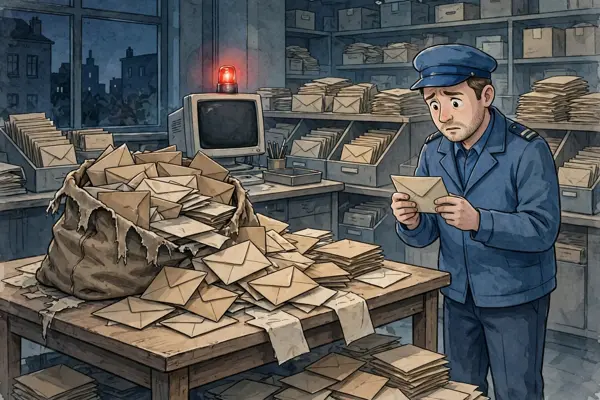
La Poste confirmed to the AFP news agency on Saturday, November 14, that hackers broke into its business-mail subsidiary Maileva in mid-September and stole the first names, surnames and postal addresses of 22 million people who received mail through the service. That is about a third of France's population, making it one of the largest data breaches ever acknowledged in the country. Maileva handles business mail — the letters companies and public bodies send to customers and citizens — so the stolen data covers ordinary people, not just business accounts.
The hackers got into a database that tracks mail deliveries, and it held about 39 million mail references — the records that follow a letter from sender to recipient. La Poste said bank details were not affected, which is the one clear piece of good news. But the breach was not limited to names and addresses: some of the exposed letters, such as reminders from hospitals, also carried invoice numbers and the amounts people owed, details that make a scam letter look far more convincing.
Maileva has told France's data-protection regulator, the CNIL, about the breach, filed a criminal complaint with the police, and a judicial investigation is now under way — the formal French process in which a judge oversees the inquiry into who did it and how. La Poste has not said who was behind the attack or exactly how the hackers got in. For the 22 million people affected, the practical question now is what happens to their data next.
A name and an address may sound small — at 22 million people, it is a national-scale problem.
Why It Matters
A name and a home address sound harmless on their own, and that is exactly why this breach matters. Scammers do not need your bank password to hurt you: with your real name, your real address and a real invoice number, they can send a letter, an email or a text that looks like it came from your hospital, your insurer or your local council. At 22 million people, the attack gives criminals a target list covering roughly one in three people in France, and the stolen data does not expire — an address stays useful for years.
The breach also shows how much damage can come from a system that was never meant to hold sensitive data. A mail-tracking database sounds boring, almost by design, yet it sat on top of the contents of real letters, including hospital reminders with amounts owed. Companies that handle mail, appointments and deliveries often hold more personal detail than they admit, and attackers know it. Every business that stores customer letters or notices now has a fresh reason to ask what is actually sitting in its databases.
For markets, the read-through is indirect, and it is worth saying plainly. La Poste and Maileva are state-owned, so there is no public stock to buy or sell on this news. The listed names in this story, CrowdStrike (CRWD) and Palo Alto Networks (PANW), are security companies whose software helps firms defend themselves — a breach like this is bad for the victim, not for the vendors, which is why we tag both as mixed rather than bearish. On Friday, November 13, CRWD closed at $226.61, down 1.42%, and PANW closed at $322.24, down 0.13% — small moves on a day when the wider market was also soft.
Analyst's Take
Our call is Bearish. A breach of this size does real damage: 22 million people now face years of targeted scams, La Poste faces a regulator's investigation and a criminal case, and every French business that trusted Maileva with its customer mail has to explain itself. The absence of bank details limits the immediate financial harm, but names, addresses and invoice details are exactly the raw material for the kind of fraud that shows up months later, when the headlines have moved on.
What matters next is what the investigation finds. If the CNIL concludes Maileva's protections were weak, fines and forced changes could follow, and other postal and mail-handling firms will face the same questions about their own systems. The bigger test for the security industry is whether breaches like this push more companies to spend on monitoring the unglamorous databases — mail tracking, appointment reminders, customer notices — where personal data quietly piles up.
For readers, the lesson is practical rather than financial: treat any unexpected letter, email or message that knows your address and mentions a bill with suspicion, and check it through the organisation's official channel before paying anything. The breach itself is done; the scams it enables are only starting. Reader poll: Bullish or bearish on $CRWD? Vote: Bullish, Bearish, Mixed, Watching.
Are you bullish or bearish on this story?
By The Numbers
FAQ
What is Maileva?
Maileva is the business-mail platform run by Docaposte, the digital arm of La Poste, France's state-owned postal group. It handles the letters that companies and public bodies send to customers and citizens.
Were bank details stolen?
No individual customers' bank details were affected, La Poste said. What was taken was names, surnames and postal addresses — plus, in some cases, invoice numbers and amounts due from the letters themselves. Corporate billing data was reported exposed separately, including some client companies' IBANs.
What should affected people do?
Be wary of any unexpected letter, email or message that uses your name and address and asks for money. Check it through the sender's official channel before paying anything, and report suspected scams to the authorities.
👁
Source: EuropeSays