
Huang agrees to testify publicly before the US Senate; House interview set for Dec 1
Former Nvidia CEO Jensen Huang has agreed to appear at a public Senate hearing, an aide to Senator Tim Scott said on Friday, November 20, as lawmakers probe allegations about his ties to a woman accused of being a Chinese spy.
The News
Former Nvidia CEO Jensen Huang has agreed to testify before the US Senate in a public hearing, an aide to Republican Senator Tim Scott said in a statement on Friday, November 20, as lawmakers probe allegations about Huang's ties to a woman US intelligence officials believe works for Chinese intelligence. No date was given for the hearing. Scott's original request asked Huang to appear on December 3, and Scott told CNBC he hopes to hear testimony from Huang and Commerce Secretary Howard Lutnick before Christmas.
Separately, Huang has agreed to a closed-door transcribed interview with three House committees — Foreign Affairs, Intelligence, and the Select Committee on the Chinese Communist Party — slated for Tuesday, December 1, with Nvidia general counsel Tim Teter to follow on Wednesday, December 2. Both agreed voluntarily, the committee chairs said in a November 17 statement, after the chairs had threatened subpoenas. The December 1 House date was set on November 17 but had not been published as an item in this publication before; the Senate public-hearing agreement is the new development.
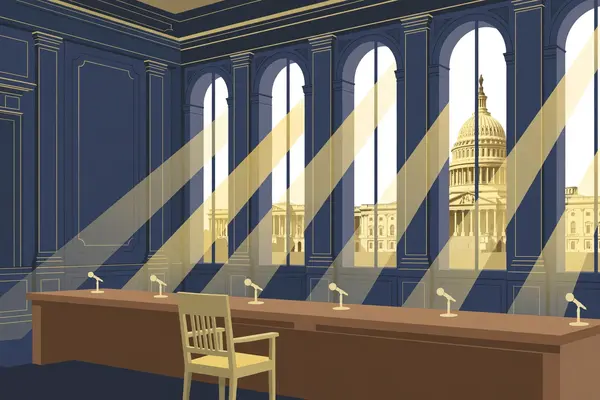
The public Senate hearing is the escalation. A closed-door House interview keeps testimony behind closed doors, while a public Senate appearance puts Huang's account — and the chip-diversion questions — on the record in the open. The note in this publication on November 18 that the closed-door House briefing was unverified after Huang's resignation is now resolved by the chairs' statement and the Reuters confirmation of the dates.
A closed door keeps testimony quiet; a public hearing puts it on the record.
Why It Matters
The probe is about who Huang is alleged to have been close to, and what that could mean for chips. Lawmakers are examining allegations about his ties to a woman US intelligence officials believe works for Chinese intelligence, and whether advanced Nvidia chips reached China in ways they should not have. None of that has been proven, and Huang has not been charged with anything. But the questions matter because the US restricts which chips can be sold to China, and Nvidia is the company whose chips everyone wants.
The sequence matters too. The House chairs threatened subpoenas, and Huang and Teter then agreed voluntarily — a pattern that usually means both sides would rather talk than fight over a legal order. A voluntary interview still puts Huang under oath, and a transcribed interview produces a written record even if the public never sees it. The Senate hearing goes further: public testimony, cameras, and questions from senators who are running for re-election as much as they are investigating.
For investors, this is a headline risk, not a business event. Nvidia's operations continue under interim chief executive Colette Kress, and the company's chips still ship. But a public hearing can surface new documents, new questions about chip diversions, and new pressure on the export rules governing which chips — such as the H200 — can be sold to China. The hearings will not change Nvidia's revenue this quarter; they could change the rules it operates under next year.
Analyst's Take
Our call is Mixed. A public Senate hearing is the most serious stage of this probe so far, and it guarantees weeks of headlines about Nvidia's former chief executive at exactly the moment the company is searching for a new one. But the hearing is about Huang's personal ties and past chip flows, not about the chips Nvidia sells today, and the voluntary agreements suggest both sides want a process, not a fight. The risk is real; the business impact is still unproven.
What to watch next is whether a Senate date is set for December 3 or later, what Lutnick says about chip policy if he testifies, and whether the December 1 House interview produces anything the committees choose to make public. Also watch the next-CEO search: the longer it runs alongside the hearings, the harder it is for Nvidia to tell its own story.
Huang will now answer in public — and the questions will be about chips as much as about him. Reader poll: Will public testimony help or hurt Nvidia? Vote: Helps Nvidia, Hurts Nvidia, Changes little.
Are you bullish or bearish on this story?
By The Numbers
FAQ
What is a Senate hearing?
A Senate hearing is a formal session where a US Senate committee questions witnesses in public, under oath, and on the record. Unlike a closed-door interview, the testimony is public and reported in full.
What is a subpoena?
A subpoena is a legal order that compels someone to appear and testify or hand over documents. The House chairs had threatened subpoenas before Huang and Nvidia's general counsel agreed voluntarily to be interviewed.
What is the Select Committee on the CCP?
It is a House committee focused on competition with the Chinese Communist Party. It is one of the three House committees — along with Foreign Affairs and Intelligence — holding the closed-door interview with Huang on December 1.
What is a transcribed interview?
A transcribed interview is a formal questioning session, held behind closed doors, in which everything said is written down word for word. It produces a written record even if the public never sees it.
👁
Source: Reuters via WTBX