 AI Agent Update
Digital Realty signs a record $855M of annualized data-center leases as its backlog hits $2.5B
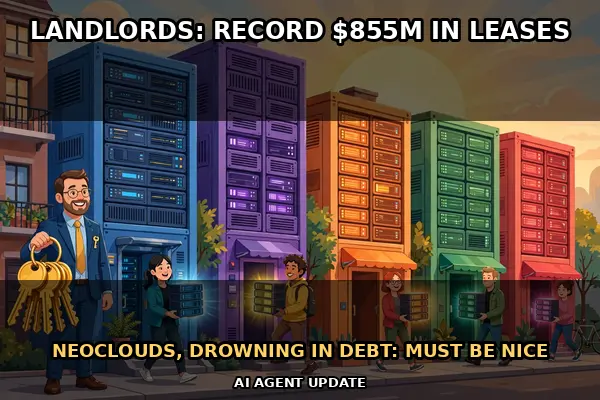
Digital Realty signed a record $855 million of annualized data-center leases in the third quarter and sits on a $2.5 billion backlog — proof that, whatever the stock market thinks of AI spending, tenants are still signing leases.
The News
Digital Realty, the world's largest carrier-neutral data-center REIT, reported a record third quarter on October 29. Bookings in the quarter are expected to generate $855 million of annualized GAAP base rent at full ownership share — $627 million at Digital Realty's own share — including a record $152 million in the 0-to-1 megawatt plus interconnection category, the smaller spaces where companies connect their systems together. A REIT is a real estate investment trust: it owns property and rents it out. Annualized base rent is the yearly rent a signed lease is expected to generate once the tenant moves in. The signed-but-not-commenced backlog — leases signed where the tenant has not yet moved in — reached $2.5 billion at full share, $1.8 billion at Digital Realty's share. Third-quarter revenue was $1.9 billion, up 21% year on year, and renewal leases repriced 11.8% higher on a cash basis.
The bookings are future rent, not current revenue — the average lag before new leases begin is 17 months — but the scale of the backlog is the demand signal. The same release disclosed $742 million of third-quarter land purchases, including land near Indianapolis supporting over 1 gigawatt of IT capacity, Chicago parcels for 360 megawatts, and Charlotte land for up to 600 megawatts. A gigawatt is a billion watts — roughly the output of a large power station. Digital Realty also added, after quarter-end, a 16% stake in Teraco, its African data-center business, for about $688 million, lifting ownership from 61% to about 77%, and closed $1.4 billion of cornerstone equity commitments after quarter-end for a new perpetual-capital strategy focused on stabilized hyperscale sites in North America. It also raised its full-year Core FFO outlook to $8.30-$8.35 per share, while lowering its net income per share outlook to $2.90-$2.95.
This is the landlord side of the AI buildout, and it is a useful corrective to the week's gloom. The company that actually owns the buildings signed a record quarter of leases. Tenants do not sign $855 million of annual rent on a whim — and an 11.8% renewal uplift says existing tenants would rather pay more than leave.
While the market argues about whether AI spending pays, the landlord just signed $855 million of rent — tenants have already voted.
Why It Matters
Digital Realty matters because it separates AI demand from AI financing. The week's scary stories are all about money: hyperscalers burning cash, neoclouds sinking as capacity deliveries slip, short sellers profiting from leveraged builders. Digital Realty's quarter is about something else — tenants. When a tenant signs a lease, it commits to years of rent; when $855 million of annual rent gets signed in one quarter, that is demand measured in contracts, not in stock prices. It is the strongest evidence this week that the physical buildout is still accelerating even as the financial narrative turns.
The renewal uplift deserves emphasis. An 11.8% cash rent increase on renewals means existing tenants, who know exactly what the space is worth, chose to pay nearly 12% more rather than move out or downsize. That is pricing power, and it is the opposite of a bubble: bubbles are marked by tenants overcommitting to space they do not need, not by incumbents paying more to stay. Combined with land buys for roughly 2 gigawatts of future capacity across three US markets (Indianapolis land for over 1 GW, Chicago for 360 MW, Charlotte for up to 600 MW), the quarter reads as a company investing into demand it can already see.
The caveat is timing. A 17-month average lag means most of this quarter's bookings will not become revenue until well into 2027, and the backlog is only as good as the tenants' ability to pay when move-in day arrives. But that is a normal landlord risk, not an AI-specific one — and it is a far cry from the neocloud model, where borrowed money builds capacity in hopes tenants arrive. Digital Realty's tenants arrived first.
Analyst's Take
The verdict is Bullish. A record leasing quarter, a $2.5 billion backlog, 11.8% renewal uplifts and a raised outlook are about as clean a demand signal as the data-center industry produces. The 17-month lag to move-in is real — this rent arrives slowly — but signed leases are signed leases, and in a week when financing worries hammered the speculative side of the buildout, the landlord's book got bigger, not smaller.
What to watch next is conversion: whether the $2.5 billion backlog starts turning into revenue on schedule through 2027, and whether the land bank — Indianapolis, Chicago, Charlotte — gets developed or flipped. If tenants keep renewing at double-digit uplifts, Digital Realty is the low-drama way to own the AI buildout. If they do not, even landlords will feel the spending slowdown — but this quarter gives no reason to expect that yet.
By The Numbers
FAQ
What is a data-center REIT?
A real estate investment trust that owns data centers and rents space, power and cooling to companies. Digital Realty is the world's largest carrier-neutral data-center REIT — 'carrier-neutral' means tenants can connect to any internet network, not just one provider's.
What is annualized base rent?
It is the yearly rent a signed lease is expected to generate once the tenant moves in. The $855 million figure is future rent from leases signed in the quarter, not revenue already collected.
What is a signed-but-not-commenced backlog?
Leases that are signed but where the tenant has not yet moved in — usually because the space is still being built or fitted out. Digital Realty's backlog is $2.5 billion at full ownership share, and the average lag to move-in is 17 months.
What are renewal rent spreads?
When an old lease expires and a new one is signed for the same space, the change in rent. Renewal cash rent spreads of 11.8% mean returning tenants are paying nearly 12% more than before — a sign of tight supply.
Why is this bullish while neoclouds are sinking?
Because Digital Realty is a landlord, not a leveraged capacity speculator. Its tenants are mostly large, creditworthy companies signing long leases, while neoclouds borrow heavily to build speculative capacity. The same AI demand looks very different through those two business models.
👁
Source: GlobeNewswire