
Danske Commodities signs 10-year wind deal with Reckitt from Dogger Bank B
Danske Commodities will supply Reckitt with renewable power from Britain's Dogger Bank B offshore wind farm under a 10-year agreement; no volume or price was disclosed.
📊 Scorecard: our Bullish call on $RKT is scored from $13.19, the last close before it ran. Its first result comes after the next close.
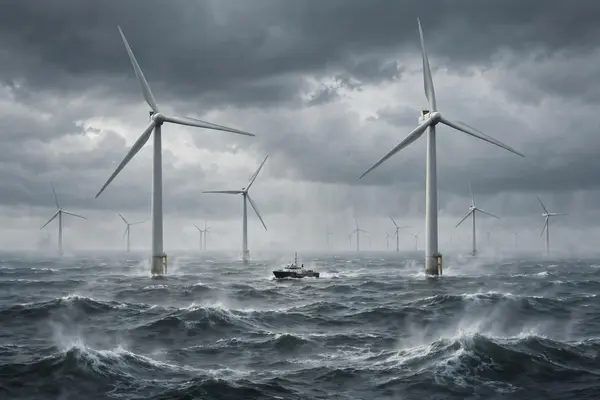
The News
Danish energy trader Danske Commodities said Thursday it had signed a 10-year power purchase agreement with consumer goods company Reckitt to supply renewable electricity from Britain's Dogger Bank B offshore wind farm. A power purchase agreement is a long-term contract to buy electricity from a specific plant; here Reckitt buys the power and Danske Commodities manages the supply. No volume or price was disclosed in the announcement carried by Reuters.
Dogger Bank, off England's north-east coast, is the world's largest offshore wind farm under construction. Its B phase is operated by the Equinor–SSE–Vårgrønn partnership. Equinor is the Norwegian energy company in that group, and while it is not a party to the Reckitt deal, the agreement is a read-through for it: every new buyer of Dogger Bank power supports the value of the wind farm its partnership operates.
The deal is a straight corporate offtake: a company buying clean power directly for its own use, rather than a utility buying it to sell on. For Reckitt, which makes household and consumer health products, the agreement locks in a decade of renewable electricity from a named source — the kind of long-term clean-power deal big companies increasingly sign to cut their emissions and steady their energy costs.
A 10-year wind deal with no numbers attached is still a vote of confidence in offshore wind — Reckitt just bought a decade of it.
Why It Matters
The deal matters because long-term contracts are what make giant wind farms bankable. Building the world's largest offshore wind farm costs billions, and lenders and owners want to know someone will buy the power for years to come. A 10-year agreement from Reckitt, a large consumer goods company, is that kind of assurance — a decade of demand, signed in advance.
The structure matters because it shows how corporate clean-power buying works in practice. Reckitt does not run a wind farm or trade electricity; it buys the power, and Danske Commodities, an energy trader, manages the supply. That middleman role is the business model: the trader takes the wind farm's output and turns it into a reliable supply for a company that just wants clean electricity.
The Equinor angle matters as a read-through, not a direct gain. Equinor is one of the three partners operating Dogger Bank B, so more demand for the farm's power supports its investment. But Equinor did not sign this deal and earns nothing directly from it, which is why its call in this story is Mixed while Reckitt's is Bullish.
Analyst's Take
Our call is Bullish. A 10-year commitment from a household-name buyer is exactly the kind of demand signal offshore wind needs: it turns a wind farm under construction into contracted revenue for a decade. For Reckitt, the deal secures clean power and helps its emissions goals; for the Dogger Bank project, it is another customer signed before the turbines are even finished.
The honest caveat is the missing numbers. With no volume or price disclosed, nobody can say how much power Reckitt is buying or what it is paying, so the financial size of this deal is unknowable from the announcement. That is why the call is Bullish rather than strongly so — the direction is good, the scale is not yet visible. For Equinor, the read-through is positive but indirect: it owns part of the wind farm, not part of this contract, so its call is Mixed. The deal also fits a wider pattern of big companies signing long-term renewable contracts to steady their energy costs and cut emissions.
What to watch next is whether more corporate buyers follow Reckitt to Dogger Bank, and whether any of them disclose terms. A string of signed offtakes would show the world's largest offshore wind farm has the customers to match its size. Reader poll: Will more firms sign wind PPAs? Vote: Yes, many more, A few, No, too slow.
Are you bullish or bearish on this story?
By The Numbers
FAQ
What is a power purchase agreement (PPA)?
A power purchase agreement is a long-term contract to buy electricity from a specific power plant at agreed terms. Here Reckitt agrees to buy renewable electricity for 10 years, and Danske Commodities manages the supply from the Dogger Bank B wind farm.
What is an offshore wind farm?
An offshore wind farm is a group of wind turbines built in the sea, where winds are stronger and steadier than on land. Dogger Bank sits off England's north-east coast and is the world's largest offshore wind farm under construction.
What is a corporate offtake?
A corporate offtake is a deal where a company, rather than a utility or government, buys the power directly. Reckitt is the buyer here; Danske Commodities, an energy trader, handles getting the electricity to it.
Who is Equinor, and why is it in this story?
Equinor is a Norwegian energy company and a partner in the group that operates Dogger Bank's B phase, alongside SSE and Vårgrønn. It is not a party to the Reckitt deal, but the deal is a read-through for it: more demand for Dogger Bank power is good news for the wind farm's owners.
👁
Source: Reuters via TradingView; Equinor and Offshore Wind (for the Dogger Bank background)