
Congress moves to lock down China chip exports as the Huang reports hand hawks momentum
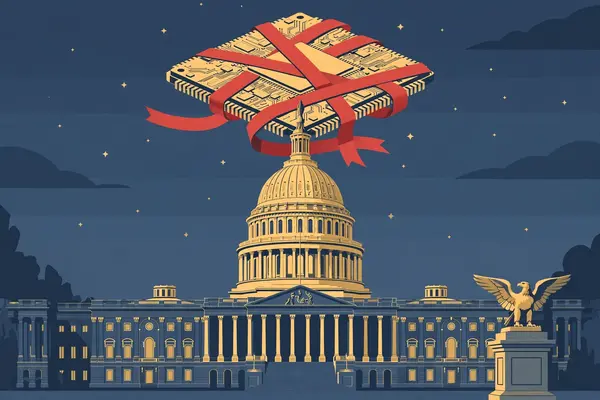
Senators Jim Banks and Elizabeth Warren issued a joint statement on November 9 urging Congress to pass the AI Overwatch Act and close loopholes in AI chip export controls — with three bills now candidates for the fiscal 2027 defence bill and the odds of passage rising sharply.
📊 Scorecard: our Bearish call on $NVDA is scored from $168.89, the last close before it ran. Its first result comes after the next close.
The News
Senators Jim Banks, a Republican from Indiana, and Elizabeth Warren, a Democrat from Massachusetts, issued a joint statement on November 9 urging Congress to pass their AI Overwatch Act and close loopholes in AI chip export controls. The statement came days after reports about Nvidia's chief executive and the movement of Nvidia chips to China, and it gives the export-control hawks in both parties a shared vehicle to push through.
Three measures are now candidates to be folded into the fiscal 2027 National Defense Authorization Act — the annual defence funding bill that Congress passes almost every year. They are the AI Overwatch Act, the Chip Security Act and the MATCH Act, all aimed at tightening the rules on advanced AI chips sold to China. A floor vote is possible in the second week of December. The AI Overwatch provisions are already in the Senate's version of the defence bill; the House version lacks them, so the reconciled bill — the version both chambers must agree on — is where the fight will be settled.
The odds of passage have moved sharply. Veda Partners, a policy research firm, raised its estimates: the Chip Security Act to 80% from 60%, the AI Overwatch Act to 65% from 40%, and the MATCH Act to 60% from 35%. Those are analyst estimates, not facts. Separately, Representative Michael McCaul urged an immediate pause on advanced AI chip shipments to China. For scale: Nvidia has disclosed that its H200 shipments to China were under 1% of its recent Data Center revenue, and no finding has established that any export-control violation took place.
Two senators from opposite parties now agree on one thing: the chip export rules need tightening.
Why It Matters
The push matters because it turns a scandal into law. Export controls on AI chips have been tightened before, but always by the executive branch — the president's administration writing rules. What is different now is Congress: a bipartisan pair of senators, from opposite parties, jointly demanding legislation, and three bills competing to be folded into the one bill Congress almost always passes, the defence authorisation. When a policy rides the defence bill, it is much harder to stop.
The timing is the second reason it matters. The Banks-Warren statement landed days after the reports about Nvidia's chief executive, and Veda Partners explicitly raised its odds on the back of that momentum — the Chip Security Act from 60% to 80%, Overwatch from 40% to 65%. That is a large move for a policy research firm, and it tells investors the market for these rules has changed. The December floor vote is now a real deadline, not a distant possibility.
The third reason is the gap between the politics and the money. Nvidia's disclosed H200 shipments to China were under 1% of its recent Data Center revenue, so a ban on those sales would barely dent today's numbers. But the bills are not about today's sales — they are about tracking, licensing and liability for every advanced chip that leaves the country, and about whether the next generation of chips can be sold to China at all. That is a cost and a risk that falls on every chipmaker in the supply chain, from Nvidia and AMD to Broadcom, TSMC and ASML, whose equipment makes the chips in the first place. And it lands while no finding of any violation has been established — the rules are tightening on the basis of reports and allegations, not a proven breach.
Analyst's Take
Our call is Bearish. The political momentum has shifted fast: a bipartisan joint statement, three bills in play, and a policy research firm lifting passage odds by 20 to 25 points in a single move. For Nvidia, AMD, Broadcom and TSMC, the risk is not today's China revenue — Nvidia's disclosed H200 shipments to China were under 1% of recent Data Center revenue — but the rules that will govern the next generation of chips, and the compliance burden of tracking every one of them.
What to watch: the reconciled defence bill in the second week of December, and whether the House accepts the Senate's Overwatch provisions. If all three bills land, the chip industry faces its tightest export regime yet. If they are stripped out, the momentum fades — but the bipartisan statement means the issue will not go away.
Are you bullish or bearish on this story?
By The Numbers
FAQ
What is an export control?
An export control is a government rule that limits which products a company can sell to which countries. The US already restricts sales of the most advanced AI chips to China; the bills in question would close loopholes and add tracking to make the rules harder to evade.
What are the three bills?
The AI Overwatch Act, the Chip Security Act and the MATCH Act. All three would tighten rules on AI chip exports to China, and all three are now candidates to be folded into the fiscal 2027 National Defense Authorization Act, the annual defence funding bill.
When could Congress vote?
A floor vote on the defence bill is possible in the second week of December. The AI Overwatch provisions are already in the Senate's version of the bill; the House version lacks them, so the reconciled bill — the merged version both chambers must agree on — is the battleground.
How likely are the bills to pass?
Veda Partners, a policy research firm, raised its estimates sharply: the Chip Security Act to 80% from 60%, the AI Overwatch Act to 65% from 40%, and the MATCH Act to 60% from 35%. Those are analyst estimates, not facts, and they reflect the momentum the Nvidia reports have given the bills.
How much does Nvidia actually sell to China?
Nvidia has disclosed that H200 shipments to China were under 1% of its recent Data Center revenue — a small share. And no finding has established that any export-control violation took place. The debate is about the rules going forward, not a proven breach.
👁
Source: Morningstar / MarketWatch