
Bazuka: AI-assisted Android banking trojan that fakes your screen to hide theft
ThreatFabric disclosed this week a new AI-assisted Android banking trojan called Bazuka, which fakes the phone's own screen to hide theft in the background — with no victim count disclosed and no evidence of Google Play distribution.
📊 Scorecard: our Bearish call on $GOOGL is scored from $265.29, the last close before it ran. Its first result comes after the next close.
The News
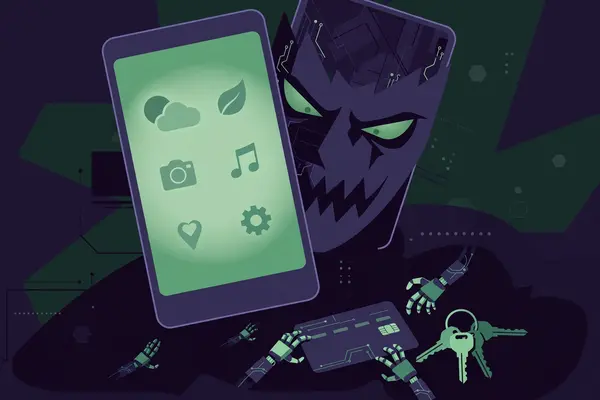
ThreatFabric disclosed this week a new Android malware framework called Bazuka, a full malware framework with a dropper and downloader, a core orchestrator and 23 modules covering overlays, keylogging, 2FA and SMS interception, remote control and crypto-address swapping. Its distinguishing feature is a novel fake-screen overlay technique: it screenshots the home or lock screen and displays that as an overlay on demand to cover up malicious activity taking place in the background, while keylogging and phishing overlays capture banking credentials and verification codes.
The operator panel integrates large language models to help operators score victims and manage infections at scale — the AI sits in the panel, not in the modules that collect credentials. ThreatFabric discovered Bazuka in late October 2026 during an investigation into an NFC-relay banking trojan; its separate NFC relay capability also puts contactless card data at risk. The framework abuses Android Accessibility services and ADB/wireless debugging to acquire permissions and device control, and can intercept lock-screen PINs.
Delivery is via sideloaded droppers — one sample was disguised as a TikTok18+ adult-content app. Control-panel settings suggest the developers intended to distribute through Google Play, but ThreatFabric found no evidence they had done so. No CVE is associated with the threat, and no victim count was disclosed.
Bazuka shows you your own home screen while it steals your banking codes behind it.
Why It Matters
This matters because the fake-screen trick attacks the one thing users rely on: what they can see. If your phone shows your home screen, you assume nothing is happening — and Bazuka counts on exactly that assumption, running its theft behind a photograph of normality. Keylogging and phishing overlays capture banking credentials and verification codes while the fake screen holds your attention, and intercepting the lock-screen PIN removes even the last barrier between the malware and the device.
The AI angle is the second problem, and it is worth stating precisely. The large language models sit in the operator panel, helping criminals score victims and manage infections at scale — the AI is not in the modules that collect credentials. That distinction matters, because it shows where AI is actually changing crime: not in writing better malware, but in running the business of malware more efficiently, picking the richest victims and managing thousands of infections the way a sales team manages leads.
The third problem is distribution. Sideloading is the current route, and the disguise — a TikTok18+ adult-content app — targets users who are already outside the safety of the store. But the panel settings show the developers intended Google Play distribution, and the framework's NFC-relay capability puts contactless card data at risk too, widening the damage from bank logins to tap-to-pay. No victim count has been disclosed, which means the honest statement is that the scale is unknown — and for a rented-out framework with 23 modules, unknown scale is the bearish part.
Analyst's Take
Our call is Bearish — on the threat, not the stock. A banking trojan that hides behind a screenshot of your own home screen, uses AI to score victims at scale, and can intercept lock-screen PINs is a step up in mobile crime — and the 23-module framework behind it is built to be rented out, which means more operators, not fewer. The absence of a victim count is not reassurance; it means nobody knows the scale yet.
What to watch next is whether Bazuka reaches Google Play. The developers clearly intended to distribute there — the panel settings say so — but ThreatFabric found no evidence they had done so, and the current delivery route is sideloaded droppers dressed up as adult-content apps. If a Bazuka dropper ever slips into the Play Store, the victim pool jumps from people who install apps from shady links to anyone who downloads an app. Also watch for the NFC-relay angle: contactless card data at risk widens the damage beyond bank logins.
For investors, the read-through is Google, and the GOOGL ticker call is Mixed rather than Bearish. Google owns Android, but this is not a Google breach — Bazuka is delivered by sideloading, not through the Play Store, and it abuses features that exist by design. The mixed call reflects that tension: Android's openness is the reason sideloading exists, and the same openness is the reason malware like this can spread outside the store's checks. Google's job now is to make the sideloaded route harder without closing the openness its users value. Reader poll: Do you sideload apps — yes or no? Vote: Never, Sometimes, Only trusted ones.
Are you bullish or bearish on this story?
By The Numbers
FAQ
What is malware-as-a-service?
Malware-as-a-service is crime sold as a subscription: one group builds the malware and rents it to other criminals, who use it to attack victims. Bazuka is a full framework — a dropper and downloader, a core orchestrator and 23 modules — sold or shared so operators can run banking theft at scale without writing the code themselves.
What is sideloading?
Sideloading is installing an app from outside the official app store — from a website, a message link or a file, rather than Google Play. Bazuka is delivered through sideloaded droppers, including one sample disguised as a TikTok18+ adult-content app. Apps from outside the store skip Google's checks, which is why criminals prefer them.
What are Accessibility services?
Accessibility services are an Android feature that lets apps read the screen and press buttons on behalf of users who need assistance — for example, people with limited vision. Malware abuses them because they give an app deep control over the phone, including seeing what is on screen and intercepting taps.
What is an overlay attack?
An overlay attack is when malware draws a fake screen on top of the real one — for example, a fake banking login page that captures the password you type. Bazuka's twist is a fake-screen overlay: it screenshots your home or lock screen and displays that image to hide the malicious activity happening behind it.
👁
Source: The Hacker News