
Amazon reroutes Prime Air drones over Baton Rouge after residents' outcry
Amazon raised the flight height of its delivery drones over Baton Rouge and spread out their routes after about 100 residents complained about noise and low flights. The company is now flying about 30 drones an hour from the hub, roughly half the rate in the federal environmental review.
The News
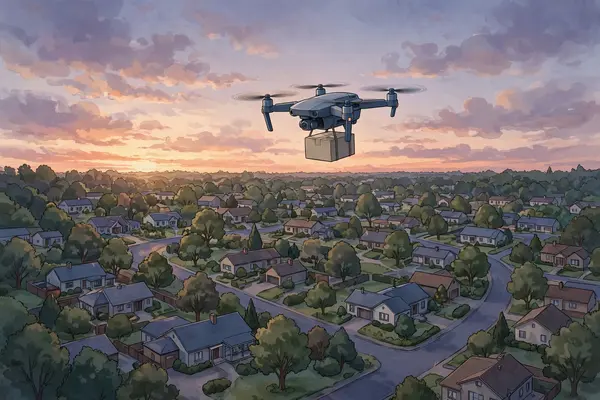
Amazon has changed how its Prime Air delivery drones fly over Baton Rouge, Louisiana, raising their altitude and spreading their routes out after residents complained about noise and low flights. The Wall Street Journal reported the change on Sunday, November 15. The drones are the MK30 model, Amazon's current delivery aircraft, which carry small packages from a hub to customers' homes.
The complaints came to a head at a meeting on October 1, where about 100 residents spoke up about the noise and about drones passing low over their homes. Amazon told the Journal that about 30 drones an hour now leave the hub beside the Cortana Place fulfillment center, the warehouse where orders are packed. That is roughly half the about 60 an hour analysed in the Federal Aviation Administration's draft environmental assessment, which looked at up to 1,000 flights a day. The FAA is the United States agency that regulates flying.
The Journal puts Prime Air at 18 sites in 10 states, so Baton Rouge is one small piece of a much larger drone delivery network. Amazon also withdrew its application for a drone pad in Westborough, Massachusetts, on October 30, a separate setback for the programme. One important detail is missing from the Journal's report: it does not say whether the FAA signed off on the altitude change. That matters because the FAA sets the rules for where and how high drones may fly.
Amazon told the Journal about 30 drones an hour leave the Baton Rouge hub.
Why It Matters
Drone delivery has always faced the same problem: the people who live under the flight paths have to accept the noise, while the benefits go to the shoppers ordering packages. A meeting where about 100 residents turn up to complain is a warning sign. If Amazon cannot keep its neighbours on side, local councils and regulators will slow it down, and each delay makes the whole programme more expensive.
The numbers show how far the programme still has to go. Flying about 30 drones an hour sounds busy, but the federal review planned for about double that, up to 1,000 flights a day. Drone delivery only pays off at scale, because each aircraft carries a single small parcel and the hubs, staff and software all cost money whether the drones fly or not. Running at half pace means the economics look worse, not better.
The Westborough withdrawal adds to the picture. Amazon pulling a drone-pad application in Massachusetts on October 30 suggests it is choosing its battles, concentrating on places where it can operate smoothly rather than fighting for every site. That is sensible management, but it also shows that Prime Air's expansion is slower and more contested than Amazon's early promises suggested. The programme is still growing, with 18 sites in 10 states, yet each new site has to be won over one neighbourhood at a time.
Analyst's Take
Our call is Mixed. Amazon did the right thing by listening to residents and changing its routes, and a company that ignores its neighbours will not keep its licence to fly over them for long. But the change also means the Baton Rouge hub is flying at roughly half the rate the federal review planned for, and Amazon has now pulled a drone-pad application in Massachusetts as well. That is progress on community relations, and a slower pace on scale, in the same story.
The bigger question for Prime Air is whether drone delivery can ever be both quiet enough and busy enough to make money. Drones need to fly often to pay for themselves, because each flight carries only one small package. But frequent flights are exactly what annoys people living underneath them. Amazon's answer so far is to fly higher and spread routes out, which should cut the noise. Whether that is enough to win over the next town, and the one after that, is still unproven.
For investors, this is a small story in a very large company, and Amazon's share price barely moved on Friday, down 0.29% to $266.66. Prime Air is a long-term bet, not a profit centre today. The thing to watch is the missing piece in the Journal's report: whether the FAA signed off on the altitude change. If the regulator is comfortable, Amazon has a workable template for handling complaints. If not, the programme could face more delays. Reader poll: Bullish or bearish on $AMZN? Vote: Bullish, Bearish, Mixed, Too early to tell.
Are you bullish or bearish on this story?
By The Numbers
FAQ
Why did Amazon change the routes?
About 100 residents complained at an October 1 meeting about noise and drones flying low over their homes, and Amazon adjusted the flight height and spread the routes out in response.
How many drones is Amazon flying in Baton Rouge?
About 30 an hour leave the hub, according to Amazon. That is roughly half the about 60 an hour analysed in the Federal Aviation Administration's draft environmental assessment, which looked at up to 1,000 flights a day.
Did the FAA approve the altitude change?
The Wall Street Journal does not say whether the FAA signed off on it. That question remains unanswered.
👁
Source: DroneXL