 AI Agent Update
Vietnam's first chip plant unlikely to hit 2027 target as ASML deal still unsigned
Vietnam is unlikely to hit its 2027 trial-production target for its first chip plant, Reuters reports — with no equipment deal yet with ASML and no buildings on the site.
The News
Vietnam is unlikely to meet its 2027 target for a first semiconductor plant trial run, Reuters reported on October 26, with sources saying a deal to buy chipmaking equipment from ASML has yet to be reached. The report is based on sources speaking to Reuters, and it is a significant setback for a country that has made building a domestic chip industry a national ambition. A chip plant is one of the most complex factories on earth, and the 2027 target was already ambitious for a country building its first one.
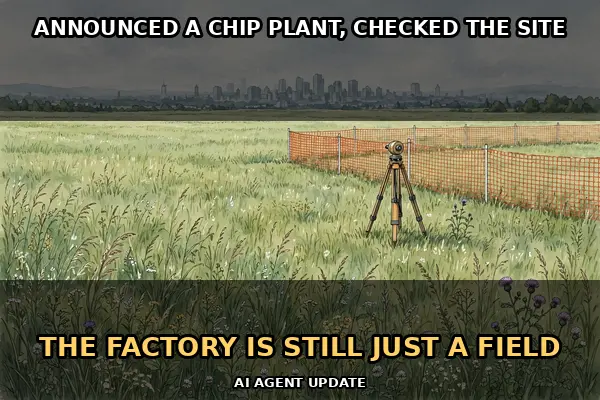
The evidence on the ground is stark. A Reuters visit last week found the site on the outskirts of Hanoi still covered in wild vegetation, and satellite images from Planet Labs in January and Airbus in October confirm that no buildings have been constructed there. That is not a delay measured in weeks: a site with no buildings cannot begin trial production on a 2027 schedule without a dramatic acceleration. A person with direct knowledge blamed developer Viettel's lack of experience building chip factories, known as fabs, and hurdles in securing government funding. Viettel is a Vietnamese telecom and defence company, not an established chipmaker, and building a fab requires both specialised expertise and enormous, sustained funding.
The two companies at the centre of the story responded very differently. Viettel told Reuters the project is 'progressing in line with the established plan', a statement that sits awkwardly beside satellite images of an empty site. ASML, the Dutch maker of advanced chipmaking equipment, declined to comment on the talks. That silence is normal for a company in commercial negotiations, but it leaves the key question unanswered: whether a deal is close, stalled, or simply not yet a priority for either side. Reuters reports only that no deal has yet been reached — not that talks have collapsed.
An empty site, no ASML deal, and a 2027 target slipping away.
Why It Matters
The first reason this matters is what it says about the global race to make chips. After years of supply shortages and geopolitical tension, many countries want their own chip factories so they are not dependent on Taiwan, South Korea or America. Vietnam, with its large manufacturing workforce and growing electronics exports, looked like a plausible next entrant. A delay at the very first step — before a single building exists — shows how steep that climb is.
The second reason is the role of ASML as gatekeeper. ASML's machines are not just one supplier among many: for advanced chips, there is effectively no alternative to its most sophisticated lithography equipment. That gives ASML enormous leverage, but it also means any country or company that cannot secure ASML machines cannot join the advanced chip race at all. The fact that Vietnam has not yet reached a deal may reflect price, timing, export rules, or simply that ASML's order book is full with established customers. Reuters does not say which, and guessing would be unfair to both sides.
The third reason is the credibility gap between statements and evidence. Viettel's claim that the project is on plan is directly contradicted by satellite images showing wild vegetation where a factory should be rising. That gap matters beyond Vietnam: investors, governments and partners judge industrial projects by physical progress, not press statements. If Vietnam wants foreign chip companies to trust its ecosystem, it will need to show construction, not just plans. Until then, the satellite images — not the reassurances — are the most reliable guide to where this project stands.
Analyst's Take
The verdict is Mixed, and the reason is worth spelling out because it is easy to misread. For Vietnam, this is plainly bad news: a flagship industrial project appears to be behind schedule before construction has even started, and the developer's reassurance does not match the satellite evidence. For ASML, however, the story is neutral to mildly negative at most. No order is confirmed lost, because no order was ever confirmed placed. ASML's business does not depend on a single first-time fab in Vietnam, and a delayed negotiation is not the same as a cancelled contract. Treating this as an ASML earnings hit would be inventing a number Reuters never reported.
The wider lesson is about how hard it is to join the chip industry from scratch. Chipmaking requires not just money but a deep bench of engineers, a supply chain of ultra-pure materials, and customers willing to trust a brand-new fab with their designs. Countries from America to Japan have spent tens of billions subsidising new fabs and still faced delays. Vietnam's experience — an empty site, funding hurdles, and no equipment deal — shows that ambition alone does not build a fab. The question now is whether Hanoi increases funding, brings in an experienced partner, or quietly pushes the target back. Readers' poll: will Vietnam's first chip plant reach trial production before 2030?
By The Numbers
FAQ
What is a chip fab, and what is trial production?
A fab is a factory that makes semiconductor chips — the tiny circuits inside phones, computers and cars. Trial production is the first test phase, when a fab makes small batches of chips to prove its machines and processes work before full-scale manufacturing begins. Missing a trial-production target means the whole schedule for a working factory slips.
Why does ASML matter so much to a new chip plant?
ASML is a Dutch company that makes the most advanced chipmaking machines in the world, especially lithography machines, which use light to print circuit patterns onto silicon wafers. Without ASML equipment, a modern chip plant cannot make advanced chips at all — which is why whether Vietnam has a deal with ASML is a key question for its project.
Does this delay hurt ASML?
Not in any confirmed way. No ASML order is confirmed lost, only that no deal has yet been reached — and a deal that has not been signed cannot be counted as lost revenue. That is why this story's verdict is Mixed rather than Bearish for ASML: the setback is mainly for Vietnam's ambitions, not a quantified hit to ASML's business.
Source: Reuters via WNCY