
USTR proposes up to 15% principal tariffs for Taiwan and Korea, up to 25% if commitments fail; nothing in effect yet
The US Trade Representative proposed principal tariff rates for 14 economies on Wednesday — up to 15% for Taiwan and Korea, net of existing MFN and Section 301 duties, with up to 25% considered if commitments are found unsatisfactory — with comments due January 5, 2027 and hearings on January 25, 2027, and no new tariffs in effect.
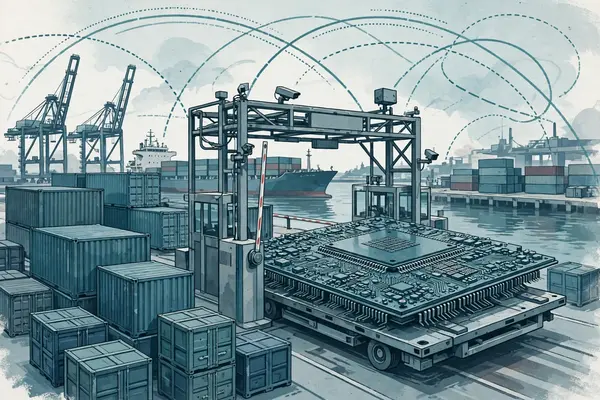
The News
The US Trade Representative, or USTR, moved a broad tariff plan one step forward on Wednesday, November 25. The agency made affirmative structural-excess-capacity determinations for 14 of the 16 economies it investigated. A determination is an official finding, and structural excess capacity means, in the agency's framing, that an economy has more factory capacity than its own market can absorb. Mexico and Norway, the other two economies investigated, received no determination yet.
Alongside those findings, the USTR published proposed capped tariff rates. A tariff is a tax on imported goods, and a capped rate here is the principal ceiling under current commitments — some economies also face a higher alternative rate if USTR finds those commitments unsatisfactory. The principal proposed rate is 15% for the EU, Japan, Korea, Switzerland and Taiwan, with up to 25% considered for Korea and Taiwan and up to 20% for the EU, Japan and Switzerland if their commitments are found unsatisfactory. China faces a proposed 20% rate under the current trade truce — on top of roughly 25% in first-term Section 301 duties — potentially rising to 40% if that truce unravels, with a lower 10% rate on a roughly $30 billion annex list. Vietnam faces 20% with a deal or 35% without one, India 17% with a deal or 25% without, Singapore 20% or 10% with a deal, and several Southeast Asian economies 18%. None of these rates is in effect; they are proposals open for public comment.
The timetable gives companies and governments time to respond. Comments are due January 5, 2027, and hearings begin January 25, 2027. One legal analysis, by Wiley, says the non-China proposals would exempt goods that are subject to Section 232 tariffs, including semiconductors. That point needs careful handling: it comes from one legal analysis of the proposal, not from a final rule, and it does not mean chip supply chains face no tariff risk. TSMC's US-listed shares closed Wednesday at $342.34, down 1.96%. SK hynix and Samsung are named in this story only as public read-throughs — related stocks investors watch for a signal on Korea's exposure — not because either company was singled out in the proposal.
A 15% principal rate for Taiwan and Korea is now on paper, with up to 25% considered if commitments are found unsatisfactory, but nothing is in effect — and whether chips are exempt rests on one legal analysis, not a final rule.
Why It Matters
This matters for chip investors because Taiwan and Korea sit at the centre of the semiconductor supply chain, the network of companies that design, make and ship chips and the parts that go into them. A proposed 15% principal rate for both Taiwan and Korea, with up to 25% considered if commitments are found unsatisfactory, puts a number on a risk that, until now, investors had to guess at. A cap is not the same as a final rate, and a proposal is not a tariff in effect, but the published 15% principal rate — with up to 25% considered for Korea and Taiwan if commitments are found unsatisfactory — gives companies a clearer range to plan around.
The Section 232 point is the main reason the read is not simply negative. Section 232 is a separate US tariff authority, and one legal analysis says goods already subject to Section 232 tariffs, including semiconductors, would be exempt from these non-China proposals. If that reading holds in a final rule, chips themselves might avoid this particular tariff layer. But that is exactly the kind of detail that can change between a proposal and a final decision, which is why it should be stated carefully and never treated as settled fact today.
The calendar is the other half of the story. Comments due January 5, 2027 and hearings from January 25, 2027 mean the proposal will be argued over in public before anything takes effect. Deals also matter: Vietnam's proposed rate drops from 35% to 20% with a deal, and India's from 25% to 17%, which shows the USTR is using the caps partly as bargaining pressure. For TSMC, and for Korean read-throughs SK hynix and Samsung, the question is not whether a tariff exists today — it does not — but what survives the comment and hearing process.
Analyst's Take
Our call is Mixed. The proposal puts a 15% principal rate on Taiwan and Korea — up to 25% if commitments are found unsatisfactory — two economies the chip industry cannot route around quickly, and that is a real overhang for TSMC and for Korean read-throughs SK hynix and Samsung. At the same time, nothing is in effect, the rates are proposals rather than final charges, and one legal analysis says semiconductors subject to Section 232 tariffs would be exempt from the non-China proposals. Risk and relief are both present, and neither is final.
The market's Wednesday reaction was muted rather than panicked: TSMC's US-listed shares closed at $342.34, down 1.96%. That fits a proposal-stage story. Investors now have specific numbers to weigh — 15% principal rates for Taiwan and Korea (up to 25% if commitments are found unsatisfactory), a January 5, 2027 comment deadline, hearings from January 25, 2027 — instead of open-ended tariff fears. Specific numbers can be planned around; open-ended fears usually get priced more harshly.
What to watch is the comment period and the January hearings, and above all whether any final rule keeps the Section 232 exemption that one legal analysis described. If semiconductors are clearly carved out, the chip impact of this plan shrinks. If they are not, the proposed Taiwan and Korea rates become a direct cost question for the supply chain. Reader poll: Will chips escape these tariffs? Vote: Chips exempt, Chips taxed, Too early.
Are you bullish or bearish on this story?
By The Numbers
FAQ
What is a tariff?
A tariff is a tax a government charges on imported goods. The USTR has proposed tariff rates for 14 economies, but no new tariffs from this proposal are in effect.
What does structural excess capacity mean?
It is the USTR's term for an economy having more factory capacity than its own market can absorb. The agency made affirmative determinations, or official findings, for 14 of 16 investigated economies.
What is a capped rate?
A capped rate here is a principal ceiling under current commitments. Taiwan and Korea each face a proposed principal rate of 15%, with up to 25% considered if USTR finds their commitments unsatisfactory — neither figure is a final rate in effect.
What is a read-through ticker?
A read-through is a related stock named for the signal it carries, not because it was singled out. SK hynix and Samsung are read-throughs here for Korea's exposure; neither company was named individually in the proposal.
👁
Source: Reuters