
Rackspace Spot breach: leaked credentials let intruders reach customer Kubernetes Secrets
Rackspace warned customers that hackers breached its Rackspace Spot cloud platform on Nov 17 using leaked credentials and could have read customer Kubernetes Secrets — exposure, not confirmed theft.
📊 Scorecard: our Bearish call on $RXT is scored from $1.90, the last close before it ran. Its first result comes after the next close.
The News
Rackspace warned customers that hackers breached its Rackspace Spot cloud platform using compromised credentials, allowing them to deploy unauthorised workloads and access Kubernetes Secrets in customer clusters. In a notification sent to affected customers and obtained by BleepingComputer on Nov 21, Rackspace said an unauthorised party used leaked credentials to access parts of Rackspace Spot on Nov 17, 2026, between approximately 00:20 and 22:00 UTC.
The attackers were able to act as legitimate users in some customer organisations, creating pods in Kubernetes clusters, reading Kubernetes Secrets — which store passwords, authentication tokens and API keys — and listing nodes and volumes. Rackspace warned the attackers could have read any Secret stored in an affected user's clusters, as well as any Spot API tokens or refresh tokens held by that user. That is Rackspace's "could have been read" warning — not confirmed theft. Rackspace has not disclosed how many customers were affected, whether customer data was actually stolen, or how the credentials originally leaked.
Rackspace learned of the intrusion on Nov 18 after a customer report and confirmed that customer's organisation was affected the same day. It has since revoked affected tokens and sessions, removed the unauthorised pods, rotated keys, and strengthened access controls and monitoring, and shared indicators of compromise: IP address 23.224.79.106, range 23.224.0.0/15, and suspicious Kubernetes pod and object prefixes i1, glm- and probe. The breach also caused an extended outage of the Spot administration console, temporarily preventing customers from managing clusters and rotating potentially compromised credentials; Rackspace announced service had been fully restored on Nov 21.
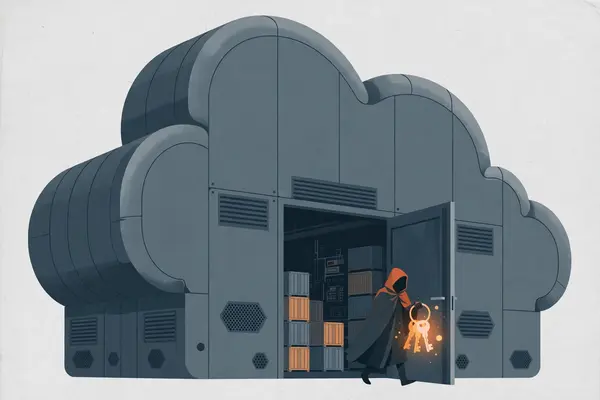
The attackers did not break the lock — they walked in with a leaked key and read the secrets drawer.
Why It Matters
This matters because Kubernetes Secrets are the keys to the kingdom. They hold the passwords, tokens and API keys that applications use to talk to databases, cloud services and each other — and in this incident the attackers could read them. Even without confirmed theft, every Secret in an affected cluster must now be treated as exposed and rotated, which is expensive, disruptive work for every customer involved. The breach did not need a clever exploit: leaked credentials were enough.
The second problem is the outage. The breach also knocked out the Spot administration console for an extended period, which temporarily stopped customers from managing clusters and rotating the very credentials that may have been compromised. That is the worst possible timing for an outage — the security tool goes down at the exact moment it is needed most — and it turned a credential incident into a control incident as well.
The third problem is what Rackspace has not said. No customer count, no confirmation either way on whether data was stolen, and no explanation of how the credentials leaked. Leaked credentials are the most common entry point in cloud breaches, and without knowing the source — a phishing email, a public code repository, a previous breach — customers cannot judge whether the same door is still open. The indicators of compromise Rackspace shared, including the IP address and the i1, glm- and probe pod prefixes, at least give defenders something concrete to hunt for.
Analyst's Take
Our call is Bearish. A cloud provider breach that lets intruders act as legitimate users, spin up workloads and reach the Secrets holding customer passwords and API keys is a serious incident — even with the honest caveat that theft is not confirmed. The "could have been read" wording is Rackspace being careful, but customers cannot afford to assume the best: every credential that could have been seen has to be treated as seen.
What to watch next is the scale Rackspace has not disclosed: how many customers were affected, whether any data was actually stolen, and how the credentials leaked in the first place. The leaked-credential entry point is the detail that matters most — if credentials are still circulating, the same attack can be repeated. Also watch whether affected customers report follow-on abuse of the tokens or Secrets that were within reach.
For investors, the near-term question is whether this becomes a churn and trust story for Rackspace's cloud business. The company moved fast once a customer reported the intrusion — same-day confirmation, token revocation, pod removal, key rotation — and service was fully restored by Nov 21. But the console outage that stopped customers rotating their own credentials during the incident is the detail that will linger: at the moment customers most needed to act, the tool they needed was down. Reader poll: Would you rotate every credential after a breach like this — yes or no? Vote: Yes, rotate all, Only the exposed ones, Wait for proof.
Are you bullish or bearish on this story?
By The Numbers
FAQ
What are Kubernetes Secrets?
Kubernetes is software that runs applications in containers — small, sealed packages of code. A Secret is where Kubernetes stores sensitive data an app needs, such as passwords, authentication tokens and API keys. If an attacker can read Secrets, they can collect the keys to everything the app touches.
What is a pod?
A pod is the smallest unit Kubernetes runs — usually one container, or a small group of containers that work together. The attackers created unauthorised pods inside customer clusters, which gave them a foothold to look around and read Secrets.
What does "could have been read" mean?
It means Rackspace knows the attackers had the access needed to read the Secrets, but has not confirmed whether they actually did. That is different from confirmed theft — and it is why affected customers are being told to rotate credentials anyway, because the safe assumption is that the data was seen.
What is Rackspace Spot?
Rackspace Spot is Rackspace's cloud platform for running Kubernetes workloads, aimed at customers who want spare cloud capacity at lower prices. The breach hit the Spot administration console too, temporarily stopping customers from managing clusters and rotating credentials.
👁
Source: BleepingComputer