
Optimizely supply-chain attack served malicious code on 178 organisations' sites, including Zoom and Salesforce
An attacker used a flaw in Optimizely's account signup to inject malicious code into snippets loaded by 178 organisations' websites, including the BBC, CNN, Zoom and Salesforce, skimming card details and swapping crypto wallet addresses.
📊 Scorecard: our Bearish call on $ZM is a hit so far: from $92.68 to $83.82 at the latest close (-9.6%). Against QQQ the call is right: the stock is 7.4 points behind the index.
The News
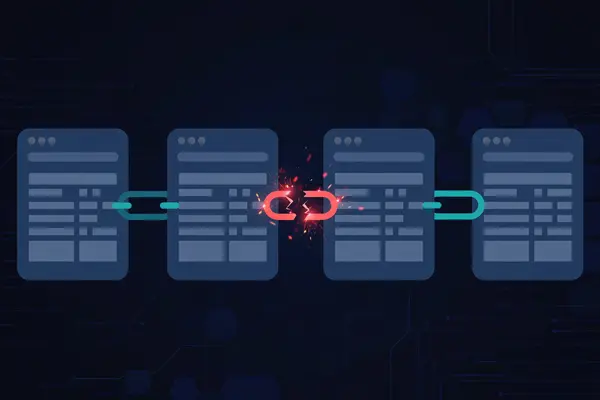
An attacker exploited a flaw in the account signup flow of Optimizely Web Experimentation, a tool companies use to test different versions of their web pages, and used it to act as existing users on customer accounts. Optimizely says no passwords were stolen or used. From there the attacker injected malicious JavaScript into the experiment snippets those sites load from Optimizely's content delivery network. The poisoned code was then served to ordinary visitors of the affected websites.
Report URI, a security research group, found the malicious code in 188 of the 1,611 Optimizely snippets it checked, belonging to 178 organisations. The list includes the BBC, CNN, Zoom, Salesforce, GitLab, IKEA, HSBC, Equifax, Air France-KLM, Ledger and Peacock. No victim site's own servers were breached — the attack came through the supplier they all trusted.
The payload did four things. It swapped cryptocurrency wallet addresses, so payments meant for a visitor's wallet could be redirected. It skimmed payment-card details typed into sites' own forms, added on November 16 at 13:43 UTC; cards entered in hosted payment windows such as Stripe's were out of reach. It also sent the visitor's non-HttpOnly cookies and a screenshot of the page to the attacker after swapping an address. And it tried to load an exploit kit aimed at iPhones and iPads — though no iPhones were confirmed taken over. One warning sign: Smartsheet's script was cleaned once and then re-infected, indicating the attacker still had access at that point. The attacker's crypto wallets received about $7,040 within roughly nine hours on November 16, according to Report URI — though StepSecurity put the total at about $6,600, two of the addresses were already in use before the injections began, and the chain does not show which transfers came from victims.
The first injection was seen on the BBC's site late on November 15, Eastern time. Optimizely confirmed the incident in a status update at 01:02 UTC on November 17, saying it had fixed the vulnerability and removed the injected code. Report URI saw every infected file it monitored clean by 23:11 UTC on November 16, though Optimizely dates the first malicious write to 07:51 UTC, hours after Report URI's 04:21 UTC first sighting — the two timelines still disagree. The number of cards skimmed and the total visitor exposure are not established; Report URI's preliminary estimate is about 34 million page visits, with a range of 6 to 150 million.
No victim's own servers were breached — the poison came through a trusted supplier, which is exactly why it reached so far.
Why It Matters
The attack matters because of how it worked, not just what it stole. A supply-chain attack means the hacker never needed to break into the BBC, Zoom or Salesforce. They broke into one supplier whose code all of those sites load, and the poison spread automatically. That is why 178 organisations were hit from a single flaw, and why this pattern keeps recurring across the industry.
The three payloads show the attacker was after money, not chaos. Swapping crypto wallet addresses redirects payments. Skimming card details harvests numbers to sell or use. Trying to load an iPhone exploit kit was an attempt to take over phones, though none was confirmed taken over. The $7,040 collected in nine hours is modest, which suggests the campaign was caught early rather than that it was harmless.
The fix was quick but the exposure window was real. Report URI saw all monitored infected files clean by 23:11 UTC on November 16, and Optimizely confirmed the incident publicly the next morning. Still, the code was first seen on the BBC's site late on November 15, Eastern time, so it was live for much of a day. And the 178 figure is Report URI's count from its own scanning — Optimizely has published no count of its own, so the true reach may be larger.
Analyst's Take
Our call is Bearish. This is a textbook supply-chain attack, and it is the kind that should worry every company with a website. One flaw in one supplier's signup flow reached 178 organisations, including some of the most visited sites on the internet, without any of them being hacked directly. The $7,040 the attacker collected in nine hours is small; the point is how far one weakness travelled.
The damage is genuinely uncertain, and that uncertainty is part of the story. The number of cards skimmed is not established, and the visitor exposure estimate spans 6 to 150 million page visits. Optimizely fixed the flaw and removed the code within about a day, which is fast — but the code was live on the BBC's site from late November 15, so visitors were exposed for most of a day before the fix.
The tickers here are the named listed companies whose sites served the code: Zoom closed Wednesday at $92.68, up 1.27%, Salesforce at $190.40, down 2.12%, and Equifax at $179.66, down 0.35%. None of them was breached, and the attack is good for nobody here — Optimizely is private, so there is no listed vendor to blame or buy. What to watch is whether any of the 178 organisations reports confirmed card fraud, and whether Optimizely publishes its own count. Reader poll: Trust the fix? Vote: Yes, No, Not sure.
Are you bullish or bearish on this story?
By The Numbers
FAQ
What is a supply-chain attack?
A supply-chain attack is when hackers break into a supplier a company trusts, then use that supplier to reach the company's customers. Here the attacker broke into Optimizely, whose code runs on other companies' websites, so the malicious code reached visitors of 178 organisations without any of those organisations being hacked themselves.
What is a snippet, and what is a CDN?
A snippet is a small piece of code a website loads from another company to add a feature, such as running experiments on which page design works best. A CDN, or content delivery network, is a system of servers that delivers that code quickly to visitors around the world. Optimizely's snippets are loaded from its CDN, so one poisoned snippet reached every site using it.
What is card skimming?
Card skimming is secretly copying payment-card details as someone types them into a website. The malicious code here copied card numbers typed into sites' own payment forms. Cards entered in hosted payment windows, such as Stripe's, were out of reach because the code could not see inside those separate windows.
👁
Source: The Hacker News