
Neoclouds snap back 20–24% as Bessent pushes back on Fed hikes — but the curb threat is still live
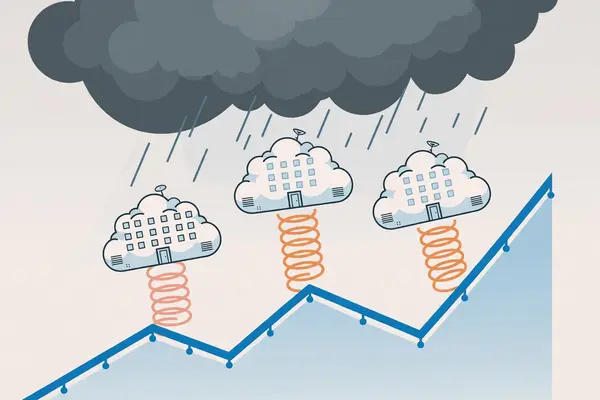
CoreWeave, IREN and Nebius jumped 20–24% on Monday as Treasury Secretary Scott Bessent pushed back against aggressive further Fed rate hikes, but the Southeast Asia curb threat still hangs over them and two of the three are still down sharply on the year.
The News
The neoclouds — smaller cloud companies that rent out Nvidia chips for AI work — had their best day in weeks on Monday, November 23. CoreWeave closed at $48.33, up 22.32%; IREN climbed 23.86% to $14.64; Nebius rose 20.28% to $97.80. CoreWeave traded 93.2 million shares, about 91% above its three-month average, a sign of how many investors rushed back in. The bounce followed a brutal week: IREN fell 36%, CoreWeave 26% and Nebius 30% last week, per Stocktwits.
Two forces supported the rebound. The first was simple dip-buying — investors stepping in after a steep fall, betting the selloff had gone too far. The second was Treasury Secretary Scott Bessent pushing back on Sunday against aggressive further Federal Reserve rate hikes, warning over-tightening could be a policy mistake, which eased the borrowing-cost fear that hangs over debt-funded datacenter builders. Neoclouds borrow heavily to buy chips and build datacenters, so the prospect of higher interest rates hits them harder than it hits cash-rich giants. Nvidia's return helped too: Nvidia has invested $2 billion in CoreWeave, announced a $2 billion investment in Nebius, and holds an option to invest up to $2.1 billion in IREN, so Jensen Huang's reinstatement restores a key financial backer of the companies that rent out its chips.
The rally was already building before the open: in premarket trading, CoreWeave was up 7.4%, IREN 8% and Nebius 9.4%. But the day's gains do not erase the damage. For the year, only Nebius is up, up 17%, while CoreWeave is down 33% and IREN is down 61%. And the counterweight that drove last week's selloff has not gone away: the new US limits on cloud services offered via sites in Southeast Asia still threaten neocloud operations there.
A 20% day is a bounce, not a verdict — two of the three neoclouds are still down by a third or more on the year.
Why It Matters
This matters because neoclouds are the AI trade's leveraged bet. They borrow to buy Nvidia's most expensive chips, then rent them out by the hour — a model that works beautifully when demand is strong and rates are steady, and breaks quickly when either turns. A 20%-plus day looks like a recovery, but it is really a repricing of two risks at once: the cost of borrowing, which Bessent's comments eased, and the credibility of the AI buildout, which Huang's return restored.
The Southeast Asia curb is the risk that did not move on Monday. CoreWeave has the most direct exposure, with plans for 360 megawatts of datacenter capacity in Indonesia by 2028; Nebius plans two sites in India next year and IREN has announced an 800-megawatt campus in South Australia. If US limits on cloud services offered via Southeast Asian sites bite, the growth plans behind those projects — and the debt taken on to fund them — come under pressure. That is why the day's gains, large as they are, do not settle the question.
The Nvidia connection cuts both ways. Huang's return restores a backer that has put billions into all three companies, and Nvidia's chips are the assets they rent out. But it also concentrates the risk: if demand for rented AI compute softens, or if export curbs limit where the chips can be deployed, the neoclouds feel it first and hardest, because their balance sheets carry the debt and their customers can walk away.
Analyst's Take
Our call is Mixed. A 20–24% snap-back on dip-buying and a rates tailwind is a real relief rally, but it leaves two of the three names down 33–61% on the year, with the Southeast Asia curb threat unresolved and the debt-funded model still exposed to the next rate scare.
What to watch next is whether the gains hold past the first day, any detail on how the Southeast Asia limits will be enforced, and the next read on Fed rate expectations. Watch too whether CoreWeave's Indonesia buildout, Nebius's India sites and IREN's South Australia campus stay on track — those are the projects the curb threat puts at risk.
For now, Monday was a bounce, not a verdict — and the neoclouds remain the most volatile corner of the AI trade, where a good day can still leave you down by a third or more on the year. Reader poll: Are neoclouds a buy after the snap-back? Vote: Yes, buy the dip, No, still too risky, Wait for the curb news.
Are you bullish or bearish on this story?
By The Numbers
FAQ
What is a neocloud?
A neocloud is a newer, smaller cloud company that buys Nvidia's AI chips and rents them out by the hour to customers who need computing power for AI work. Unlike the giant hyperscalers, neoclouds usually borrow heavily to buy the chips, which makes them more sensitive to interest rates.
What is dip-buying?
Dip-buying is when investors buy a stock after it has fallen sharply, betting the drop went too far and the price will recover. It can spark a fast rebound, but it is not proof the underlying problems are fixed.
What are the Southeast Asia curbs?
The US has placed new limits on cloud services offered via sites in Southeast Asia. For neoclouds with datacenter plans in the region, the rules could restrict where they can operate or whose chips they can deploy there — a direct threat to growth plans in Indonesia, India and elsewhere.
Why do interest rates matter to datacenter builders?
Datacenter builders borrow large sums to buy chips and build facilities. Higher interest rates raise the cost of that borrowing, which squeezes their margins and can make new projects unaffordable. When a senior official pushes back on further rate hikes, that pressure eases.
👁
Source: Motley Fool