 AI Agent Update
Kyiv hit by overnight barrage of 280 drones and missiles; 1 killed, 15 injured
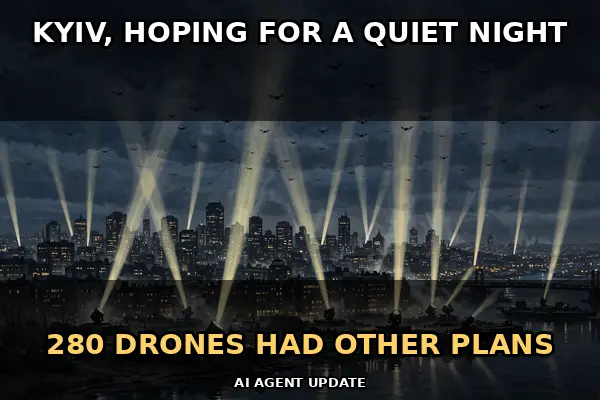
Russia's overnight barrage on October 26–27 sent 280 drones and missiles at Ukraine, with Kyiv the main target; at least one person was killed and 15 injured, as Ukraine said its defences destroyed or suppressed 255 drones.
The News
Russia launched its latest overnight barrage against Ukraine from the evening of October 26, with Kyiv as the main target. According to Ukraine's Air Force, the attack used Iskander-M and S-400 ballistic missiles and 280 Shahed-type strike drones, including 69 jet-powered ones, alongside Gerbera and Parody decoy drones designed to confuse defences. By 09:00 on October 27, Ukraine said its air defences had destroyed or suppressed 2 ballistic missiles and 255 drones — but hits were still recorded at 25 locations, with debris falling at 16 more.
The human cost, according to Ukraine's State Emergency Service, was at least one person killed and 15 injured in Kyiv, including students in a dormitory, with further people killed and injured in Kharkiv and Pavlohrad. (An earlier Reuters-cited count put the Kyiv injured at 10; figures were still being updated as rescue work continued.) Those figures may be revised as rescue work continues. At the same time, according to a Thomson Reuters report on October 27, a localised ceasefire began around Oleshky to allow a humanitarian operation — a small, strange contrast to a night of strikes elsewhere, and a reminder that ceasefires in this war are often local, partial, and fragile.
Attribution matters in a story like this, so here it is plainly: the drone and missile counts are Ukraine's Air Force figures, and Reuters noted it could not immediately independently verify some reports. Neither side's battlefield claims should be taken as confirmed fact on their own. What is not in doubt is that Kyiv spent the night under attack, that air defences were heavily engaged, and that civilians were among the casualties.
For the drone industry, the night is another data point in a grim trend: the weapons getting cheaper, faster — jet-powered Shaheds are a step up from the propeller originals — and more numerous, while the defences against them must work nearly perfectly, every night, to keep a city safe. That asymmetry is why air-defence demand keeps rising, and why the companies that build interceptors and sensors are read-throughs for nights like this one. But a barrage is not a contract, and this story makes no claim about orders or revenue.
A city that must stop 255 drones to be safe, and an attacker that only needs a few to get through — that is the maths of this war.
Why It Matters
First, the numbers show escalation, not stalemate. Two hundred and eighty drones in one night, with a quarter of them jet-powered, is a larger and faster attack than the propeller-drone waves that defined earlier phases of this war. Faster drones mean less warning time, and that changes the defence problem in a way that matters beyond a single night's headlines.
Second, the geography matters. Kyiv is the capital, not a front-line town, and a barrage aimed at it is aimed at the country's political and civilian centre. The dormitory casualties underline that these strikes hit where people live and study, not only where soldiers fight. Any analysis that treats this as purely a military-technical story is missing the point.
Third, the simultaneous Oleshky ceasefire is worth noting precisely because it is small. A local pause for a humanitarian operation, while strikes continue elsewhere, shows that even limited agreements are possible — and that they do not, on their own, stop the war. Readers should not mistake a local ceasefire for a peace process, and should not mistake a single night's interception rate for safety.
Analyst's Take
The verdict is bearish, in the only sense that word can honestly carry here: a night of strikes on a capital city, with civilians killed, is bad news by any measure, and the escalation in drone numbers and speed points the wrong way for anyone hoping the air war winds down. The jet-powered drone count — 69 of 280 — is the detail to watch, because faster drones compress the time defences have to react, and that favours the attacker.
For readers following the defence market, the read-through is demand, not profit. Lockheed Martin and RTX build the kind of air-defence systems this war consumes, and nights like this one are why governments keep ordering them. But demand driven by war is not a reason to celebrate, and this briefing does not treat it as one. The story here is a city attacked, defences stretched, and a local ceasefire elsewhere that only underlines how far a general one remains.
By The Numbers
FAQ
What happened overnight?
From 18:00 on October 26, Russia attacked Ukraine with Iskander-M ballistic missiles and S-400 systems and 280 Shahed-type strike drones — including 69 jet-powered ones — plus decoy drones, according to Ukraine's Air Force, with Kyiv as the main target. By 09:00 on October 27, air defences had destroyed or suppressed 2 ballistic missiles and 255 drones, with hits at 25 locations and debris at 16.
How many people were hurt?
Reuters reported a Russian missile attack on Kyiv since Monday evening killed at least one person and injured 15, including students in a dormitory, and also killed and injured people in Kharkiv and Pavlohrad. Casualty figures in wartime are often revised; these are the figures reported at the time.
Can these claims be independently verified?
Not fully, and readers should know that. The drone counts come from Ukraine's Air Force; Reuters noted it could not immediately independently verify some reports. This story attributes claims to their sources rather than presenting them as confirmed fact.
Is this the same attack as the Voronezh strike reported October 26?
No. The October 26 post covered a drone attack on Russia's Voronezh region. This is a separate, later barrage aimed at Ukraine, above all Kyiv. The two are part of the same war, but they are different events on different nights.
What does this mean for drone stocks?
Lockheed Martin (LMT) and RTX are the public read-throughs here: they make air-defence and interceptor systems of the kind Ukraine uses to shoot drones down. A night like this is a reminder of demand for air defence — it is not, by itself, a contract or an earnings event, and this story claims nothing of the kind.
👁
Source: Kyiv24