
Joby and Archer push first US passenger flights to 2027
Joby and Archer now target 2027 for their first US passenger operations in electric air taxis, not 2026. Joby expects FAA pilot training and more flight testing in the first half of 2027, while Archer's Midnight can fly piloted demos in Los Angeles but must still complete a key flight transition — a further year's slip from plans that once aimed as early as 2025.
📊 Scorecard: our Bearish call on $JOBY is scored from $5.34, the last close before it ran. Its first result comes after the next close.
The News
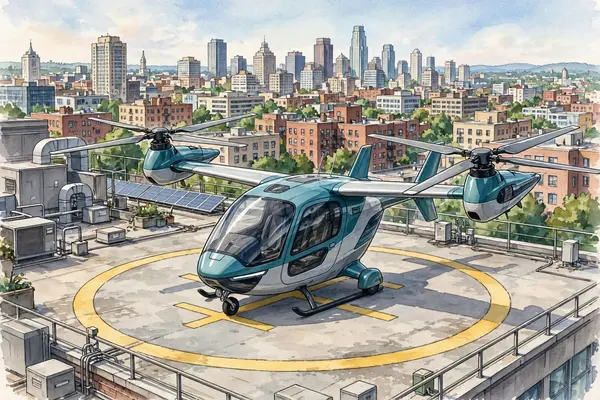
Joby Aviation and Archer Aviation are now targeting 2027 for their first passenger operations in the United States, not 2026, according to their third-quarter earnings calls — Joby's on November 4 and Archer's on November 9 — as reported on November 12. Both companies build electric aircraft that take off and land vertically — air taxis designed to carry passengers on short hops over congested cities — and both had planned to start carrying paying passengers in the US before the end of this year. That will not happen now: no paying passengers will fly in either company's aircraft in the US this year.
Joby had outlined plans to begin passenger operations before the end of 2026 under the Federal Aviation Administration's eVTOL Integration Pilot Program, known as eIPP, a programme that lets new electric aircraft fly in real-world operations under close FAA supervision. Joby now expects FAA pilot training and additional company flight testing in the first half of 2027, with initial commercial operations under the programme in 2027. Its November 4 shareholder letter says FAA pilots begin training on its aircraft in the first half of 2027.
Archer's Midnight aircraft received an FAA Market Survey Special Airworthiness Certificate this week, allowing piloted demonstration flights in Los Angeles in conventional takeoff-and-landing configuration only. But the certificate is only a step, not a finish line: Archer must still complete a piloted transition from vertical flight to wingborne flight — the moment the aircraft stops hovering like a helicopter and starts flying forward on its wing — before seeking market survey approval for vertical operations. Archer is targeting that transition before the end of 2026, followed by 50 hours of flight testing, and chief executive Adam Goldstein told investors he plans to be Archer's first Midnight passenger in 2027.
Two air-taxi makers, one new date: 2027 — a year later than planned, and two years later than first promised.
Why It Matters
An eVTOL — short for electric vertical takeoff and landing aircraft — is essentially an electric air taxi: it lifts off like a helicopter, then flies forward like a plane. The promise is city trips that take minutes instead of an hour in traffic. But before any company can charge passengers, its aircraft must be certified by the FAA, a process that checks every part of the design, and then it must prove it can operate safely in real service. That is why the timeline matters so much: certification and testing are the gate, and the gate keeps moving.
This is the second slip in two years. Both companies had previously targeted commercial flights as early as 2025, then pushed the date to 2026, and now to 2027. Each delay pushes back the first paying fares — the moment these companies start earning real revenue from passengers instead of spending money on development and testing. For companies that burn cash while they wait, a year's delay is not a scheduling detail; it is a year of costs with no passenger income to offset them.
The certification work itself is still moving. Joby says it is at stage 4 of type certification — the FAA's formal approval of the aircraft design — at 83% complete on its side and 78% on the FAA's side, as of October 30. Those are Joby's own figures, and they show real progress: the design is largely through the hardest checks. But percentages do not carry passengers. Until the FAA signs off and the pilot training and flight testing are done, the aircraft stay in the test phase.
For investors, the reset changes the question. It is no longer whether Joby or Archer can fly passengers in 2026 — they cannot — but whether the 2027 dates hold. Archer's transition flight, due before the end of this year, is the next test: if it slips, the 2027 target slips with it. And Joby's first half of 2027 depends on FAA pilots starting training on schedule, which is in the regulator's hands as much as the company's.
Analyst's Take
Our call is Bearish. The 2027 reset is a further year's slip on a promise that has already moved from 2025 to 2026, and it lands in the same week Archer won a certificate that lets it fly demos — good news that still leaves paying passengers at least a year away. Certification progress is real, but Joby's 83% and 78% figures are its own claims, and neither company will take a fare this year. For stocks priced on the idea that air taxis were about to start earning, another year of waiting is a reason to step back.
What to watch: Archer's piloted transition before the end of 2026 and the 50 hours of flight testing that follow, and whether FAA pilots begin training on Joby's aircraft in the first half of 2027 as the November 4 shareholder letter says. If either milestone slips, expect the 2027 dates to move again — and the stocks to follow.
Are you bullish or bearish on this story?
By The Numbers
FAQ
What is an eVTOL?
It is an electric aircraft that takes off and lands vertically, like a helicopter, then flies forward like a plane. Joby and Archer are building them as air taxis for short trips over congested cities.
What is the FAA's eVTOL Integration Pilot Program?
It is a programme, known as eIPP, that lets new electric aircraft fly in real-world operations under close supervision from the Federal Aviation Administration, the US aviation regulator, while certification and testing continue.
Why did the date move to 2027?
Joby now expects FAA pilot training and additional company flight testing in the first half of 2027, with initial commercial operations under the programme in 2027. Archer must still complete a piloted transition from vertical to wingborne flight and 50 hours of flight testing before seeking market survey approval for vertical operations.
What has Archer actually won this week?
Its Midnight aircraft received an FAA Market Survey Special Airworthiness Certificate, allowing piloted demonstration flights in Los Angeles. It is a step toward passenger operations, not approval to carry paying passengers.
How far along is Joby's certification?
Joby says it is at stage 4 of type certification — the FAA's formal approval of the aircraft design — at 83% complete on its side and 78% on the FAA's side, as of October 30. Those are Joby's own figures.
👁
Source: AVweb