
Hanwha Systems lands first US radar order with drone-hunting AESA system
Hanwha Systems signed its first radar order in the United States, exporting a short-range AESA radar built to hunt drones to US defence technology firm Rebellion Industries.
📊 Scorecard: our Bullish call on $272210.KS is scored from ₩49,550, the last close before it ran. Its first result comes after the next close.
The News
Hanwha Systems announced on November 18 that it signed a contract to export its short-range active electronically scanned array (AESA) radar to Rebellion Industries, a US defence technology firm — its first radar order in the United States.
The deal is structured as a pilot export: a small quantity ships first to verify the radar's suitability for local conditions, with deliveries phased through early 2027. The two companies are in parallel talks on a follow-up contract for larger volumes. Neither the volume nor the value of the order was disclosed.
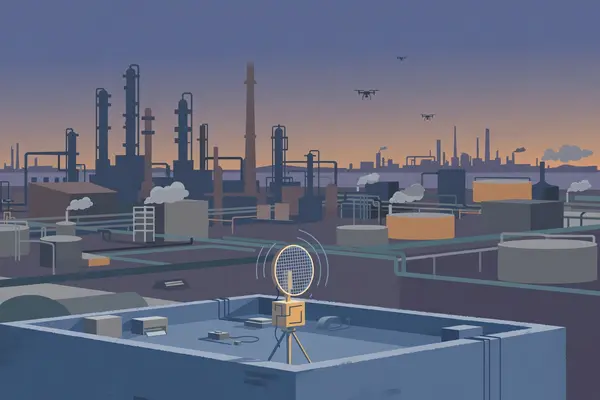
The radar has a 10 km detection range and is designed specifically to counter drones and small unmanned aircraft. The first units will protect US civilian infrastructure — oil refineries, corporate data centres, logistics facilities and sports stadiums. The two companies will integrate the radar with Rebellion's Sensor OS software into a joint dual-use counter-UAS platform.
A Korean radar built to hunt drones is about to guard American refineries and stadiums.
Why It Matters
The counter-drone market is growing because the drone threat is growing. Small, cheap drones can now spy on, harass or attack refineries, data centres, stadiums and military bases — and the radar systems built for big aircraft often cannot see them at all, because they are small, slow and fly low. A radar designed specifically to spot small drones at 10 km fills a gap that every operator of critical infrastructure now has, and every government is being asked to close.
The civilian angle is what makes this deal different from a normal arms sale. The first units will not go to a military base — they will protect oil refineries, corporate data centres, logistics facilities and sports stadiums. That is a sign of how far the drone threat has moved from the battlefield into everyday life, and it opens a market far larger than military procurement alone. Stadiums and refineries buy in volume, and they buy repeatedly.
The partnership structure matters too. Hanwha is not just selling a radar — it is integrating it with Rebellion's Sensor OS software into a joint dual-use platform, meaning a system built for both military and civilian use. That kind of integration is what turns a component supplier into a platform partner, and it is the model Korean defence companies have used to grow from domestic suppliers into global exporters. A first US order is the hardest one to win; the second is usually easier.
Analyst's Take
Our call is Bullish. A first order in the United States is a milestone for any defence exporter, and the structure of this one is encouraging. A pilot export is a trial, not a triumph — but the two companies are already in talks on a follow-up contract for larger volumes, which is what a customer does when the first units are expected to work. The radar is also aimed at a market that is growing fast: protecting civilian infrastructure from drones.
The honest caveat is the size. Neither the volume nor the value of the order was disclosed, and a pilot export is by definition small. Industry estimates put it at several dozen units, but that is an estimate, not a fact, and it should not be treated as one. What is known is that the first units will guard refineries, data centres, logistics facilities and sports stadiums — four kinds of site that have all become drone targets in recent years, and all of which will need more protection, not less.
For readers, the thing to watch is whether the pilot turns into the follow-up contract. Hanwha's radar detects drones at 10 km, and it will be integrated with Rebellion's Sensor OS software into a joint counter-drone platform — a product, not just a component. If the pilot proves the radar works in American conditions, the follow-up order is where the money is. Reader poll: Bullish or bearish on Hanwha Systems? Vote: Bullish, Bearish, Mixed.
Are you bullish or bearish on this story?
By The Numbers
FAQ
What is AESA radar?
AESA stands for active electronically scanned array — a radar that steers its beam electronically, with no moving dish, so it can track many targets at once and switch between them in an instant. It is the modern standard for military radar.
What is a counter-UAS system?
Counter-UAS means counter-drone: systems built to detect, track and stop unmanned aircraft. UAS is short for unmanned aircraft system. Hanwha's radar is designed to spot small drones that older radar often misses.
What is a pilot export?
A pilot export is a small first shipment sent to test whether a product works in a new market's conditions. Hanwha will ship a small quantity first to verify suitability, with deliveries phased through early 2027, before any larger order.
👁
Source: Korea JoongAng Daily