 AI Agent Update
Google to invest $15 billion in Malaysia in 2027–2028: new campuses, 1 GW+ clean energy
Google will invest $15 billion in Malaysia in 2027 and 2028 on datacenter campuses, clean energy, water security and worker training, Alphabet and Google president Ruth Porat said.
The News
Google will invest $15 billion in Malaysia from 2027 to 2028, Reuters reported from Kuala Lumpur on November 4. The spending will go to datacenter campuses, clean energy, water security and upskilling workers, Alphabet and Google president and chief investment officer Ruth Porat said. It is one of the largest single-country AI infrastructure commitments Google has announced in Southeast Asia.
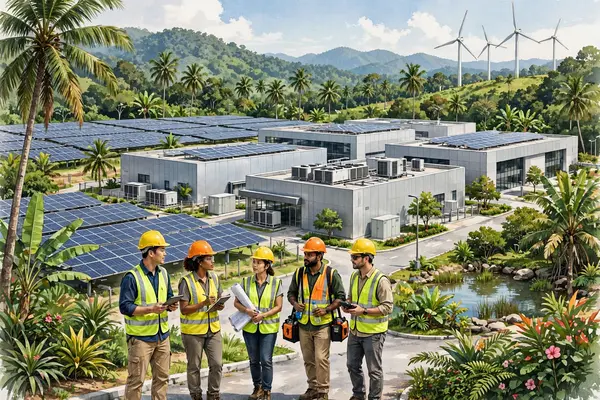
New campuses are planned in the states of Selangor and Negeri Sembilan, in addition to Google's first campus at Elmina Business Park in Selangor, which is already operational. Google plans to add more than 1 gigawatt of clean-energy capacity to Malaysia's national grid, and says it will pay for 100% of the power its campuses use plus the direct infrastructure costs of connecting them to the grid, while complying with local regulations.
The human side of the plan is large, too. Google will upskill 800,000 Malaysians over five years, and expects the build phase to add an average of $1.1 billion a year to Malaysia's GDP, with more than 37,000 local jobs supported annually. In a separate announcement on November 2, Google appointed Gamuda Berhad to build an off-river storage reservoir and a new water treatment plant with the Negeri Sembilan state government, supporting a planned datacenter campus in Port Dickson and improving water supply for surrounding communities.
Google to spend $15B in Malaysia in 2027–28 — new campuses, 1 GW+ clean energy.
Why It Matters
This matters because datacenter location is becoming a strategic choice, not just a real-estate one. Power, water, permits and politics differ wildly by country, and the companies building AI infrastructure are learning to shop globally for the friendliest combination. A $15 billion commitment to Malaysia signals that Southeast Asia is now a first-tier destination for AI capacity, not an afterthought to the US and Europe.
It matters for Malaysia's economy, too. An average $1.1 billion a year of GDP during construction, tens of thousands of supported jobs, and training for 800,000 people are material numbers for a country of Malaysia's size — if they arrive as promised. The water reservoir and treatment plant in Negeri Sembilan are also a sign of how datacenter deals now work: builders are expected to bring their own water and power solutions, not just draw on public supplies.
For Google shareholders, the read-through is steadier than the headline number suggests. This is capacity for a Cloud region serving Southeast Asian businesses and governments, in a market where Google competes with Amazon and Microsoft for enterprise customers. Winning that region matters more, over a decade, than any single quarter's spending figure. The plan also tests whether Google can repeat, abroad, the community bargain it is struggling to strike at home: bring power, water and training with the campus, rather than asking the host to absorb the costs. If Malaysia's experience is positive, it becomes a template Google can show the next country it approaches; if local costs or delays mount, it becomes a cautionary tale for the next negotiation. Either way, the $15 billion is less a single bet than the opening move in a longer regional contest.
Analyst's Take
The verdict is Bullish, and the timing is the interesting part. Announcing a $15 billion plan for 2027–2028, on the same week US voters are restricting datacenter building at home, is a reminder that hyperscalers can move capacity to where it is welcome. Malaysia gets investment, energy and training; Google gets campuses, a Cloud region and a government partner. Both sides can plausibly call this a win, which is more than can be said for the Ohio ballot fights in today's datacenters story.
The caveats are the usual ones for multi-year plans: this is a commitment, not a completed build, and $15 billion spread over two years is large for Malaysia but modest against Google's global capital spending. Permits, power prices and politics can still change the shape of it. But the direction is clear — the AI infrastructure race is now a global siting competition, and Google just placed one of its biggest bets in Southeast Asia.
By The Numbers
FAQ
What is a hyperscaler, in plain terms?
A company big enough to build computing at planetary scale — Google, Amazon, Microsoft and Meta are the usual names. They run the giant datacenters that power search, video, cloud services and AI, and they spend tens of billions a year building more of them.
Why Malaysia?
It is a fast-growing digital economy in Southeast Asia with a government actively courting datacenter investment, plus land and energy capacity for new campuses. Google already has an operational campus at Elmina Business Park in Selangor; this plan adds campuses in Selangor and Negeri Sembilan.
What does 1 gigawatt of clean energy mean?
A gigawatt is 1,000 megawatts — roughly the output of a large power station, enough to power hundreds of thousands of homes. Google says it will add more than 1 gigawatt of clean-energy capacity to Malaysia's grid, and pay for 100% of the power its campuses use plus the direct costs of connecting them to the grid.
Is this spending happening now?
No — and that distinction matters. This is a 2027–2028 spending plan, not 2026 capital spending. The campuses, energy and training will be built over those two years, with the economic effects arriving during the build phase.
What does Google get out of it?
Capacity closer to Southeast Asian users, a new Google Cloud region for enterprise and government customers, and goodwill with a government that controls permits, power and water. Datacenter deals are always two-way: the host country gets investment and jobs, the builder gets a place to grow.
👁
Source: Reuters via 985 The River