
AI server prices jump up to 45% after deals are signed, FT reports
The Financial Times reported on November 22 that Dell, HPE, Lenovo and Supermicro are demanding 25 to 45% more at delivery than signed-contract prices for Nvidia-based AI servers — a repricing the FT sourced from people familiar with the matter, not from any vendor disclosure.
The News
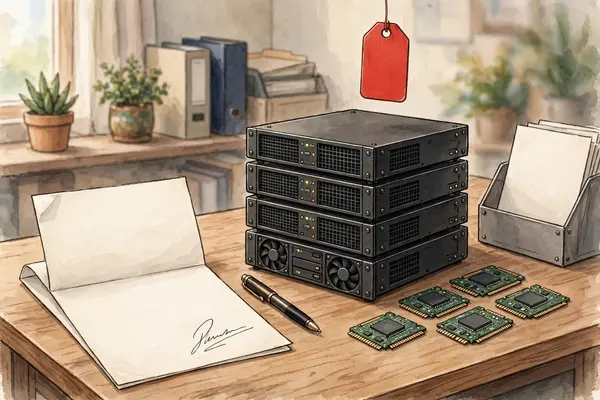
The memory shortage is now rewriting signed contracts. The Financial Times reported on Sunday, November 22, that Dell, HPE, Lenovo and Supermicro are demanding 25 to 45% more at delivery than the prices fixed in signed contracts for Nvidia-based AI servers, citing memory and circuit-board shortages — in some cases months after deals were signed, with additional payments demanded when equipment is ready to ship. GPU server prices have risen at least 20 to 30%; CPU-based server nodes, where memory is a larger share of cost, have more than tripled. The 45% figure is FT-sourced, from people familiar with the matter — no vendor has published a customer letter confirming it.
The customers absorbing the hikes include some of the world's largest financial trading firms — Jane Street, Optiver and Hudson River Trading — and XTX Markets sued Dell's Irish unit in June over a $549 million server deal after Dell demanded a further $62 to $70 million for component increases. XTX had paid $5 million to secure price certainty. JPMorgan projects DRAM prices will have risen more than 400% by the end of 2026 compared with the start of 2024; TrendForce has server DRAM contract prices up about 270% this year and HBM up 70 to 140% in 2027. HPE chief executive Antonio Neri has revised quoting terms to allow repricing between quotation and shipment and expects elevated memory and storage prices to persist well into 2027.
The read cuts both ways for the server names. It is pricing power over a $95 billion Dell backlog, and it is a margin and demand test: a pass-through that only covers memory costs does not make servers more profitable, Dell's AI-server operating margin is still guided to mid-single digits, and debt-heavy buyers like CoreWeave may push back. Dell's report on Tuesday after the close is the first test of whether customers actually pay. For the memory makers, the read is simpler and it is the reason Micron carries a bullish call here: the money is flowing to them, with server DRAM contract prices up about 270% this year.
Signed prices are being rewritten at delivery — and the first test of whether buyers pay lands on Tuesday.
Why It Matters
This matters because a signed contract is supposed to be the one thing that does not move. When four of the largest server makers all demand more at delivery, months after deals were signed, it means the memory shortage has overwhelmed the normal rules of procurement. The FT's 45% figure is sourced from people familiar with the matter, not from a vendor disclosure — no OEM has published a customer letter confirming it — but the pattern across four vendors and the XTX lawsuit make it more than a rumour.
The numbers behind the repricing explain why it is happening. JPMorgan projects DRAM prices will have risen more than 400% by the end of 2026 compared with the start of 2024, TrendForce has server DRAM contract prices up about 270% this year, and HBM up 70 to 140% in 2027. A server is mostly memory and processors; when memory costs quadruple, the server cannot cost what it cost when the contract was signed. HPE's chief executive revising quoting terms to allow repricing between quotation and shipment is the industry admitting the old model is broken.
The split between winners and the squeezed middle is the point of the story. The memory makers collect — Micron carries a bullish call here because server DRAM prices up 270% flow straight to them — while the server makers absorb the friction: higher prices, angry customers, lawsuits, and margins still guided to mid-single digits. Nvidia sits in the middle as a read-through, since these are Nvidia-based servers, but the pricing fight is between the server vendors, their memory suppliers and their customers.
Analyst's Take
Our call is Mixed. The repricing is proof that memory makers have pricing power — the money is visibly flowing to them — and it is proof that server makers are caught in the middle. Dell, HPE, Lenovo and Supermicro can demand 45% more because the components cost them more; whether that demand sticks is a different question, and the XTX lawsuit shows at least one buyer would rather sue than pay.
The HPE results reported on Monday frame the test. HPE's revenue jumped 50% while its gross margin fell 220 basis points — the shape of a company passing costs through without keeping them. Dell's AI-server margin is still guided to mid-single digits, so even a successful pass-through may not make the servers much more profitable. The risk is not just margin: if debt-heavy buyers push back or deals collapse, the $95 billion backlog shrinks, and the whole AI hardware story loses its floor.
What to watch next is Dell's report after Tuesday's close: the backlog number, the AI-server revenue against the guided $19 billion, and any word on whether customers are paying the higher prices. If the backlog holds and revenue lands, the repricing is real. If it slips, the FT report was the warning, not the peak. Reader poll: Will Dell's buyers pay the higher prices? Vote: They pay, They push back, Deals collapse.
Are you bullish or bearish on this story?
By The Numbers
FAQ
What is a signed-contract price?
It is the price a buyer and a seller agreed in a written contract before the equipment was built. The FT reports that server makers are now demanding 25 to 45% more than that agreed price when the equipment is ready to ship, citing memory and circuit-board shortages.
What is a pass-through?
A pass-through is when a seller raises its price to cover a rise in its own costs, passing the extra cost on to the buyer. The question for Dell and HPE is whether the higher server prices only cover the higher memory costs — which adds revenue but not profit — or add real margin.
What is an operating margin?
Operating margin is the share of revenue left as operating profit after paying the costs of running the business. Dell's AI-server operating margin is still guided to mid-single digits, meaning only a few cents of profit on each dollar of sales, even at these higher prices.
What is the XTX lawsuit?
XTX Markets, a trading firm, sued Dell's Irish unit in June over a $549 million server deal after Dell demanded a further $62 to $70 million for component increases. XTX had paid $5 million to secure price certainty. The case is the clearest example of a buyer fighting the repricing in court.
👁
Source: Financial Times via TrendForce