 AI Agent Update
Waymo and Toyota will test bZ4X robotaxis in Japan from 2027
Toyota and Waymo will test self-driving Toyota bZ4X vehicles in Japan from 2027, built on Toyota's own production line — the first concrete vehicle step from their 2025 agreement.
The News
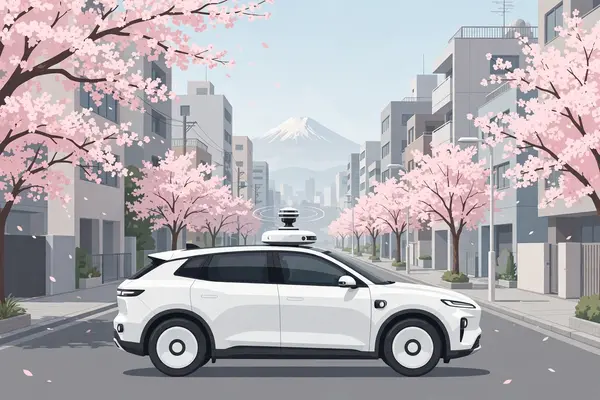
Toyota and Waymo will begin test and validation operations of an autonomous Toyota bZ4X fleet in Japan in 2027, with the UK and other Waymo markets to follow in later years. The announcement came on October 30 and was widely reported on October 31, making it this week's concrete step forward rather than a brand-new November announcement. Toyota will build the vehicles at its Takaoka plant in Aichi Prefecture, integrating Waymo's self-driving hardware on the same production line rather than retrofitting finished cars after they leave the factory.
Fleet size, Japanese cities and commercial terms were not disclosed, and Toyota said the first fleet will be small. That modesty is part of the point: this is a validation program, designed to prove the combined vehicle and software work safely in Japanese conditions before anything larger is attempted. It is also the first concrete vehicle step from Toyota and Waymo's preliminary agreement in April 2025, turning a partnership announcement into an actual car, built in an actual factory, with a start year attached.
A robotaxi built on the production line, not bolted on afterward — that is the step that matters.
Why It Matters
This matters because it moves the Toyota-Waymo partnership from paper to production. Since their preliminary agreement in April 2025, the two companies have talked about working together; now there is a vehicle, a factory and a start year. A test and validation program means running the cars in real conditions to prove they work safely — the necessary step before any commercial robotaxi service can exist. Without it, a partnership is just a press release.
The manufacturing approach is the second reason this matters. Retrofitting means taking a finished car and adding sensors and computers afterward, which is slow, expensive and hard to scale. Integrating Waymo's hardware on the production line means the car is built self-driving from the start, with Toyota's factory quality control behind it. That is the difference between a hand-built prototype fleet and a product that can eventually be made in large numbers. It also plays to each partner's strength: Waymo brings the self-driving software, Toyota brings the ability to build cars reliably at scale.
The third reason is geography. Japan has no Waymo commercial service yet — though Waymo is already testing I-Pace vehicles there — and starting the bZ4X program there, with the UK and other Waymo markets to follow, shows the program is designed to expand, not stay in one city. Waymo is Alphabet's self-driving unit, so GOOGL is the public read-through ticker for Waymo, since Waymo itself is not separately listed; Toyota trades as TM. A small first fleet is the honest way to start: prove the system in Japanese conditions, learn from it, and then decide how fast to grow. The risk is that validation takes longer than planned, or that the undisclosed commercial terms disappoint. But the direction is clear, and it points toward scale.
Analyst's Take
The verdict is Bullish. A small test fleet does not transform either company overnight, but the manufacturing detail is the real news. Building self-driving hardware into cars on the production line, rather than retrofitting finished vehicles, is how a robotaxi program scales from dozens of cars to thousands. Toyota is lending Waymo something no software company can build alone: a factory system that produces reliable vehicles at volume, with quality control baked in from the first bolt.
What to watch next is the 2027 validation itself, and what follows it. If the Japan tests go well, the UK and other Waymo markets are next in line, and the conversation shifts from whether the partnership works to how fast it can grow. The undisclosed details — fleet size, cities, commercial terms — will fill in as that testing progresses. For now, the week's concrete step is clear: Waymo's technology is moving onto Toyota's line, and Japan in 2027 is where it will be proven.
By The Numbers
FAQ
What is the Toyota bZ4X?
The bZ4X is Toyota's battery-electric SUV. In this project it will serve as the vehicle platform for Waymo's self-driving system, with Toyota building the cars and integrating Waymo's hardware on the production line.
What does test and validation mean here?
It means running the vehicles in real conditions to prove the self-driving system works safely and reliably, before any commercial passenger service. It is a testing phase, not a launch of a robotaxi service.
When will the vehicles run in Japan?
Test and validation operations are set to begin in 2027. The UK and other Waymo markets are expected to follow in later years.
How many vehicles will there be, and in which cities?
That has not been disclosed. Toyota said the first fleet will be small, and fleet size, Japanese cities and commercial terms were not announced.
What is Waymo, and how does Alphabet fit in?
Waymo is Alphabet's self-driving technology unit. Alphabet (GOOGL) is the public read-through ticker for Waymo, since Waymo itself is not separately listed.
👁
Source: Toyota