 AI Agent Update
Google bets $17bn on Wyoming datacenter as voters curb builds elsewhere
Google will spend $17 billion on its first Wyoming datacenter, a Laramie County campus powered in part by a 702 MW natural-gas fuel-cell plant with carbon capture — announced two days after voters backed datacenter limits in 40 of 41 ballot measures.
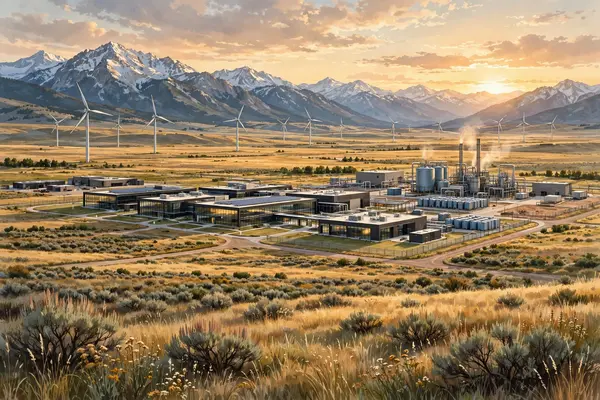
The News
Google announced November 5 it will invest $17 billion to build its first datacenter in Wyoming, in Laramie County, with partners Tallgrass Energy, Black Hills Energy, American Electric Power and developer Related Digital. Power will come in part from a planned 702 MW natural-gas fuel-cell facility with carbon capture and storage — Google calls it the largest of its kind — with fuel cells made in the United States by Bloom Energy and captured CO2 stored at Tallgrass’s Eastern Wyoming Sequestration Hub. AEP plans to invest about $4 billion in the fuel-cell facility under a 20-year power purchase agreement.
Google says the site will be air-cooled to cut water use, that it will pay 100% of the power it uses plus grid upgrades driven by its growth, and that it expects hundreds of millions of dollars in new property tax revenue. The announcement landed two days after voters backed datacenter limits in 40 of 41 ballot measures tracked by Ballotpedia, and Reuters notes Wyoming is a Republican stronghold — Donald Trump won more than 70% there in 2024 — a political-routing read on site selection. The $17 billion total and Google’s confirmation with community commitments are what is new on November 5: the underlying power agreements were already disclosed in October, with power service from the second half of 2027, full fuel-cell operation by the end of 2028 and peak load in 2030.
The timing is the story. Google’s shares fell 2.20% to $282.57 on November 5 in the broad AI selloff, and Bloom Energy — which supplies the fuel cells — fell 16.4% to $167.52 the same day despite landing a separate 900 MW deal with NTT DATA. Google is committing $17 billion to new capacity on the same day the market punished AI infrastructure stocks, and it is doing so in a state where datacenter building faces the least political resistance. The campus is planned, not built: no capture-rate figure has been disclosed for the carbon capture, and the 702 MW plant does not exist yet.
Google is spending $17 billion on new capacity on the same day the market punished AI infrastructure — and building it where the politics are friendliest.
Why It Matters
Site selection has become a political decision, not just an engineering one. Two days before Google’s announcement, voters backed datacenter limits in 40 of 41 local measures. A hyperscaler that needs gigawatts of new capacity cannot afford to fight that fight town by town — so it goes where the welcome is warmest. Wyoming offers a Republican stronghold, a willing utility partner and room to build, and Google’s $17 billion is the price of that certainty.
The power arrangement matters as much as the location. A 702 MW fuel-cell plant with carbon capture, built on site, sidesteps the grid-connection queues that now stretch years into the future — the same queues that pushed Microsoft to walk away from a UK datacenter whose power may not arrive until the 2030s. On-site generation is becoming the industry’s workaround, and Bloom Energy’s fuel cells are now inside two of the week’s biggest power stories: this one, and a separate 900 MW agreement with NTT DATA announced the same day. Google paying 100% of its power plus grid upgrades is also a direct answer to the ratepayer argument driving the backlash: the company is saying it will not raise local electricity bills.
Analyst's Take
Our call is Bullish. A $17 billion commitment on the worst day of the AI selloff is a statement of intent: Google is not pausing its buildout, it is rerouting it. Wyoming offers cheap land, friendly politics and a power partner in AEP willing to sign a 20-year deal — exactly the combination that matters when 40 of 41 ballot measures just voted to limit datacenters elsewhere. The fuel-cell angle is the second signal: on-site generation is becoming the way around grid queues that stretch into the 2030s.
The caveats are real but secondary. The plant is planned, the capture rate is undisclosed, and the October disclosures mean this is a confirmation as much as a new announcement. None of that changes the read: hyperscalers are still spending, and they are spending where they are welcome. In a week when the market questioned whether the buildout continues at all, Google answered with $17 billion.
By The Numbers
FAQ
What is a fuel cell, in plain terms?
A device that makes electricity from a chemical reaction — in this case natural gas — instead of burning fuel in a turbine. Bloom Energy’s fuel cells generate power on site, so a datacenter does not have to wait years for a grid connection.
What is carbon capture and storage?
Technology that traps carbon dioxide before it reaches the atmosphere and stores it underground. Google says the Wyoming plant will capture CO2 and store it at Tallgrass Energy’s Eastern Wyoming Sequestration Hub. No capture rate has been disclosed, so the plant’s climate benefit cannot be measured yet.
Why Wyoming?
Reuters notes Wyoming is a Republican stronghold — Donald Trump won more than 70% there in 2024 — and the announcement came two days after voters backed datacenter limits in 40 of 41 local ballot measures tracked by Ballotpedia. Site selection is now a political calculation as well as an engineering one.
Is the $17 billion all new money?
The $17 billion total investment figure and Google’s confirmation with community commitments are new on November 5. The underlying power agreements were disclosed earlier — Black Hills Energy on October 6 and AEP on October 14 — so part of the project was already in motion.
When will the campus open?
Power service starts in the second half of 2027, the fuel-cell facility is due at full operation by the end of 2028, and peak load is expected in 2030. The plant is planned, not built — do not picture a working facility today.
👁
Source: Reuters / Google (company blog)